
Tag:country

Located in the heart of Victoria’s far west region of the Wimmera is Murtoa, a quaint country town roughly halfway between Melbourne and Adelaide. Murtoa is primarily known for its history as well as its booming grain farming industry. The farming industry produces wheat, barley, chickpeas & lentils for domestic and export markets. Murtoa is also an essential part of the Silo Art Trail, which celebrates regional Australia in a modern and accessible artistic context.

Historical Roots
Like many other towns in the Wimmera region, Murtoa has a rich history deeply rooted in agriculture. The town is named after an aboriginal word meaning ‘home of the lizard’ and was established in 1873 during the gold rush era. The development of the railway network for grain transportation significantly influenced its progress. Over the years, Murtoa evolved into an essential hub for grain production.

Agriculture remains the cornerstone of Murtoa’s economy, with wheat and barley being the major crops cultivated in the surrounding farmlands. The town has kept up with modern agricultural practices by incorporating technology to enhance efficiency while preserving its rural character. The Murtoa Stick Shed Heritage Weekend is held annually in the first week of October. It celebrates the town’s significant agricultural heritage and pays homage to grain storage and processing history. It attracts locals and tourists interested in learning more about these aspects of the town’s past.

Natural Beauty
Murtoa is also a beautiful destination for nature enthusiasts as vast plains and picturesque lakes encompass it. In 2010 the Wimmera Mallee pipeline was finished; consequently, the lake was no longer used as a reservoir. A Committee of Management was established, and significant improvements have been made since then. The park and lake have become a sanctuary for bird life, and with its 1921 Memorial Arch, it has become the focal point for many of the town’s recreational activities.

Lake Marma is a beautiful spot where you can relax and unwind. It has a lovely 2km walking track lined with trees. The track passes a jetty, manicured lawns, and seating areas where you can enjoy the spectacular views. Murtoa Cabins are conveniently situated on the foreshore of Lake Marma and offer comfortable accommodation. The self-contained cabins also have verandahs where you can enjoy sunset views. They are also just a short walk from the town centre and other attractions.

museum Precinct
Significantly, Murtoa is home to three of Victoria’s heritage-listed sights. The first is the Stick Shed, an impressive grain store built in 1941 and often called the Cathedral of the Wimmera. The second is the Railway Water Tower, built in 1886.

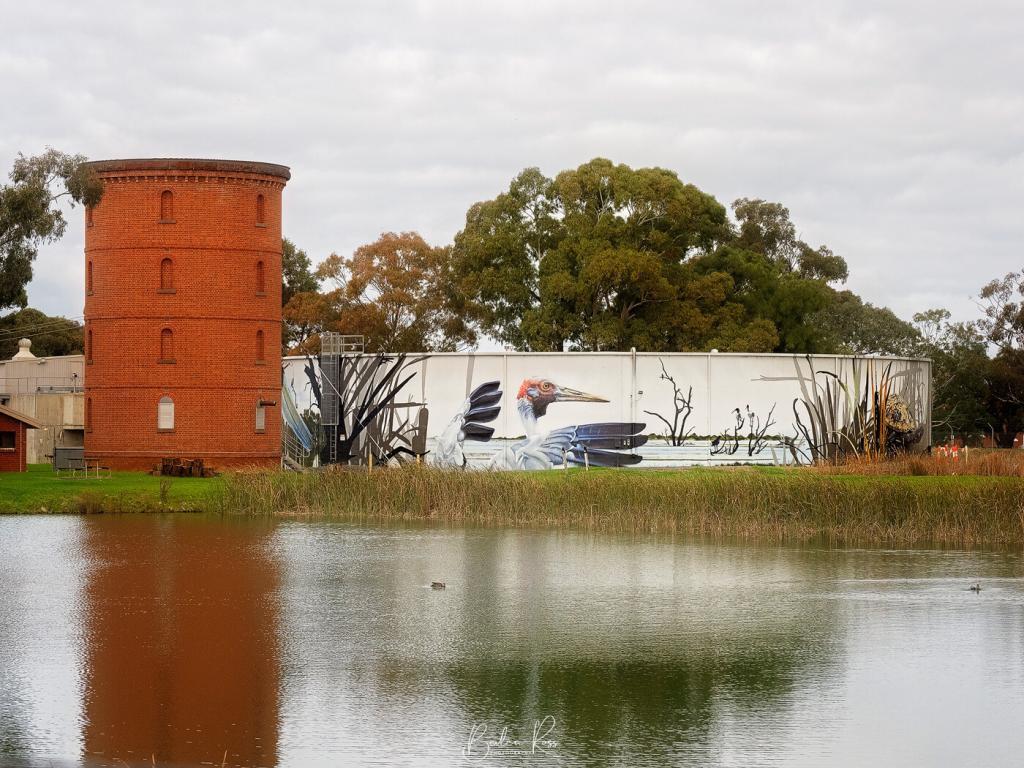
The tower is an impressive 4-storey, 13-metre high tower and home to the Water Tower Museum. The museum hosts the unique James Hill Taxidermy Collection, which includes over 500 birds and other fauna, historical artefacts, memorabilia, and households. It also houses farming tools from the 1890s, the town’s most significant growth era. Visitors can climb up the spiral staircase to the top floor, which reveals the underbelly of the 40,000-gallon wrought iron tank that used to store water for steam locomotives. The third heritage-listed sight in Murtoa is the Kurrajong Tree Ave. It was established in 1901 and is the oldest native street planting in Victoria.

The Murtoa silo art
The wheat silo has recently been painted by the renowned street artist SMUG and digitally lit by Dave Jones’ Transience. The stunning mural of brightly coloured birds was inspired by James Hill’s taxidermy collection at the Murtoa Museum (in the water tower). This bird mural is a sight to behold, day and night. The mural also pays homage to Dr John Cade, a Murtoa native who discovered Lithium treatment for Bipolar disorder.

Concordia Cottage
Concordia Cottage is the last remaining building of the original Lutheran college, which was established in Murtoa from 1890 to 1904 as a male Lutheran seminary and teacher training college on the corner of Lake and Munro Streets. In 1905, Concordia College relocated to Adelaide, where it still exists.

The Concordia Cottage building was later moved to Cromie Street in 1934. The Salvation Army used it as a hall and house until 1940. It was then remodelled as a private home until it fell into disrepair by the 1990s. However, in 1997, the cottage was moved to its current home, near the old Water Tower. It was officially opened in October 1997 as part of the Museum precinct. Displays include War memorabilia, Coromby Band photos, the old Murtoa telephone switchboard, historical clothing and a research room.

The Murtoa Heritage Trails Brochure, available for download, provides visitors with a self-guided tour through the town. As you follow the Blue and Red Trails, you will discover the heritage buildings located in the town’s centre. The Murtoa Historic Precinct entry tickets and Murtoa Heritage Trails self-guided walking tour brochures are all available at the Water Tower Museum shop.

Admission is $9 Adult (Eftpos available). Children under 16 free
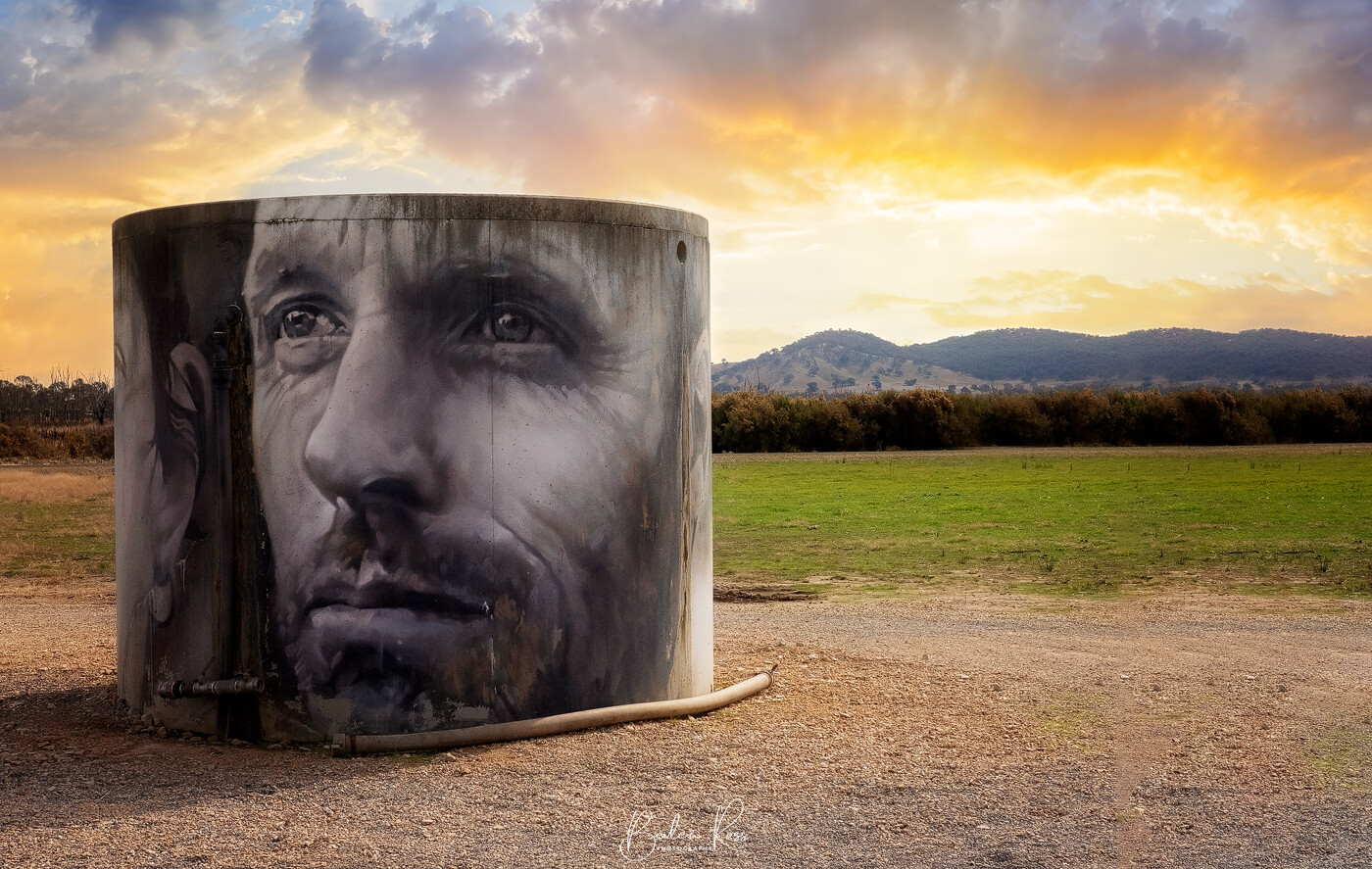
Victoria, a beautiful state in Australia, is famous for its natural beauty, cultural heritage, and lively art scene. In this captivating landscape, the painted water tanks have become an unexpected canvas that has captured the attention of locals and visitors, primarily due to the popularity of painted silos. Once considered mundane, these structures have been transformed into stunning works of art, creating open-air galleries that enhance the rural and urban landscapes.
The Artistic Transformation
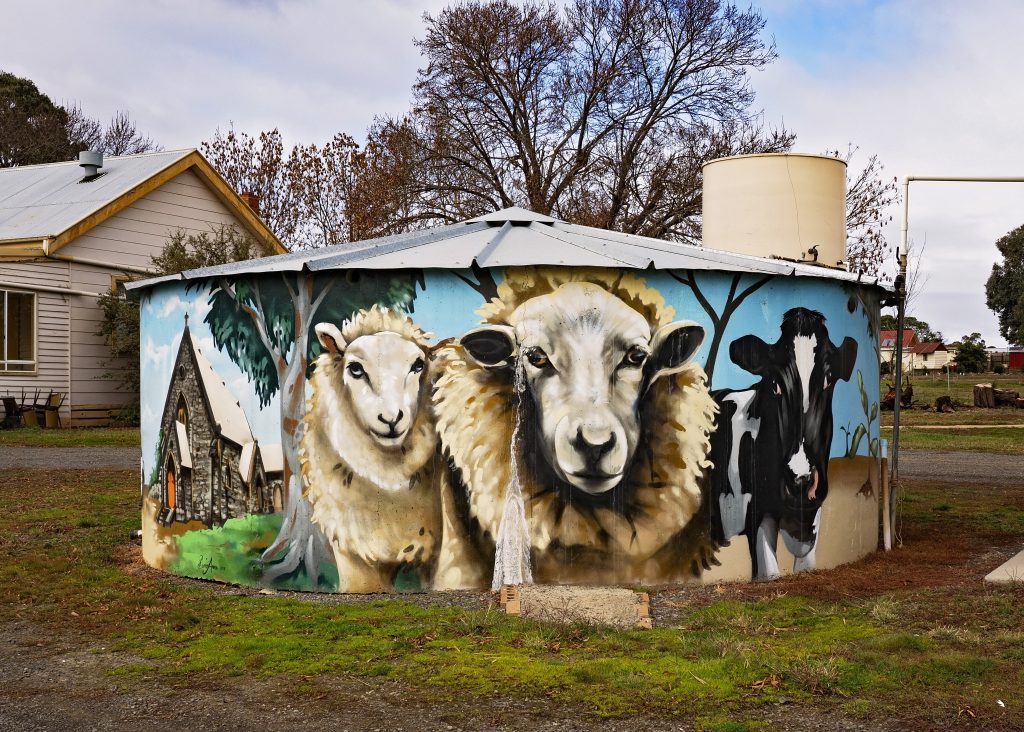
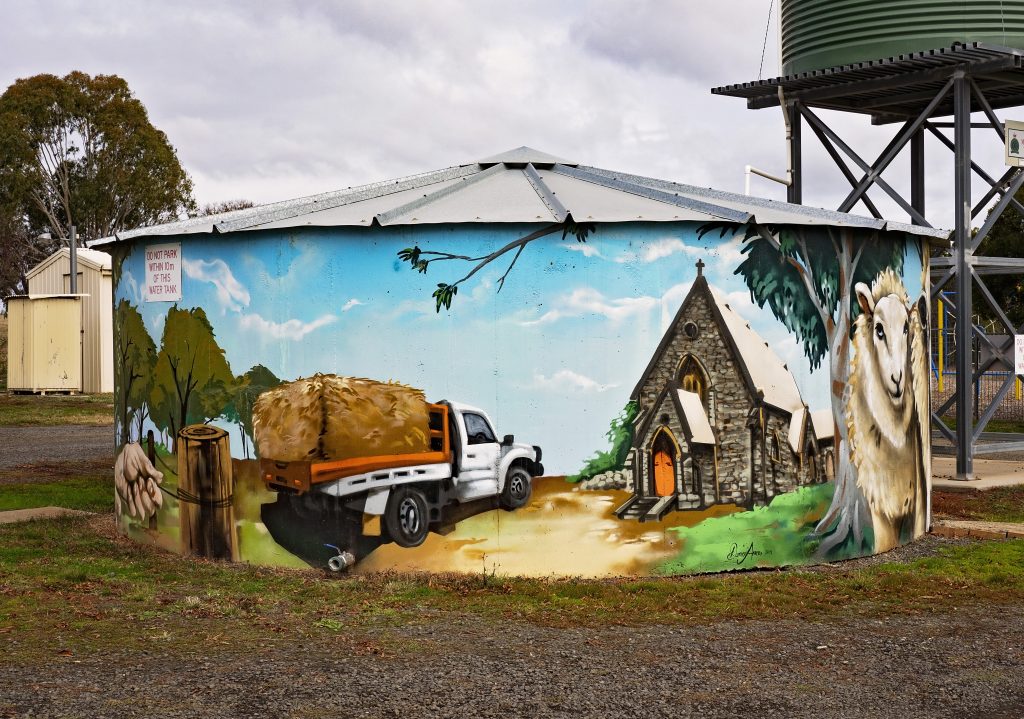
In recent years, people in Victoria have been encouraging local artists to collaborate with communities to transform ordinary water tanks into captivating works of art. Street artists and more traditional muralists have joined forces to create visually stunning pieces on these cylindrical canvases. The designs typically reflect the local culture, history, and environment. Each painted water tank tells a unique story, from depictions of native wildlife and plant life to indigenous artwork honouring the land’s original caretakers to contemporary designs that celebrate city life.
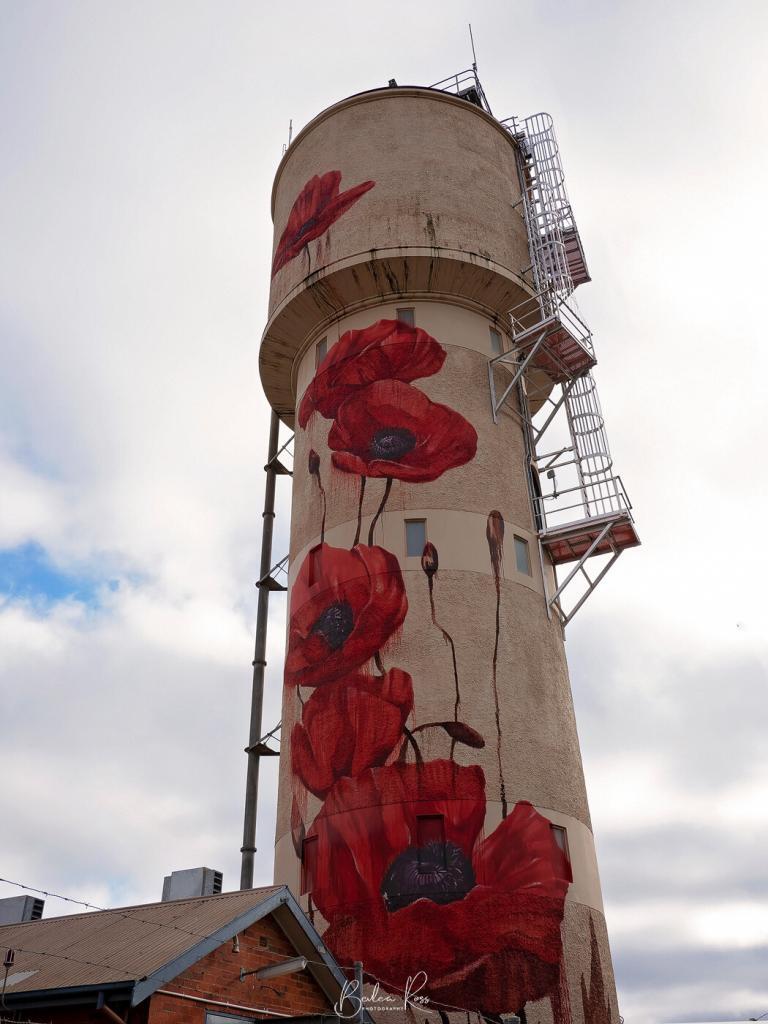
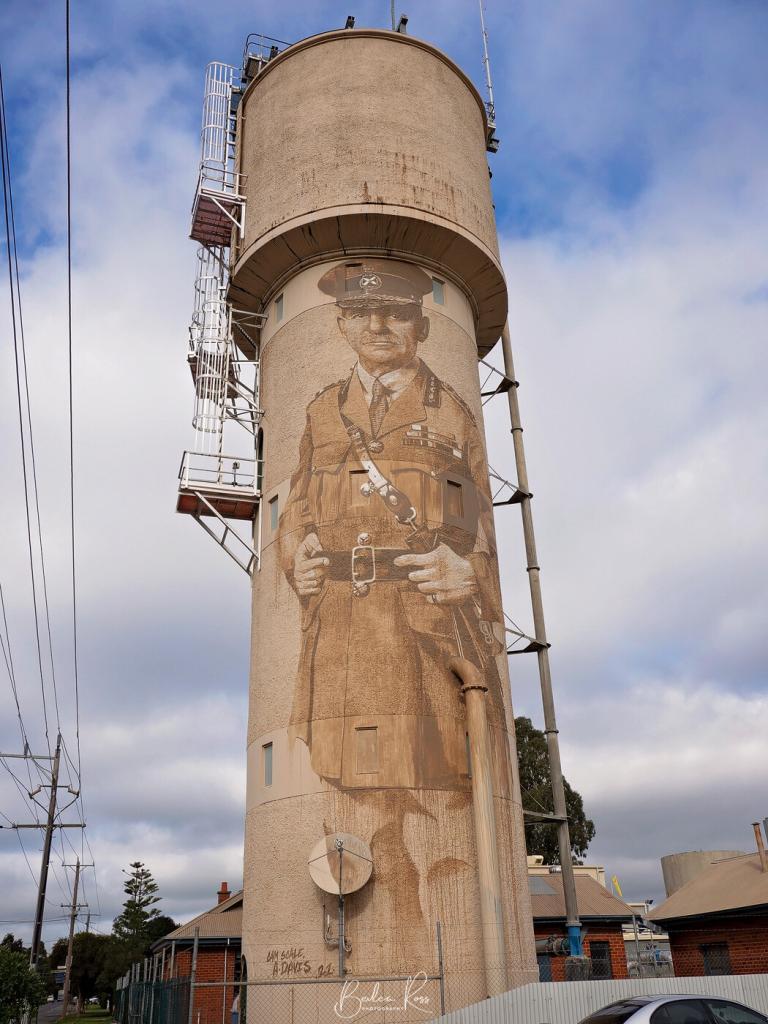
The Tatura water tower has remembrance poppies on one side and a portrait of Sir John Monash on the other. Cam Scale and Andrew Davis are the talented artists who created this beautiful artwork on the tower. The tower was built in 1912 and was designed by Monash, who was not only an engineer but also a renowned Australian military commander during WWI. The Tatura Water Tower is also the earliest surviving example of a reinforced concrete tower of its type in Victoria.
Connecting with Communities
The painted water tanks are beautiful not only because of how they look but also because of the sense of community they create. Making these artworks involves working with the locals, who help choose the themes and colours and even share stories to inspire the artists. This collaboration helps strengthen the community’s pride and ownership, transforming the water tanks from ignored structures into cherished symbols of identity.
Promoting Tourism
The painted water tanks have made quite a name for themselves, attracting tourists who crave a unique artistic experience. People now venture beyond the usual tourist spots to discover the hidden treasures of Victoria’s countryside and towns. The tanks have undeniably boosted tourism, increasing local economic revenue.
Challenges and Future Prospects
Painted water tanks have received much positive attention, but some difficulties come with this movement. Obtaining funding for significant projects and acquiring the necessary permits can prove challenging. Moreover, certain heritage-listed water tanks are not permitted to be altered. Additionally, artists must deal with logistical issues such as working at heights and ensuring the artwork can withstand weathering.
Despite these obstacles, the outlook for Victoria’s painted water tanks is bright. As the movement gains popularity, more potential sponsors and supporters are expressing their interest. The state’s commitment to promoting arts and culture further solidifies the importance of these water tank masterpieces as a crucial part of Victoria’s artistic heritage.
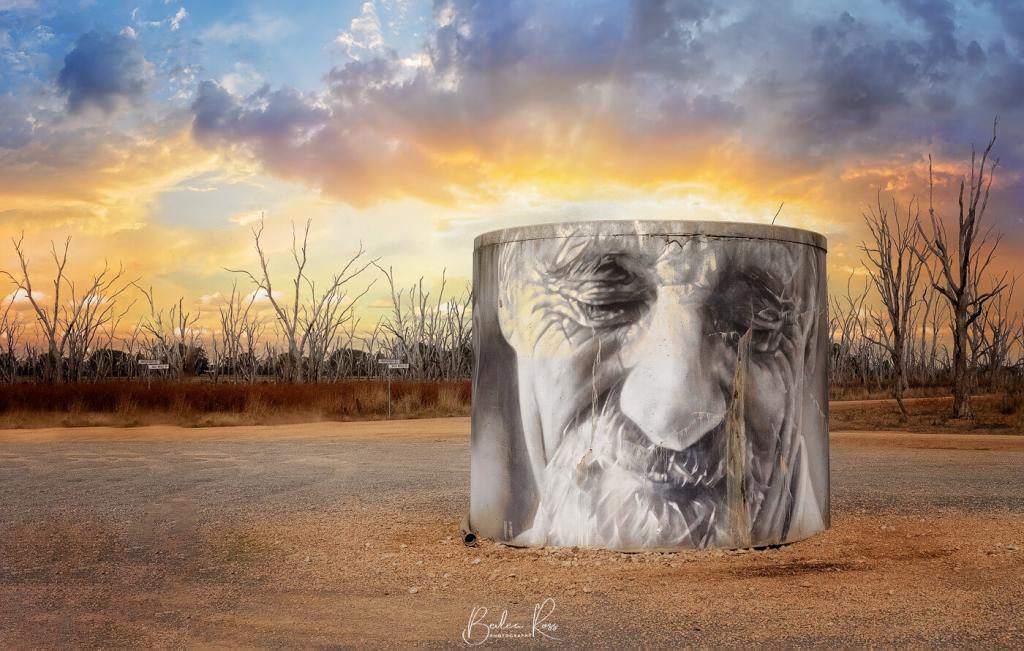
The painted water tanks in Victoria showcase the remarkable impact of art in elevating ordinary structures into extraordinary works of art. These structures, which were once ignored, have now become vibrant symbols of artistic expression, environmental awareness, and community collaboration.
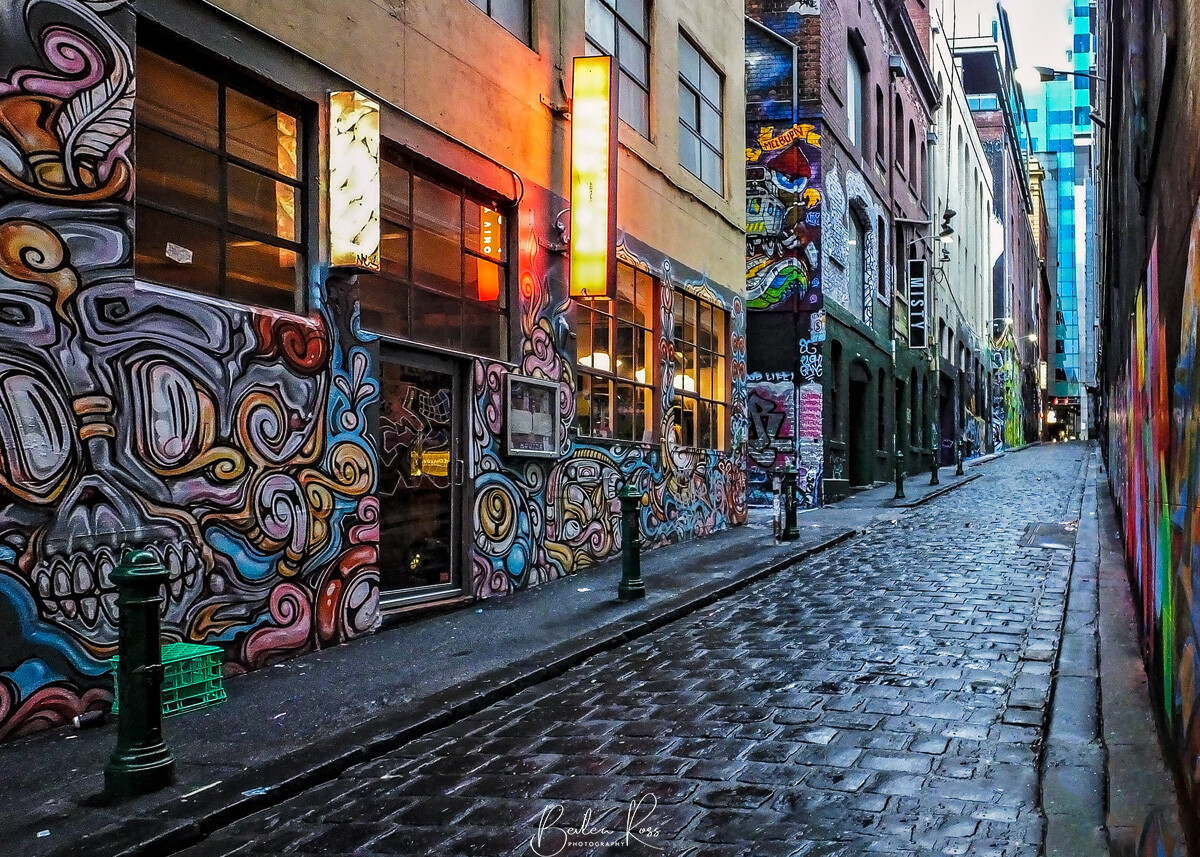
Victoria’s street art scene is a lively showcase of creativity and self-expression. Urban walls have been transformed into stunning works of art, making it a highly respected art form. Street art constantly evolves, capturing the essence of culture, identity, and social commentary. Artists are continually creating new pieces, and new art may replace or cover older ones.
The Evolution of Street Art in Victoria
Victoria’s street Art had humble beginnings as an act of rebellion; however, it has transitioned into a legitimate art form.
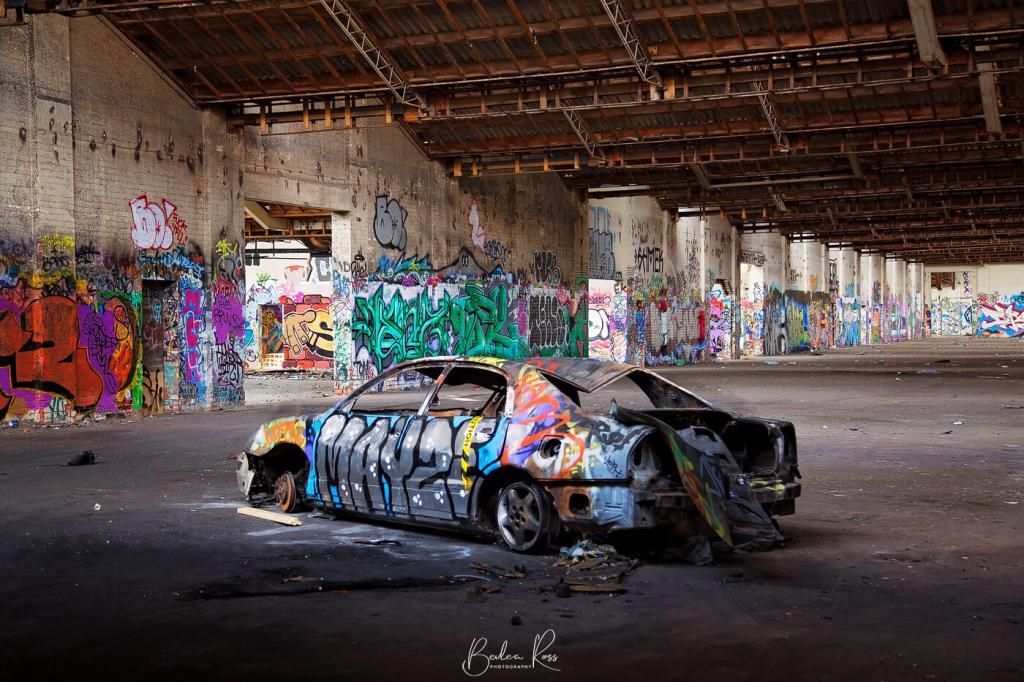
Victoria’s street art scene emerged during the 1970s and 1980s, with graffiti artists leaving their marks on public spaces. Initially regarded as vandalism, attitudes changed in the 1990s as artists created more complex and imaginative works. Debates arose about how to distinguish between art and vandalism.

Street art festivals in Victoria during the early 2000s provided legal spaces for artists to express themselves through murals and graffiti. Notable events like the Stencil Festival and Melbourne International Street Art Festival were crucial in legitimising street art as a recognised art form. As street art gained acceptance, many councils and property owners commissioned artists for larger, socially significant murals celebrating local culture and history.
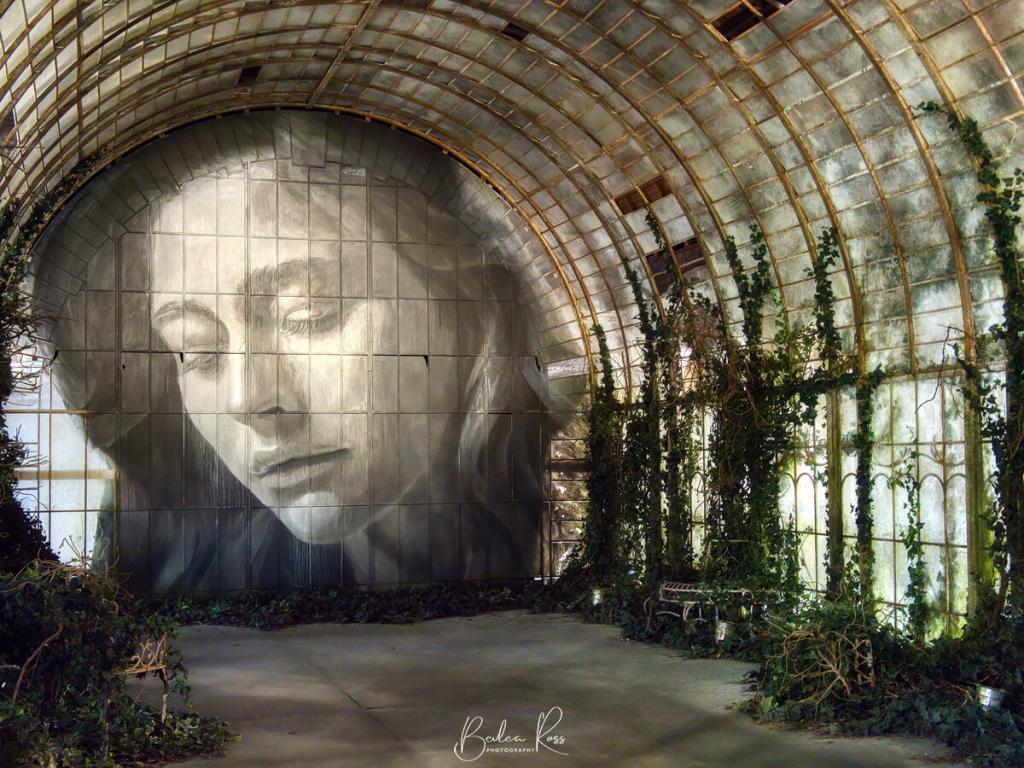
Art and Artworks
As street art gained popularity and commercial appeal, more and more artists entered the traditional art world. For example, exhibitions like Rone’s Time or Empire have showcased his creative skill, earning recognition from collectors and enthusiasts alike. This blending of street and traditional art highlights the incredible talent and versatility of Victoria’s street art scene.
Street Art with a Purpose
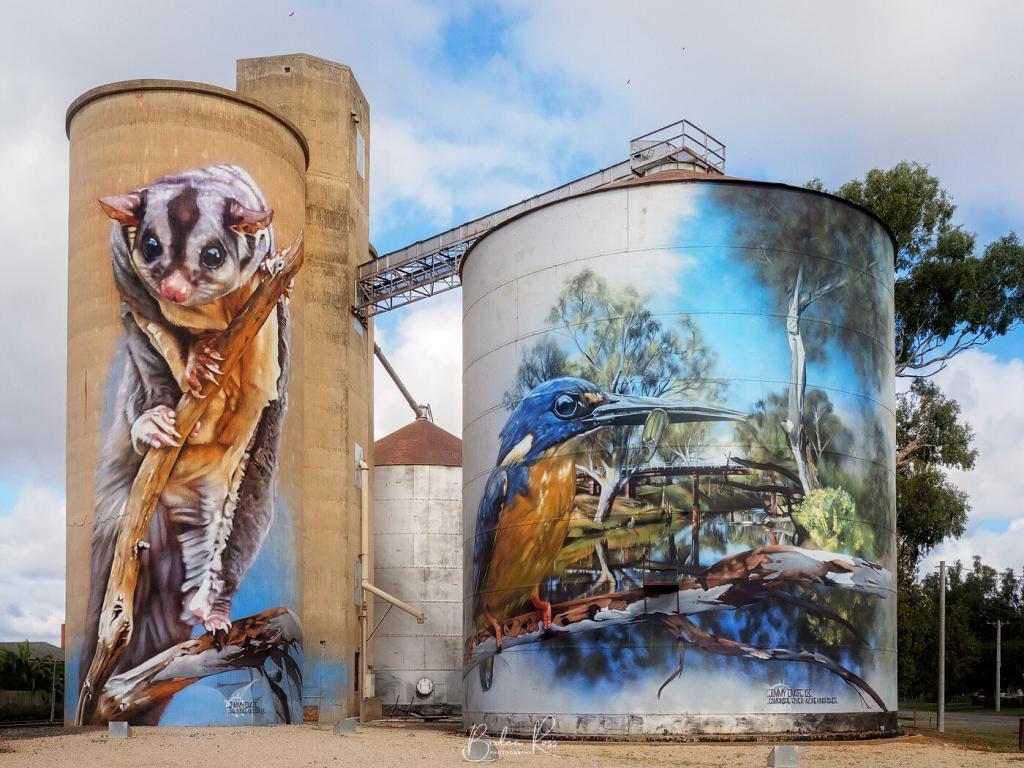
Street art has become a crucial part of urban development in recent years. It revitalises and activates urban areas, beautifies spaces, and promotes a sense of community. Victoria encourages street art, which increasingly incorporates cultural and social commentary. Artists use their work to raise awareness about important societal issues and engage the public in meaningful discussions.
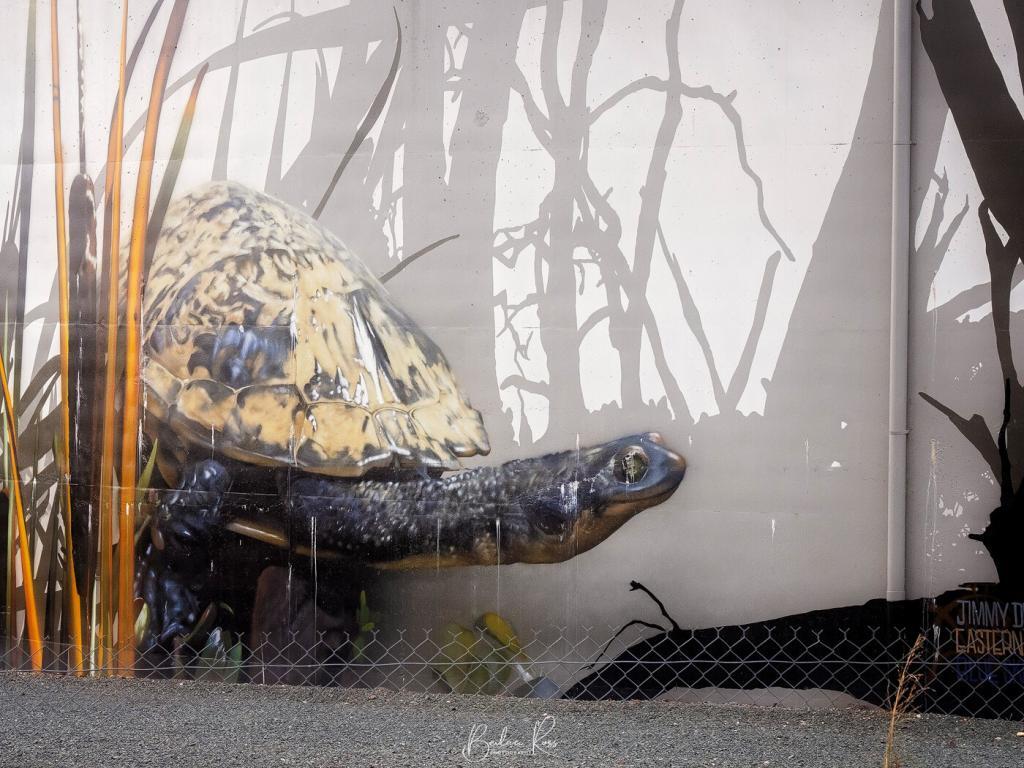
In Victoria, street artists create visually appealing works and use their art to bring attention to social issues and promote various causes. Their murals and graffiti often convey compelling messages about environmental conservation, mental health, inclusivity, and social justice. In rural areas of Victoria, murals and silos frequently feature local wildlife. Street art, therefore, acts as a platform for activism and encourages positive change.
Inner city Hotspots
While street art can be found throughout Victoria, some areas have become well-known as important hubs for street art.
Brunswick
This suburb in Melbourne is a hub of street art. Stroll along Lygon Street and Sydney Road to uncover an array of vibrant and meaningful murals and graffiti. All highlight the artistic and cultural richness of the area.
Fitzroy and Collingwood
These urban areas are hubs for dynamic street art culture. Stroll through the streets, alleys, and laneways, and you’ll come across numerous murals, stencils, paste-ups, and graffiti pieces. Johnston Street, Brunswick Street, and Smith Street are especially abundant with street art.
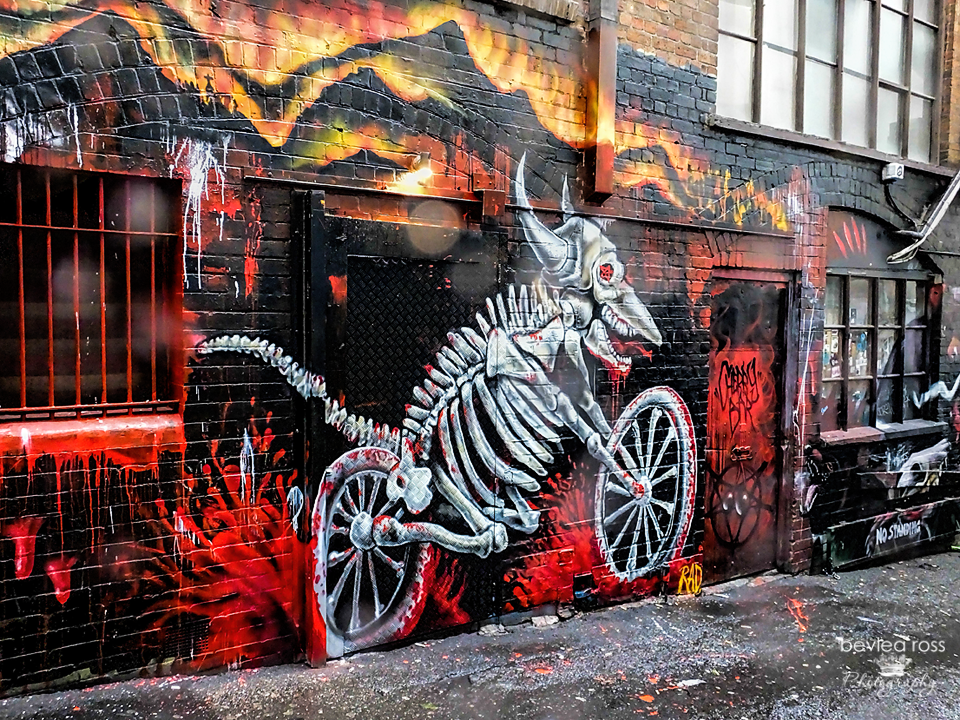
Hosier Lane
A quaint cobblestoned alleyway near Flinders St. Station has become a dynamic, ever-changing outdoor gallery.
Street Art Towns
Benalla Wall to Wall Festival
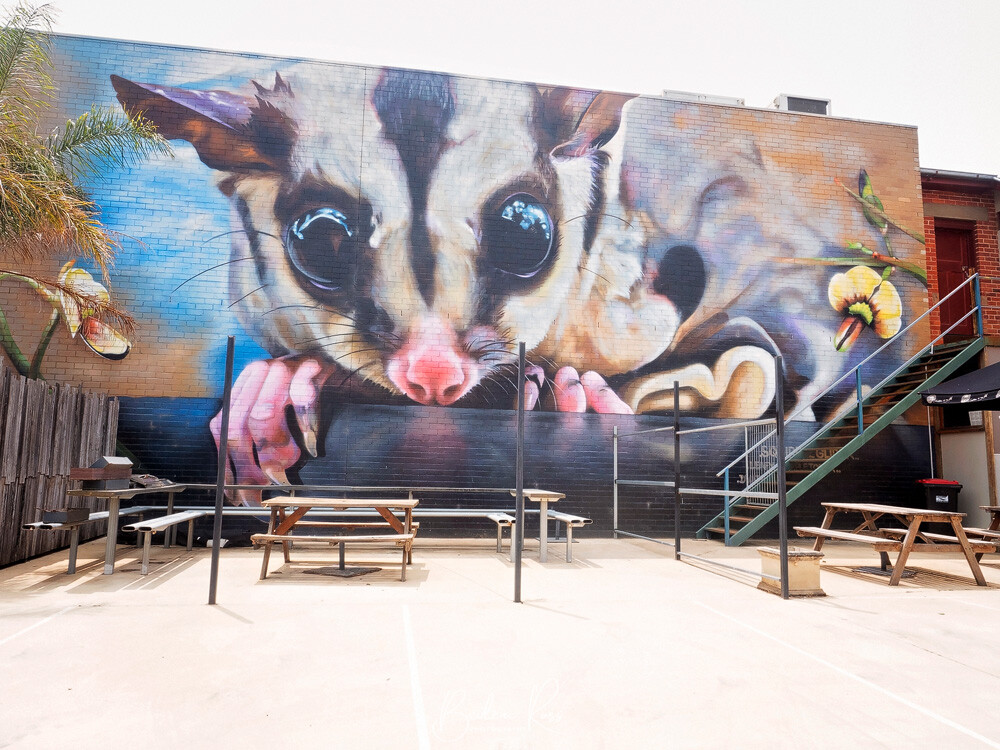
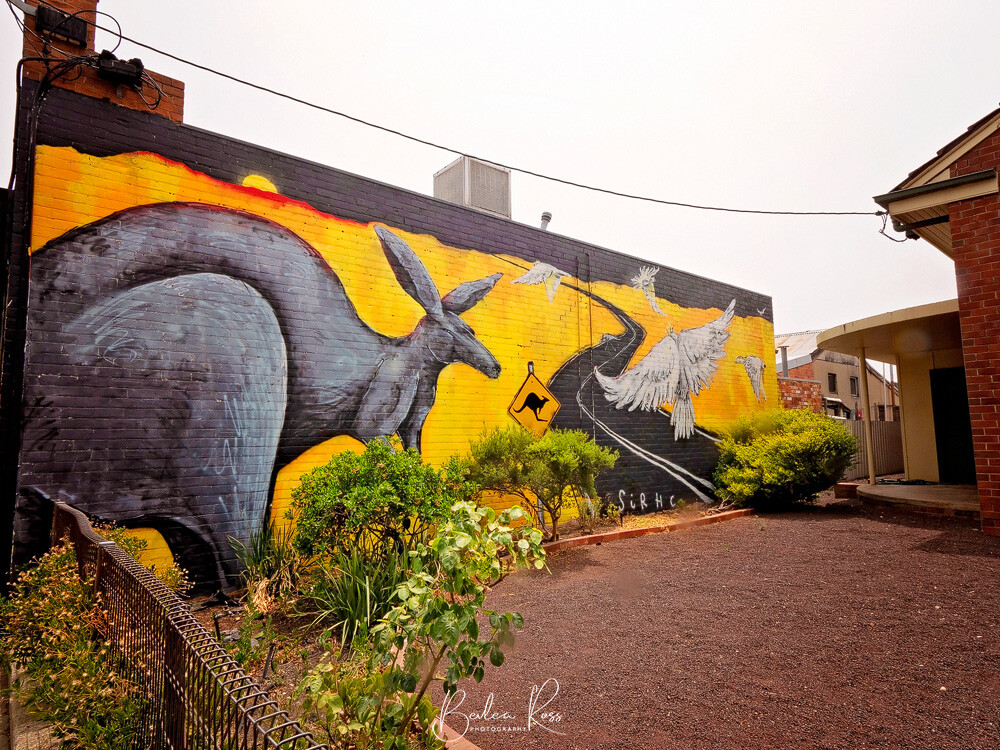
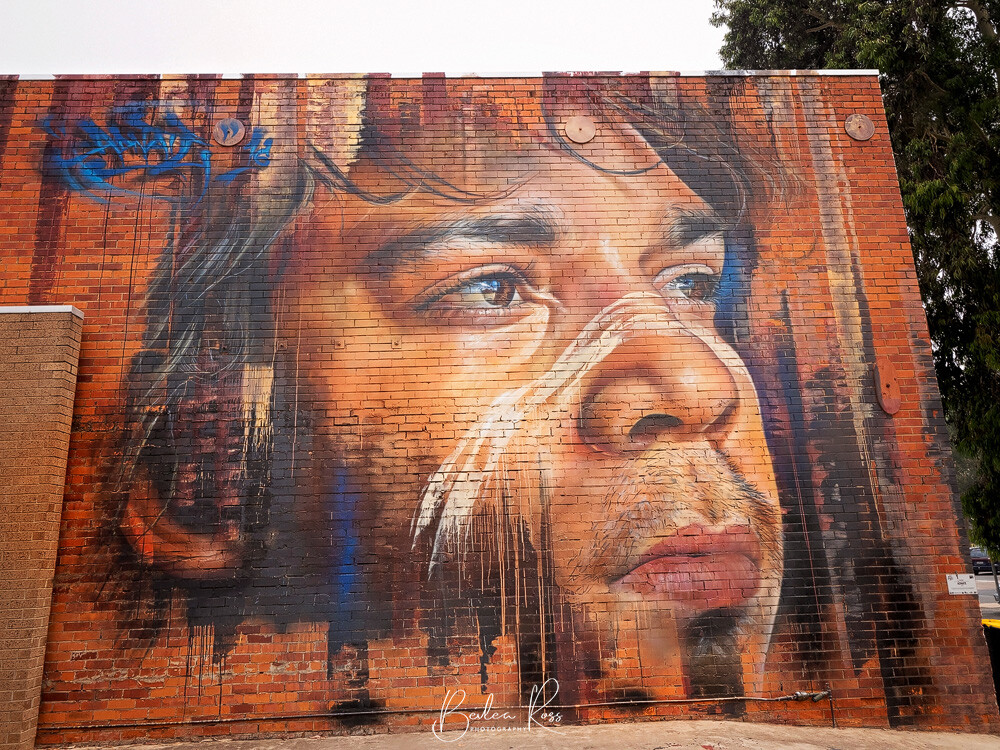
Benalla is considered the street art capital of regional Victoria. Every year, they hold the Wall to Wall Festival of street art, which features incredibly talented and well-known street artists from all over the country and the world. They create breathtaking murals and street art on the walls of buildings around the town. If you’re looking to explore the 65 murals on the art-filled streets of Benalla, you can take a self-guided walk and make the most of your experience by using the Storytowns-Benalla Street Art app. Don’t forget to grab a street art walking map from the Visitor Centre!



Bendigo
Another regional centre located in Victoria has incorporated street art into its cultural landscape. The Bendigo Street Art project has brought stunning murals to various locations around the city.
Geelong
Geelong, a city in the southwest of Melbourne, has a thriving street art culture. The lively alleys and walls near Little Malop Street have become attractive outdoor galleries, giving the urban landscape character and creativity.
Rochester
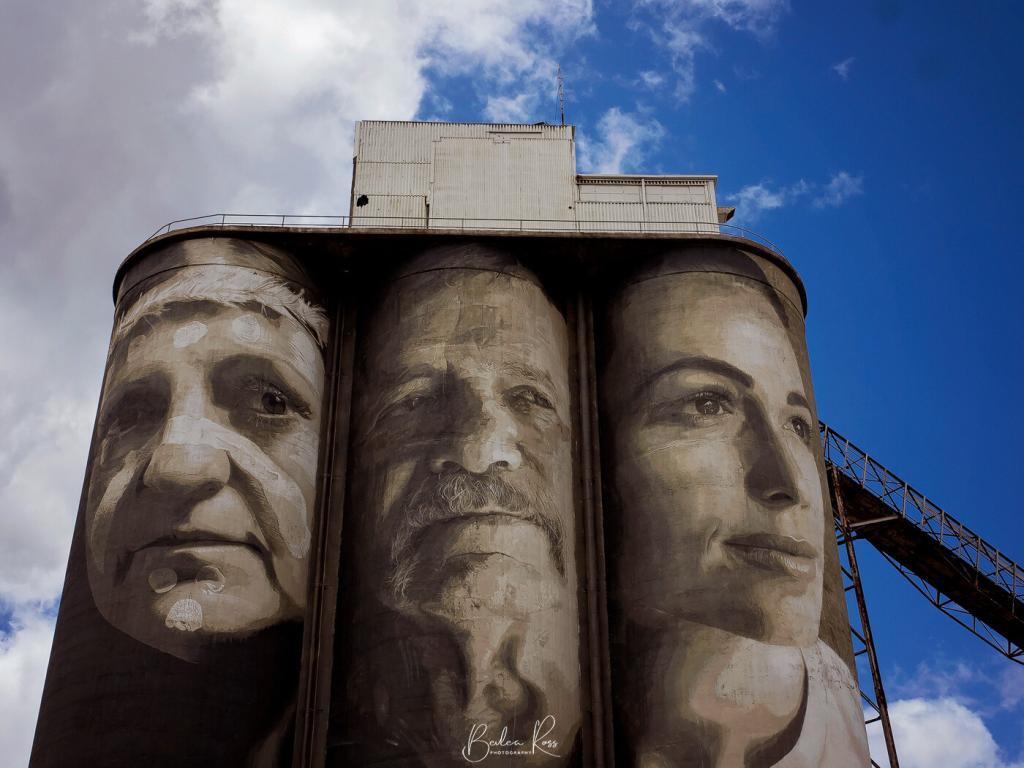
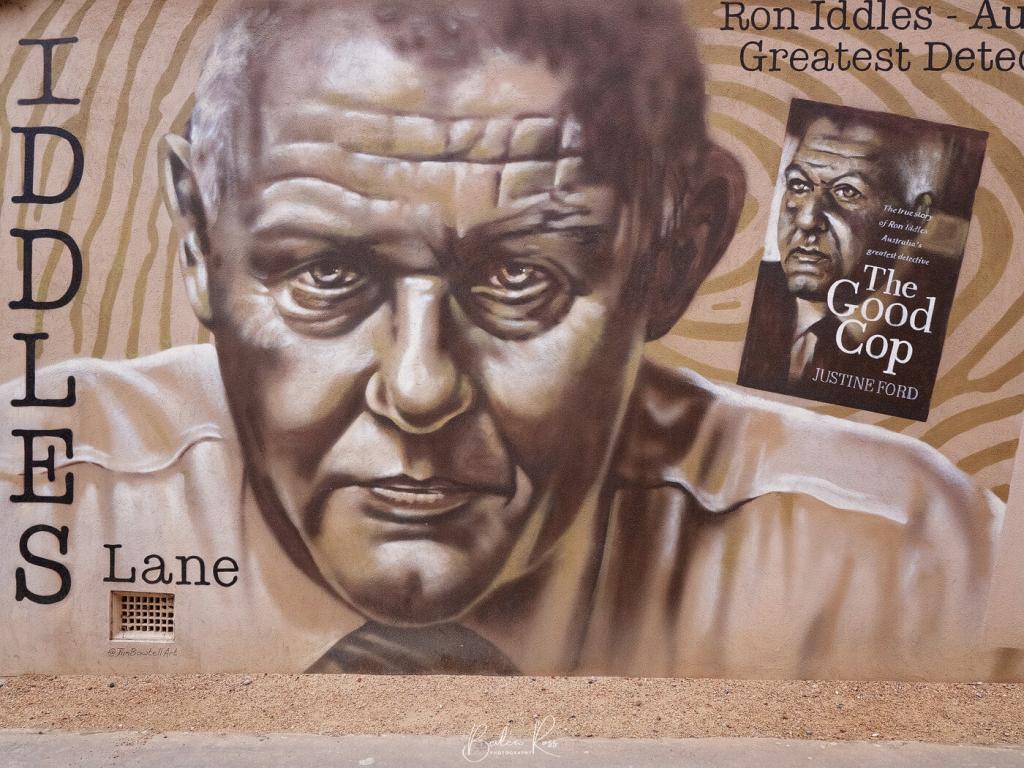
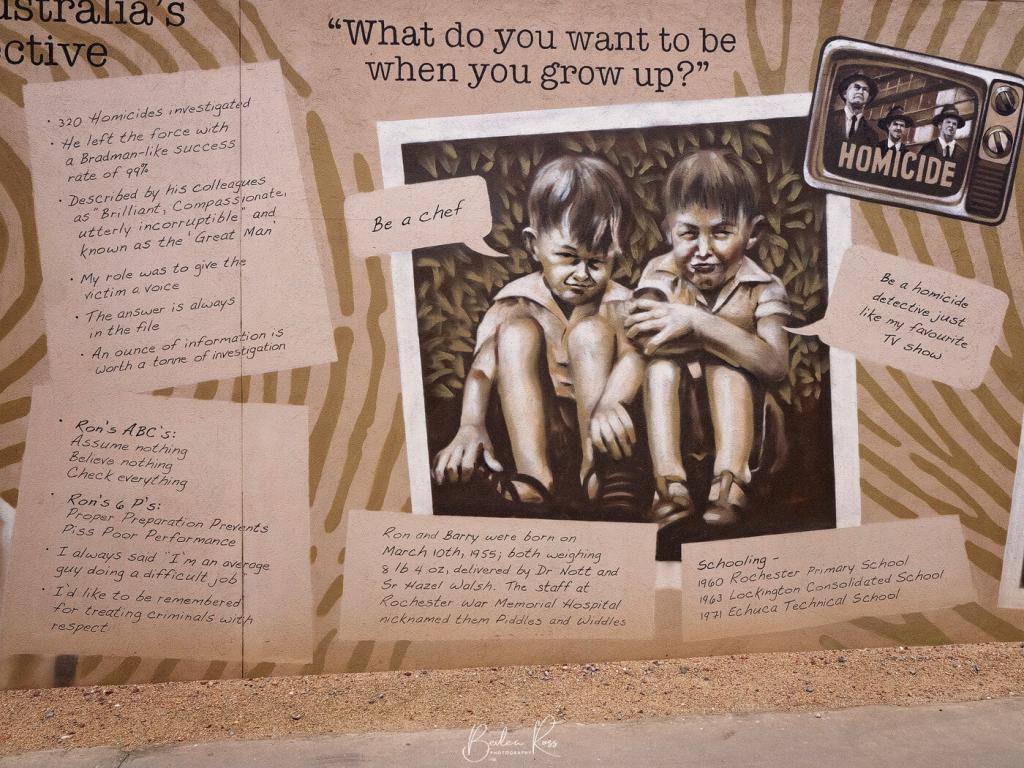
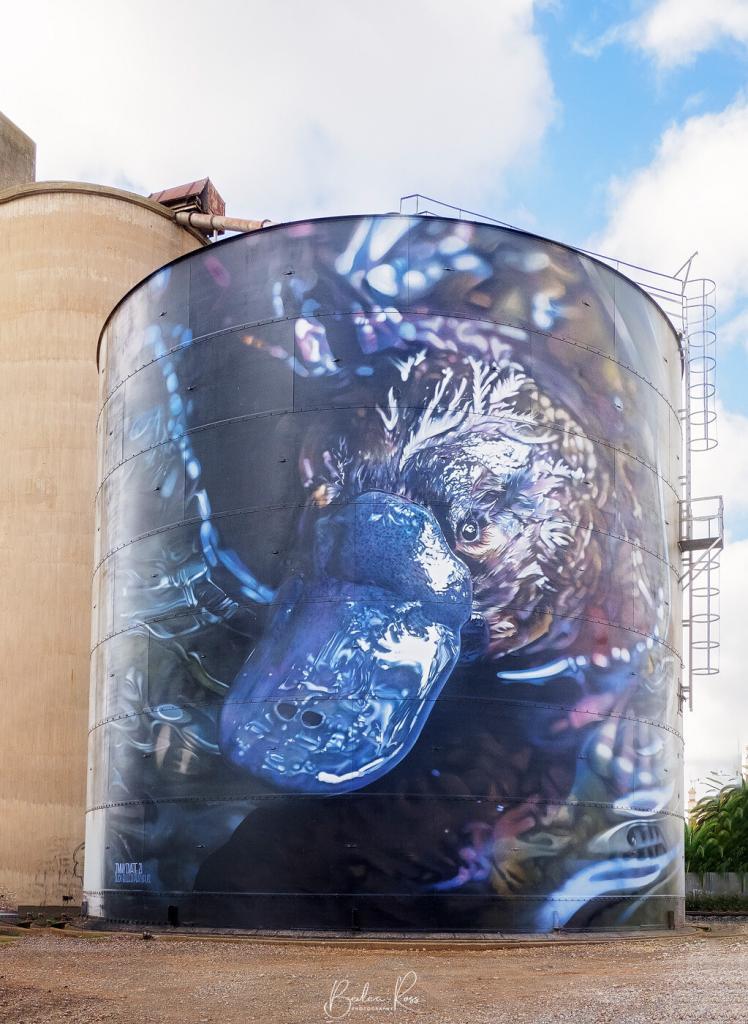
Rochester is a town in the Campaspe shire that boasts impressive art installations. In this area, there are two silos that Jimmy Dvate has painted. Additionally, there is a laneway that features the artwork of Tim Bowtell on both walls. This laneway has been recently named Iddles Lane in honour of Ron Iddles OAM APM, an accomplished Australian police detective who had a remarkable conviction rate of 99%. His exceptional performance earned him the title of “Australia’s greatest detective.”
St Arnaud
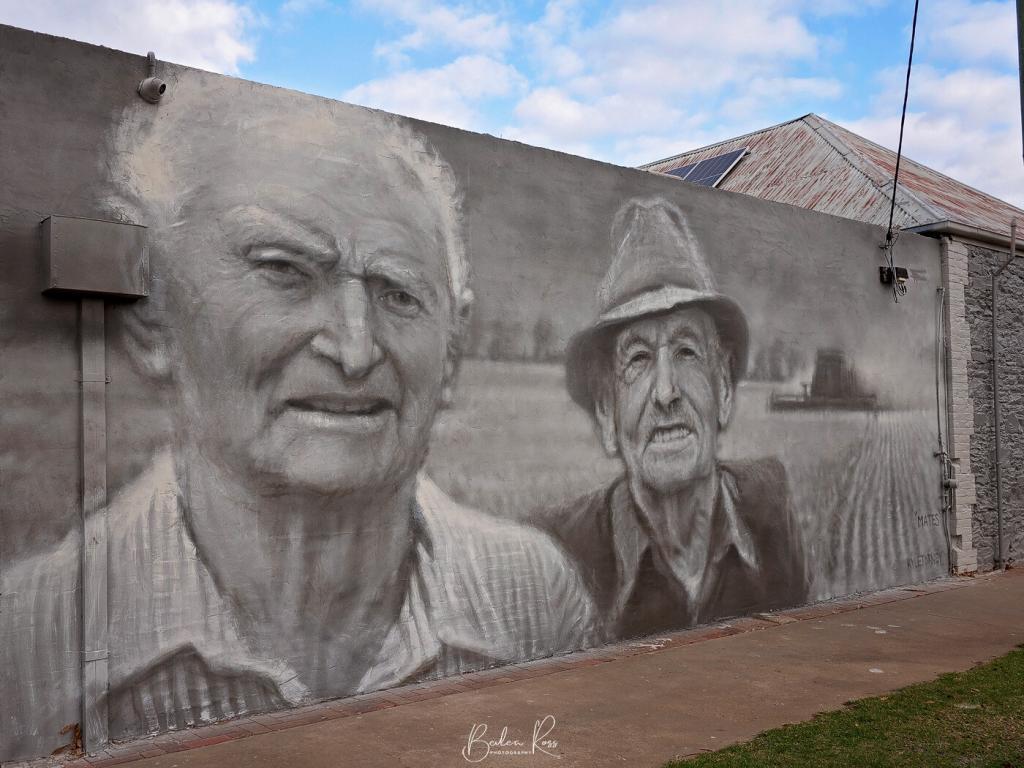
St. Arnaud is a town between Avoca and Donald and was once a central place for gold mining. Kyle Torney, a skilled muralist and oil painter, is a resident of St. Arnaud and has gained recognition in the street art community for his Renaissance-style artwork. His pieces showcase local stories with great attention to detail. Coincidently, St. Arnaud is the region’s starting point of the Silo Art Trail and is a great place to stay overnight before you start the Trail the following day.
Warrnambool
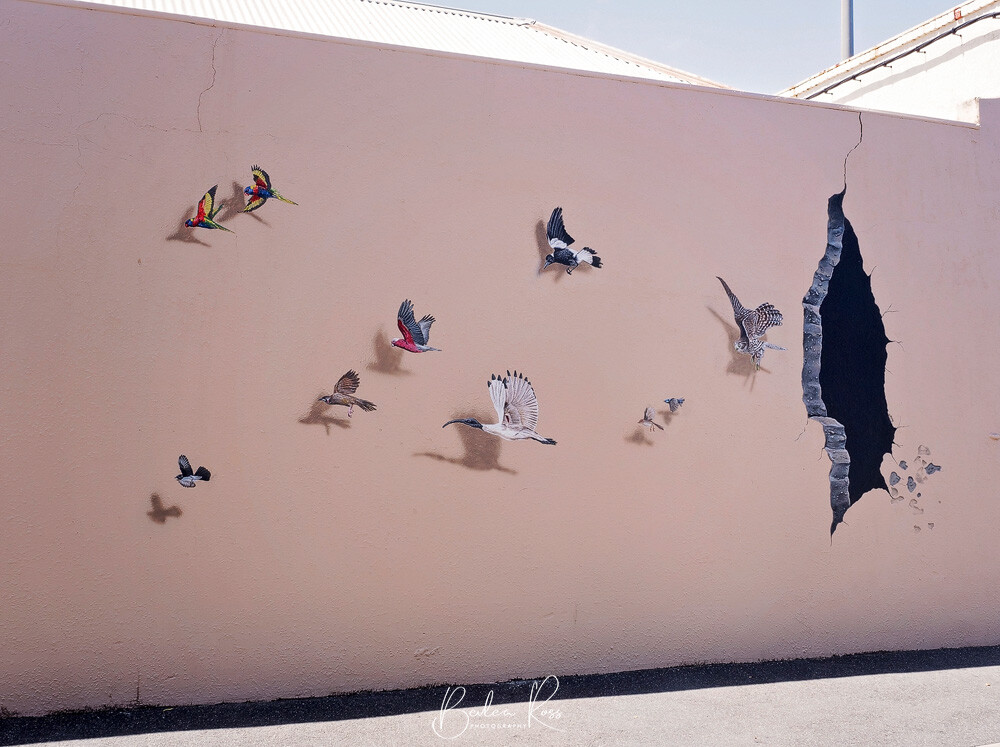
Impressive murals and street art collections can be found in the coastal town of Warrnambool. The CBD and laneways feature colourful artworks that reflect the town’s beauty and local themes.
Shepparton
Shepparton has approximately ten street art spots and its award-winning Moooving Art herd. The locals have named ‘Dana Djirrungana Dunguludja Yenbena-l’ to the Aboriginal Street Art Project, which translates to ‘Proud, Strong, Aboriginal People’ in the Yorta Yorta language. The project aims to honour the area’s Aboriginal heritage and traditions while connecting the newly constructed SAM (Shepparton Art Museum) with Shepparton CBD.

Yarram
The small township of Yarram is in southeast Gippsland, 221 kilometres east of Melbourne. It’s a two-and-a-half-hour drive down the Princes Highway car.
Yarram boasts impressive artwork by Heesco, a well-known artist from Ulaanbaatar, Mongolia. Heesco relocated to Australia in 2010 and settled in Melbourne, where he has been busy painting walls across the country, including some silos in New South Wales. Yarram has ten outdoor murals and five indoor murals to enjoy. Yarram was also the Gold winner of the 2020 Street Art Awards.

While other states also have painted silos, Victoria has the most painted silos standing at 26, as of July 2023. Only Victoria has a drivable trail with only 50-60 km between each silo. And Victoria has three separate Trails at that! The Silo Arts Trail and the Northeast Silo Trail are in regional areas. These trails are a one-of-a-kind public art project in regional Victoria, Australia, that’s truly amazing.
Silos as a canvas
This unique project aims to turn rural landscapes into an open-air art gallery. Northam, Western Australia, was the first official silo artwork in 2015, created by Phlegm and HENSE. However, the Silo Trail concept was initially launched by the Yarriambiack Shire Council in 2016. Since then, talented artists from Australia and all over the globe have been invited to paint these silos with their artistic interpretations.
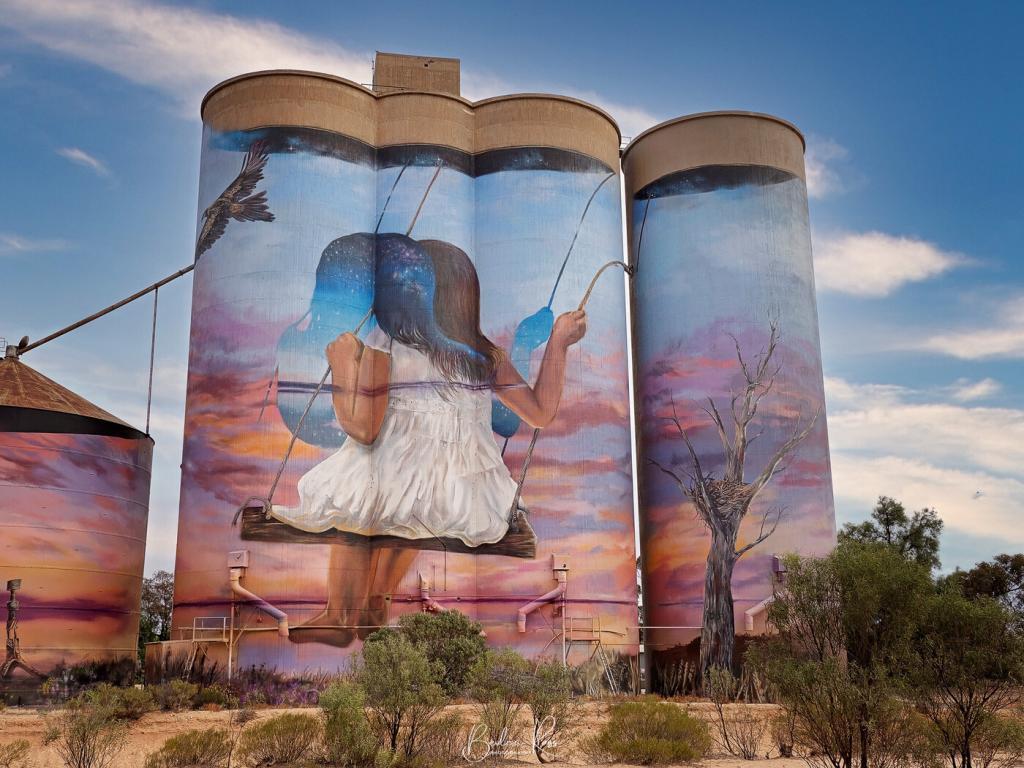
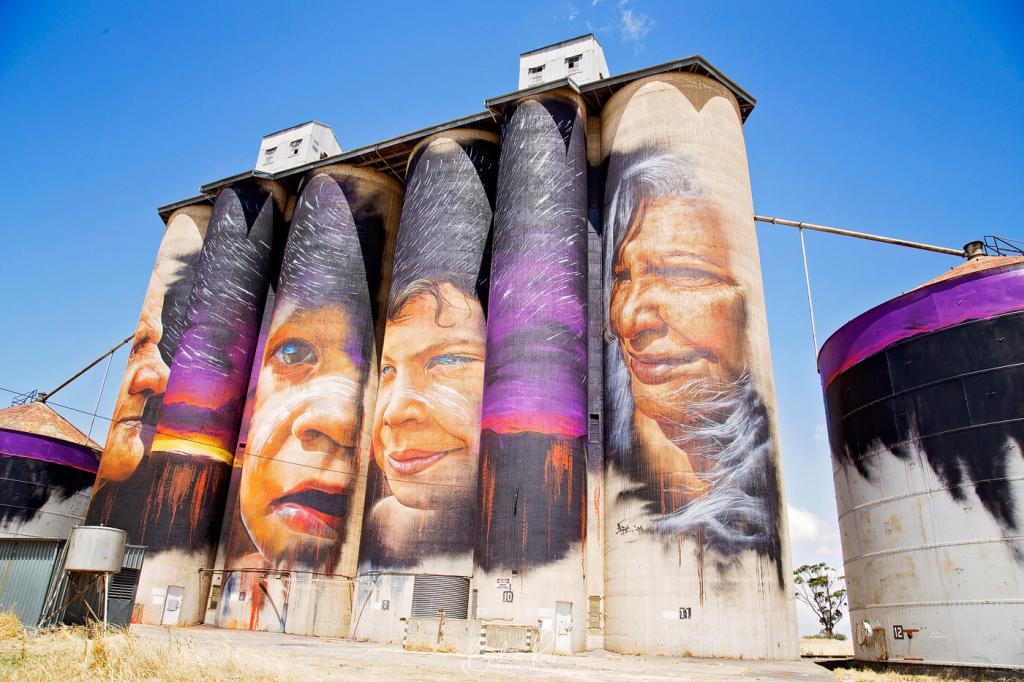
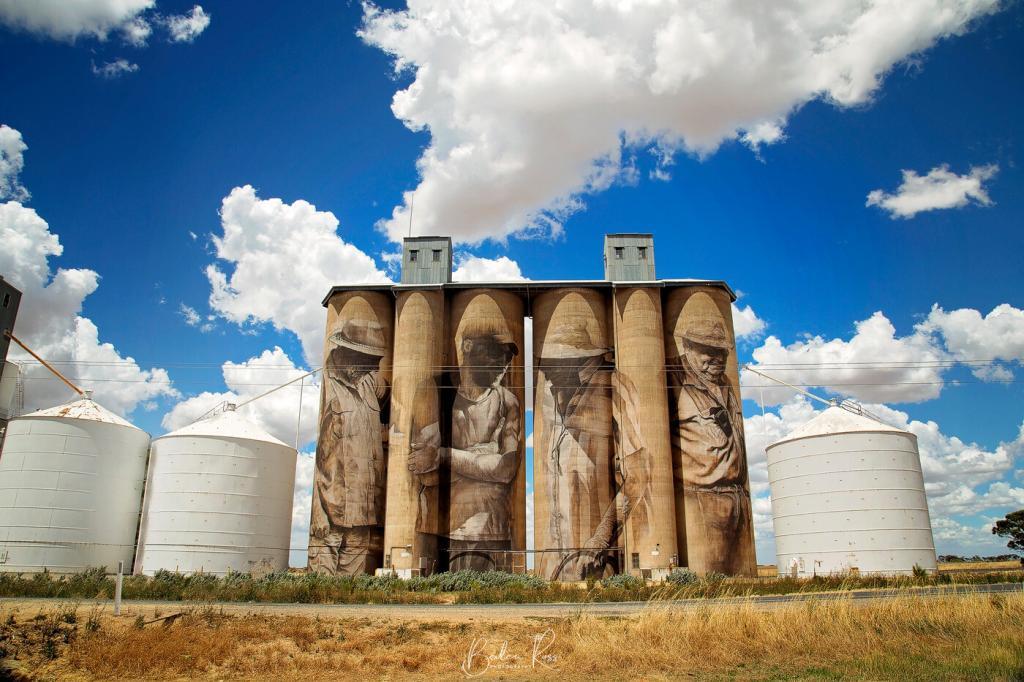
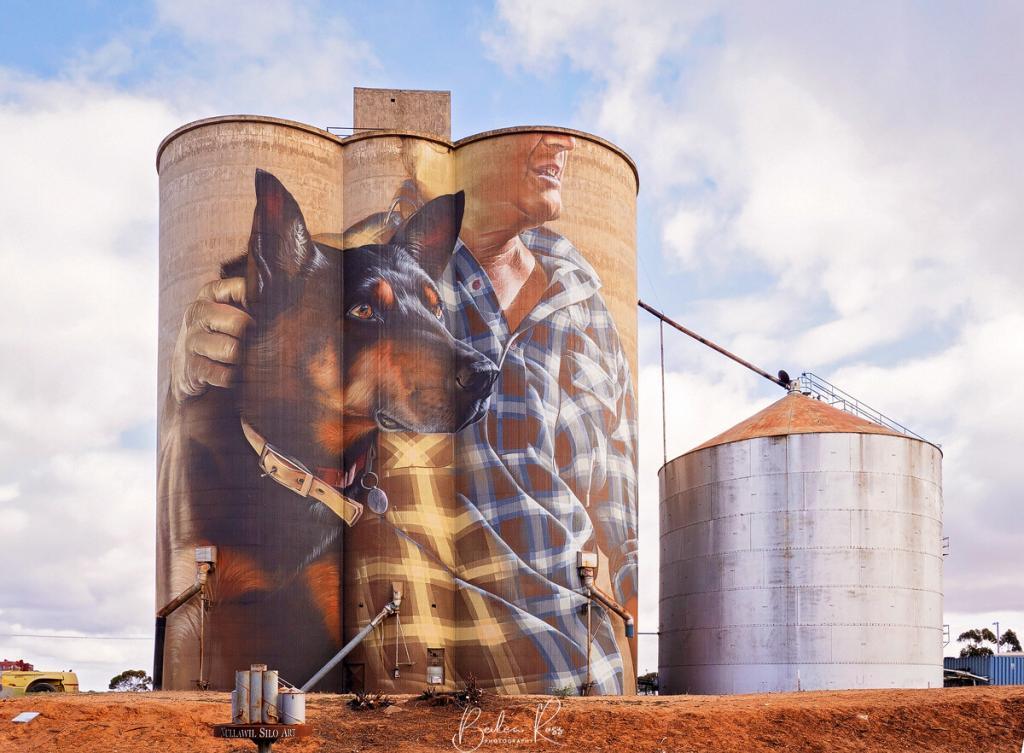
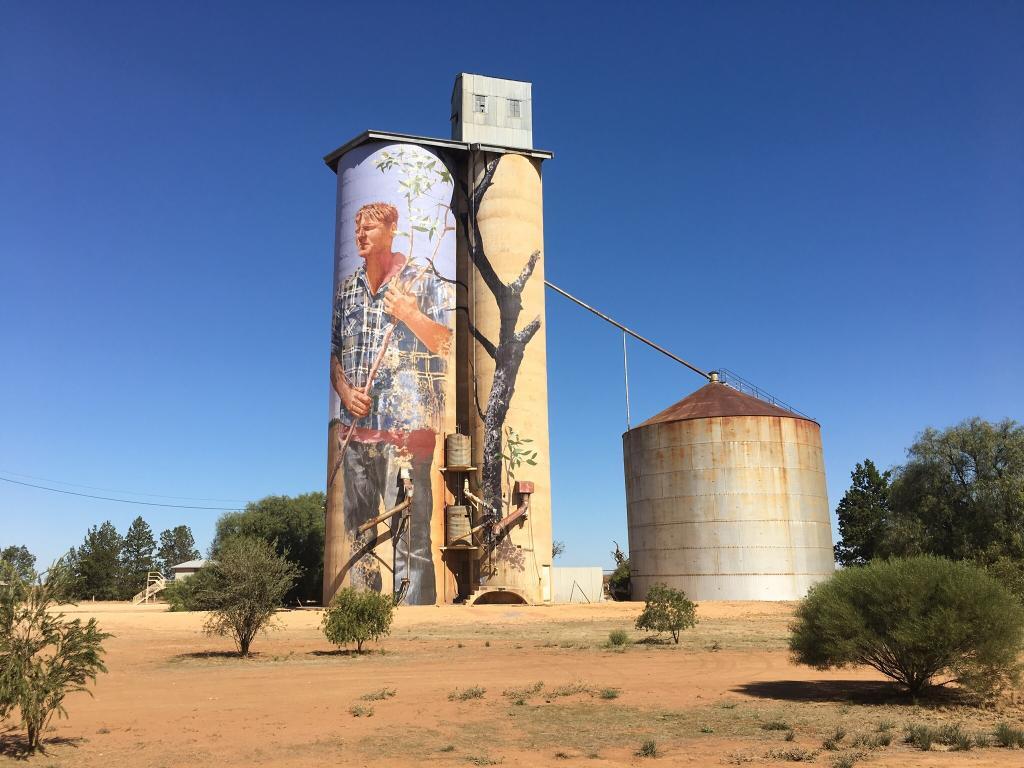
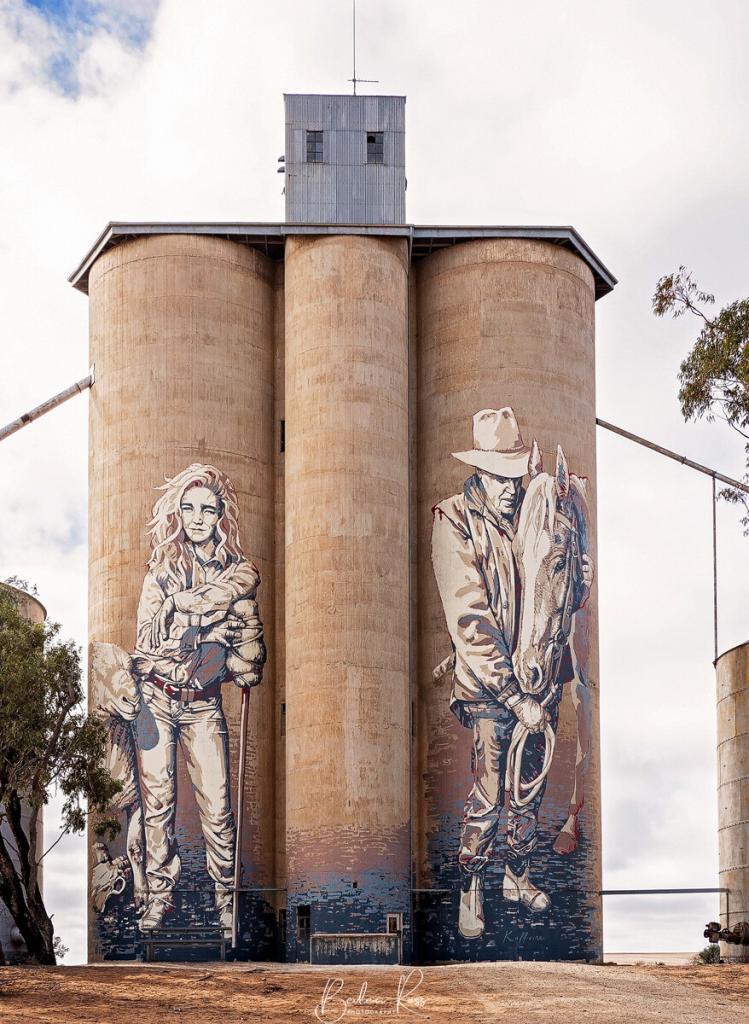
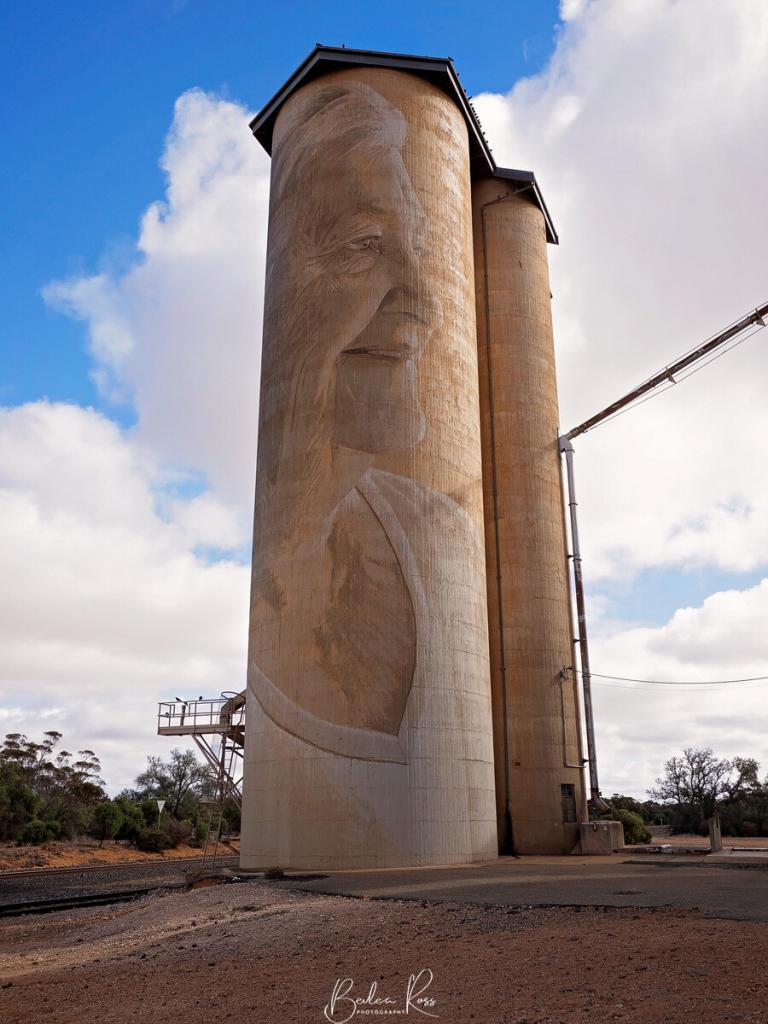
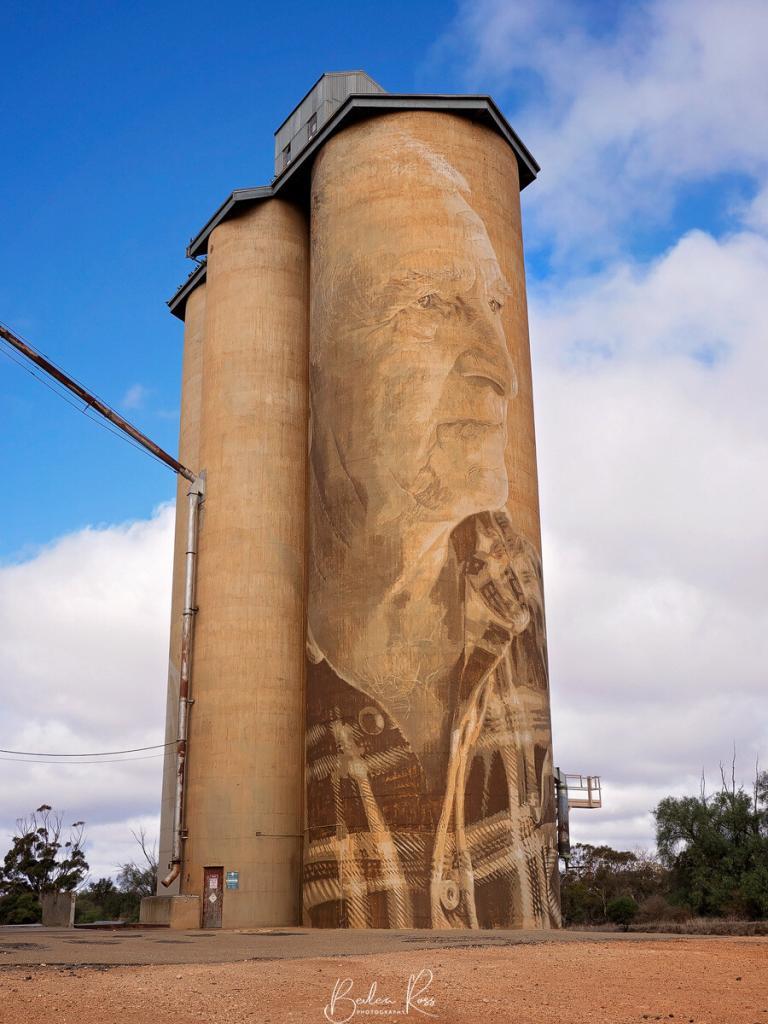
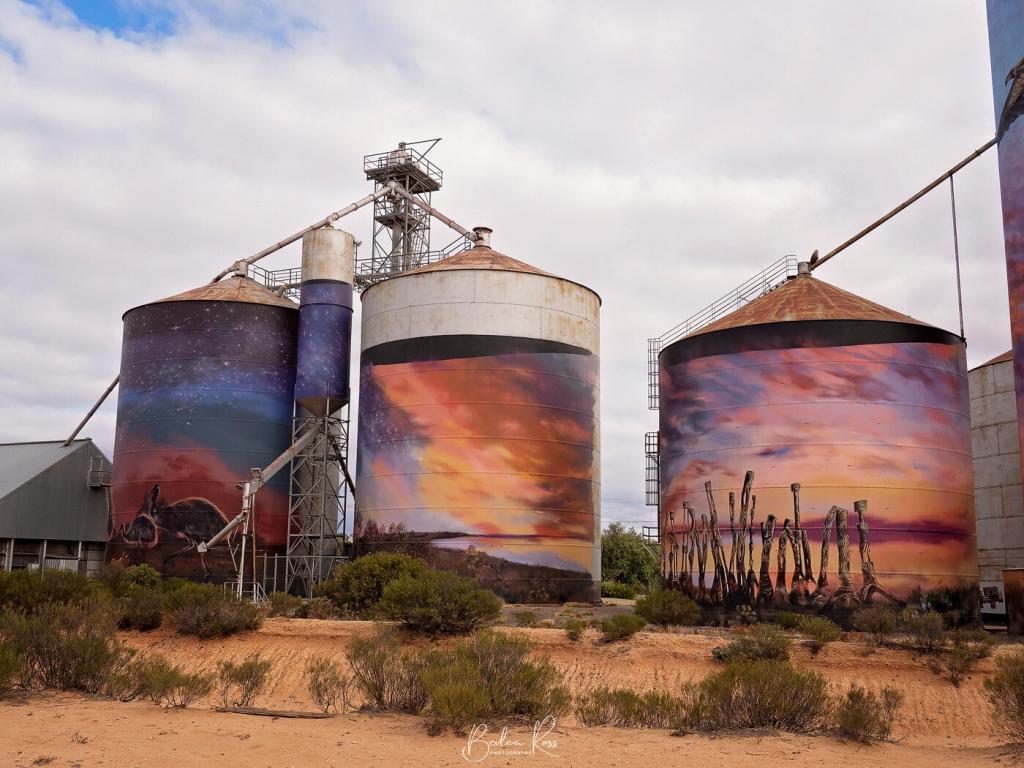
The painted silo artwork is by famous street artists such as Rone, Adnate, Dvate, Guido Van Helton, Kaff-eine and others, who use these towering silos as their canvases to create impressive artworks that celebrate the local communities, culture, and history.
The Silo Art Trail
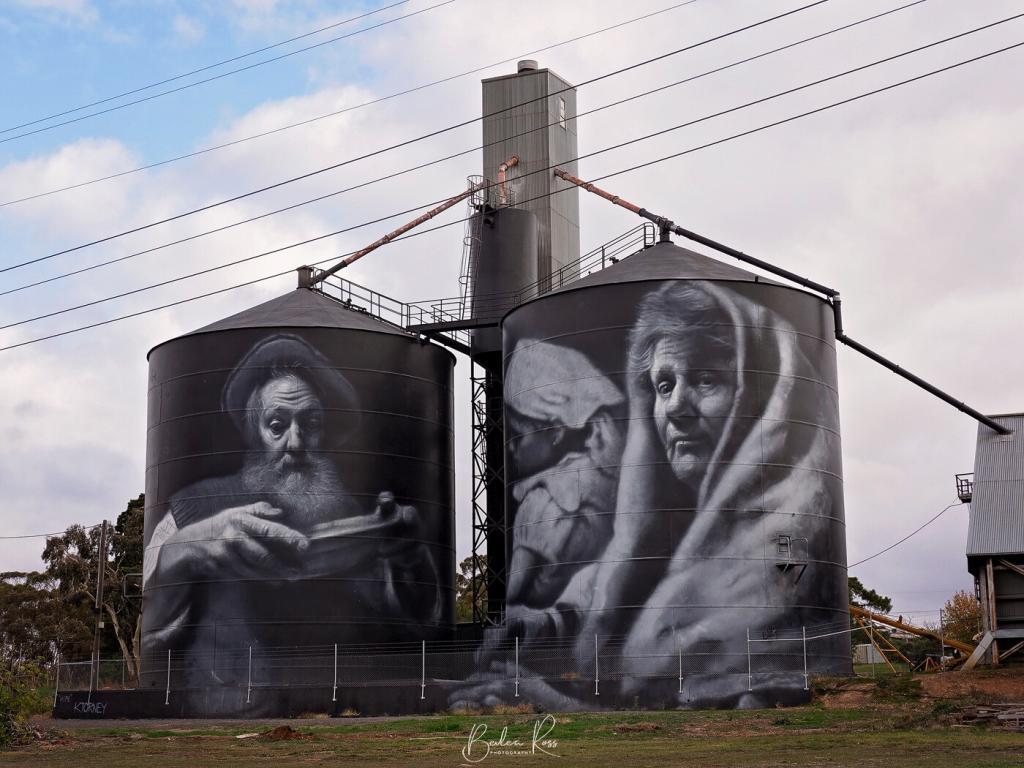
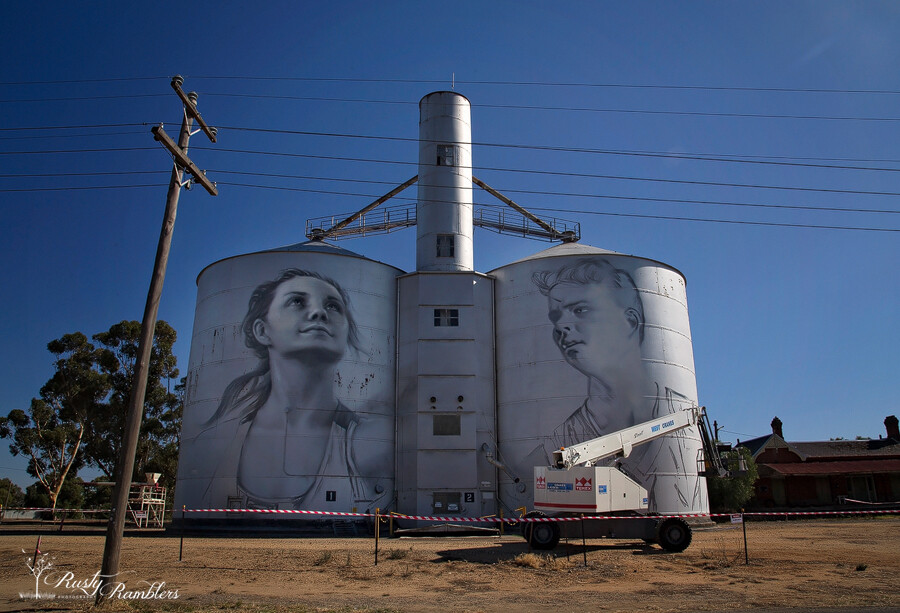
The original Silo Art Trail in Northwest Victoria started in 2016 and stretches 350km across regional Victoria, where the silos are strategically located in small towns along the trail. The artwork celebrates the people and culture of the region and adds an artistic touch to the picturesque countryside. Towns that feature painted silos (in driving order) are:- St Arnaud, Rapanyup, Murtoa, Horsham, Sheep Hills, Brim, Lascelles, Walepeup, Sea Lake and Nullawil, with more being added all the time.

North East Silo Trail
The North East Victoria Silo Art Trail began in 2018 and spans 132km. It starts just outside Benalla and takes approximately two hours to complete. Talented artists, including Guido Van Helten, Sobrane, Cam Scale, Adnate, Dvate, and Tim Bowtell, a local artist from Benalla, created the silos along this trail. The first town, Goorambat, has four works of art, including the interior wall of the Uniting Church.
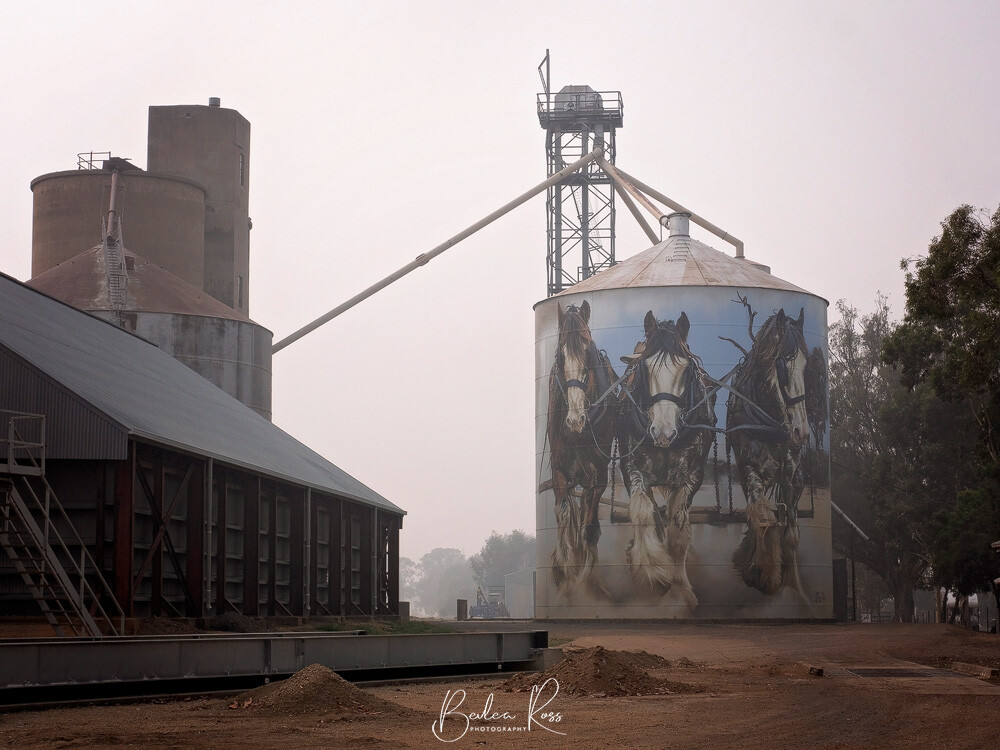
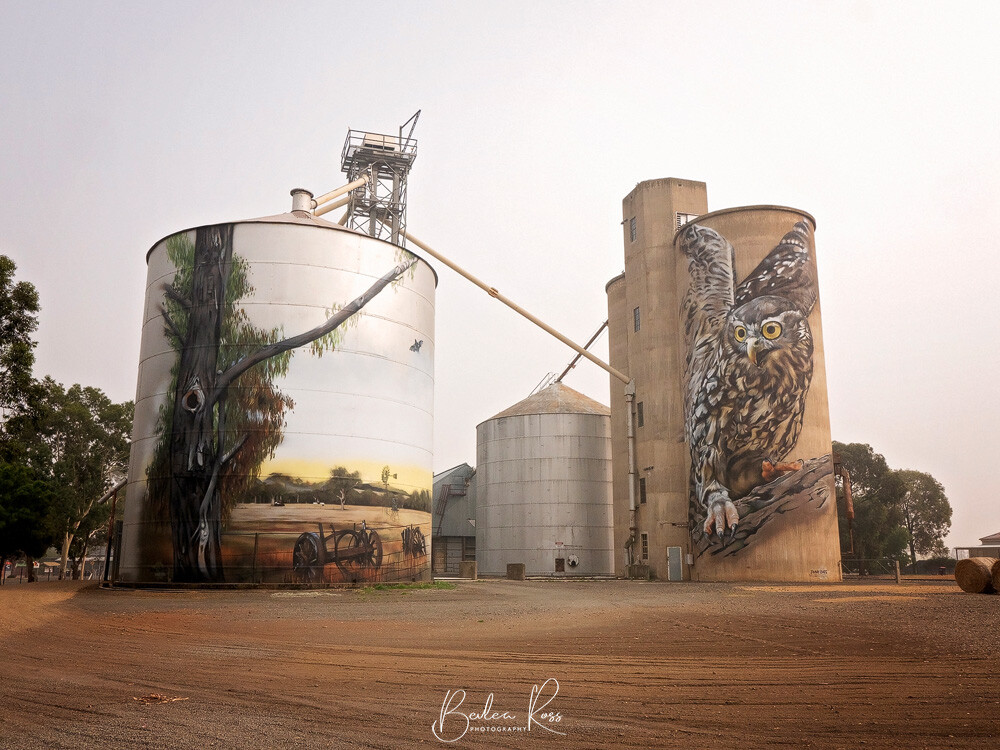
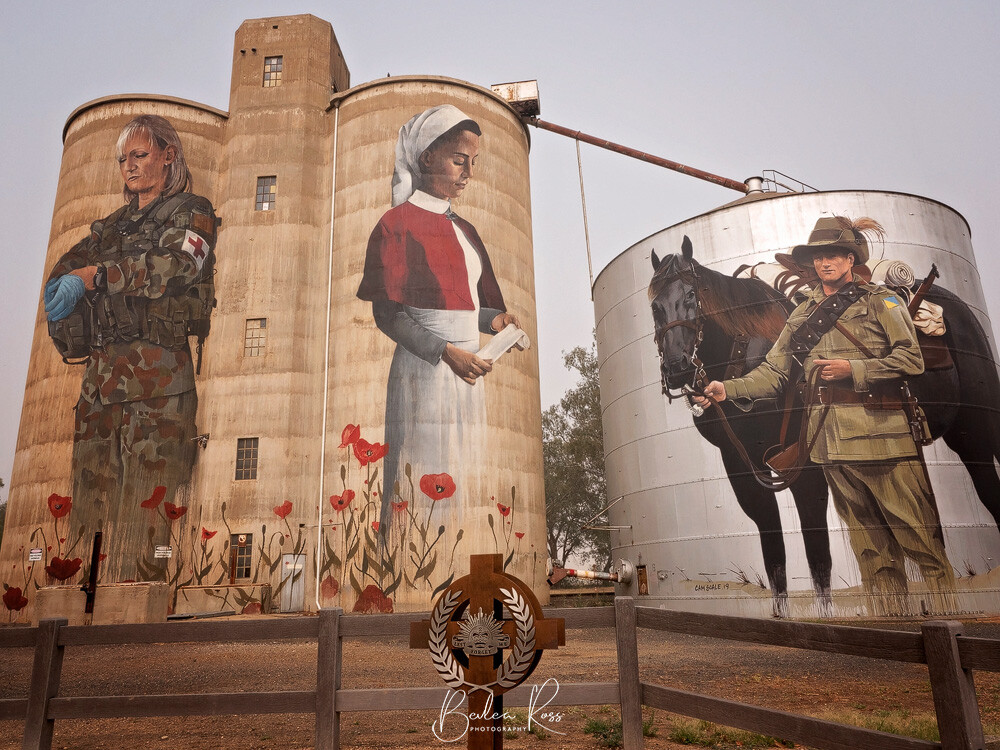
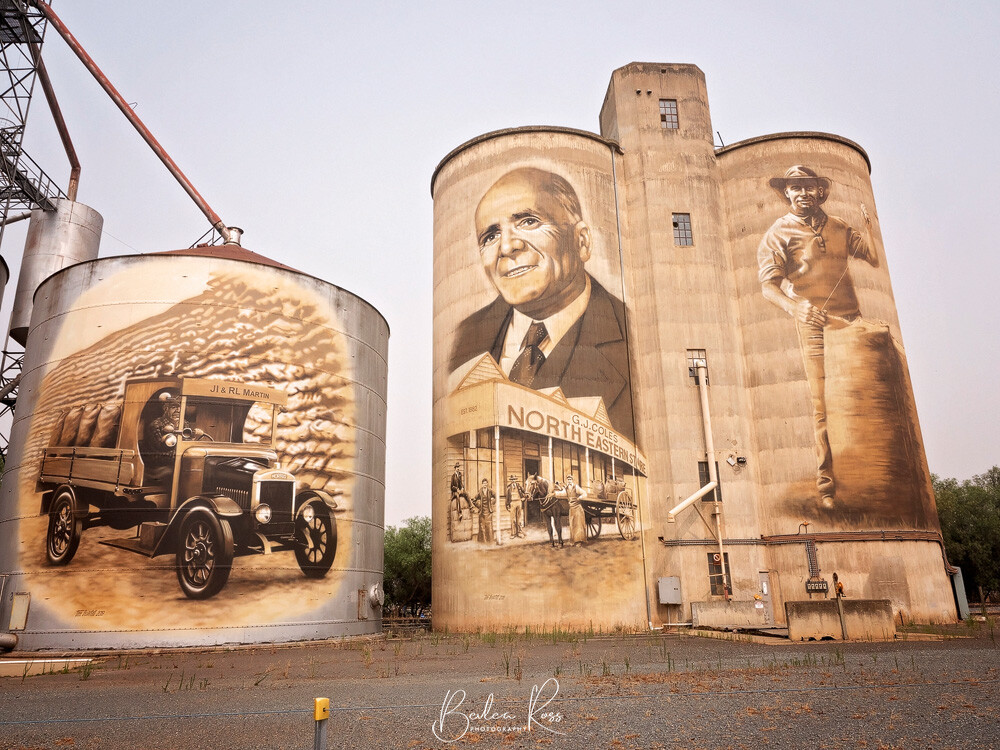
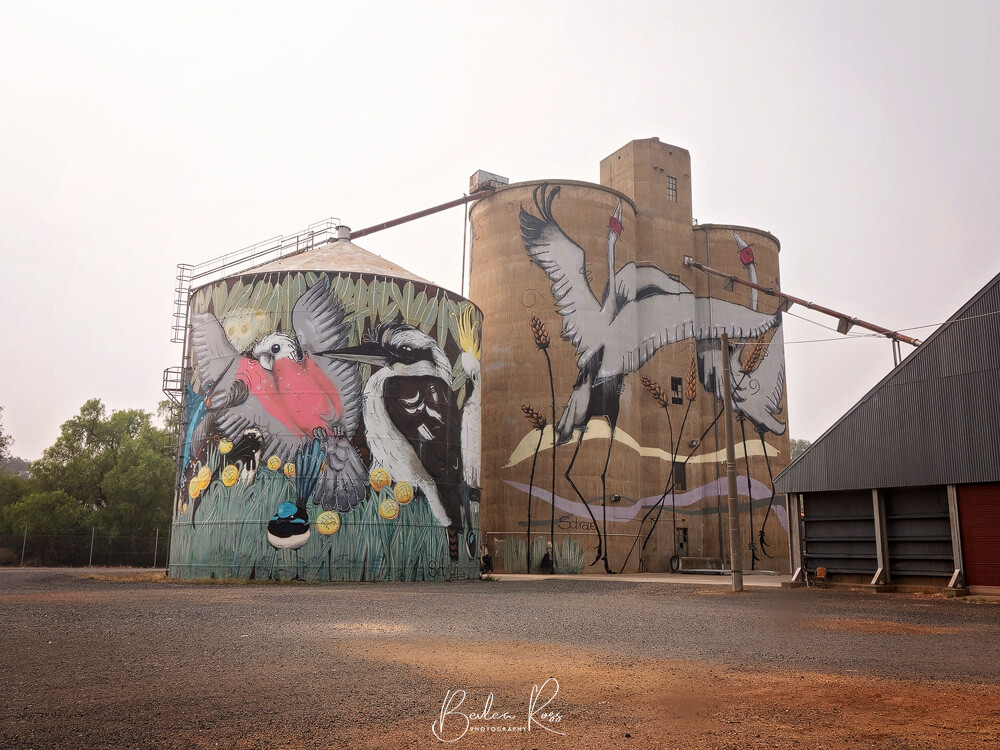
From there, it goes to Devenish, St James, Katatamite and Tungamah. The CFA Water tank at Winton Wetlands is a must-see on returning to Benalla. A North East Trail map is available for download.
Winton Wetlands
The Winton Wetlands Art in the Landscape project aims to improve the visitor experience and raise awareness about the ecological significance of the wetlands by incorporating art installations and sculptures throughout the area. Among these installations are the CFA water tanks. The tank depicts the faces of three CFA firefighters on its side. While in Winton, they are still part of the North East Silo Trail.
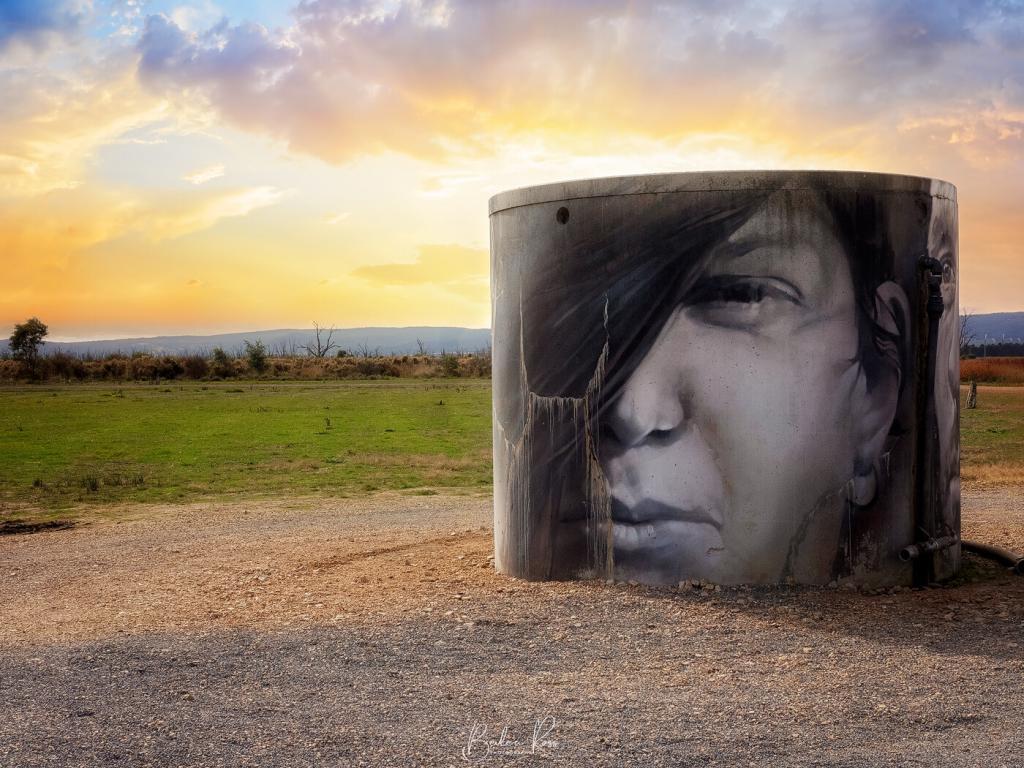
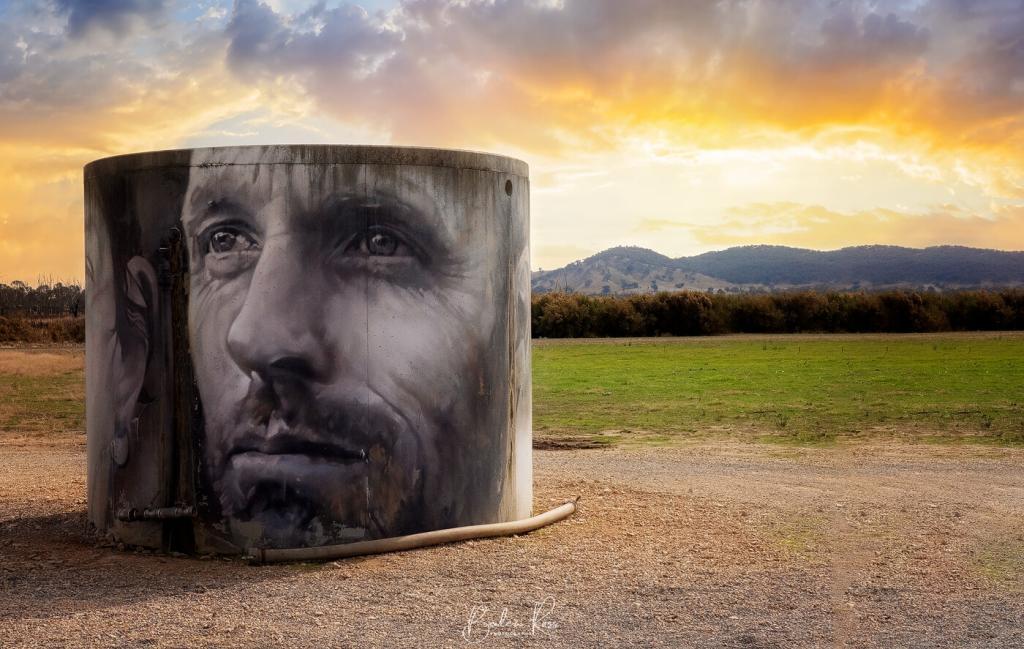
Guido Van Helton was commissioned in 2016, as part of the Wall to Wall Street Art Festival in Benalla, to paint the water tank in the heart of the Winton Wetlands.
Echuca-Moama Silo Trail
Echuca Moama and its surrounding regions house four silo and water tank art installations. The Echuca-Moama trail can be done in a full day, but can also be split it into two half-day drives. The total driving time, without any stops, is roughly between 3.5 to 4 hours.
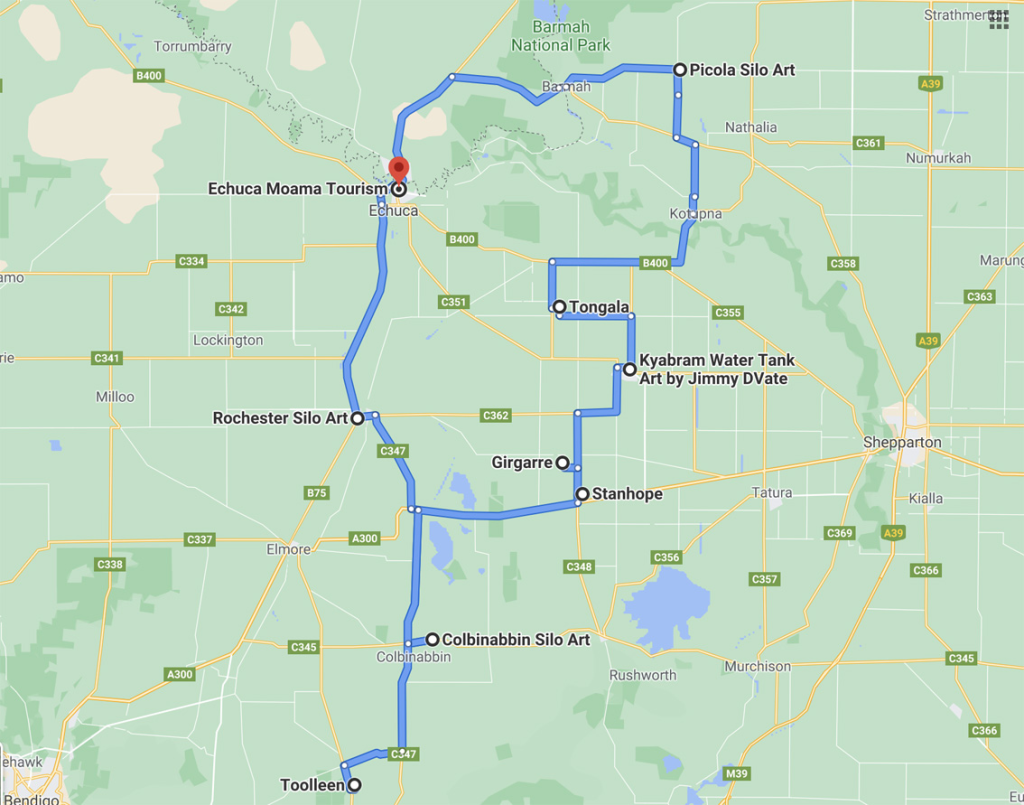
From Echuca, it’s a short 25-minute drive to Rochester where there are two silos painted by Jimmy Dvate. While n Rochester check out Iddles Lane featuring murals painted by Tim Bowtell celebrating Ron Iddles one of the state’s most respected detectives
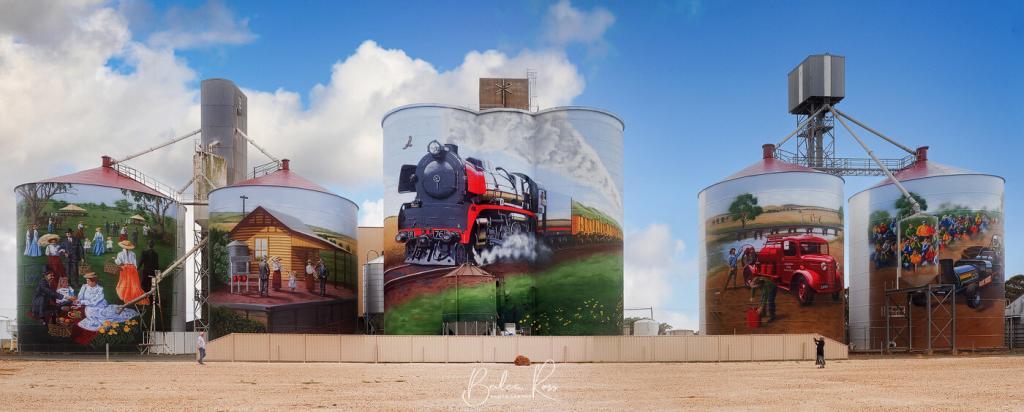
It takes approximately 25 minutes to drive from Rochester to Colbinabbin. In 2020, artist Tim Bowtell painted the silos in Colbinabbin, showcasing important moments from the town’s history. These moments include the town’s connection to agriculture, community, environment, and the construction of the railway.
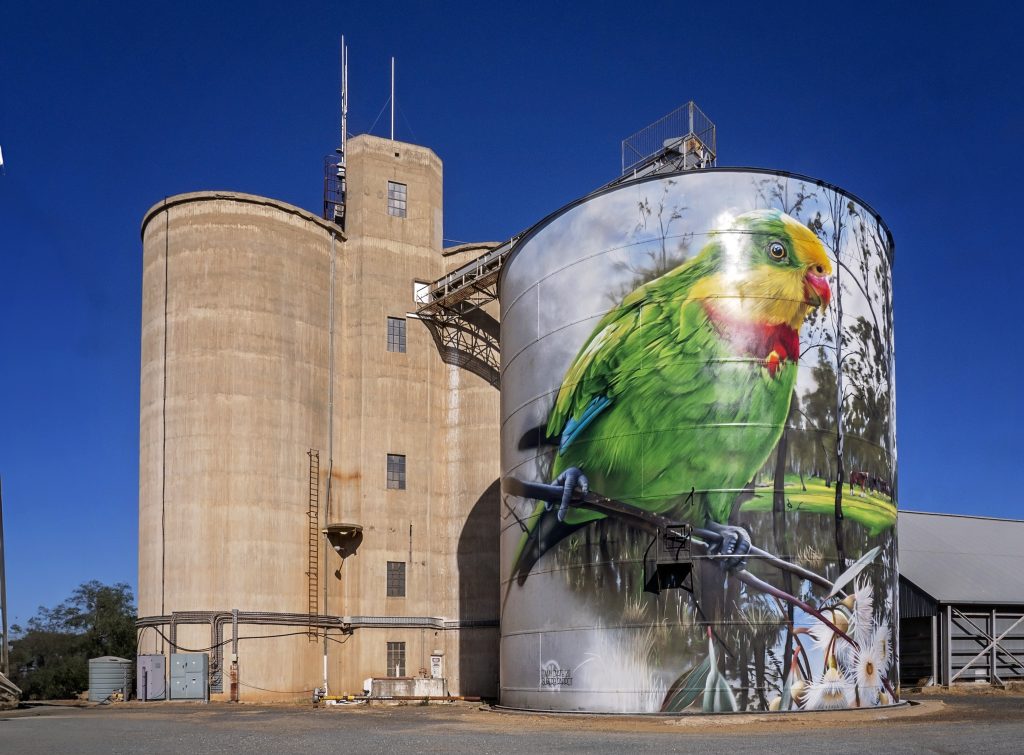
The final destination is Picola, which is located 35 minutes away, again painted by Jimmy Dvate. The artwork showcases the culturally significant Barmah National Park and the various wildlife that inhabits it. After visiting Picola, it will take another 30 minutes to return to Echuca.
Woomeland Field Bins
Explore Woomelang’s unique Mini Silo Art Trail, which offers a creative twist on the well-known Big Silo Art Trail. This trail features eight Mini Silos (Field Bins) scattered throughout the town, providing a fun and exciting way to discover the area. The Mini Silos celebrates the endangered species of the Mallee region.
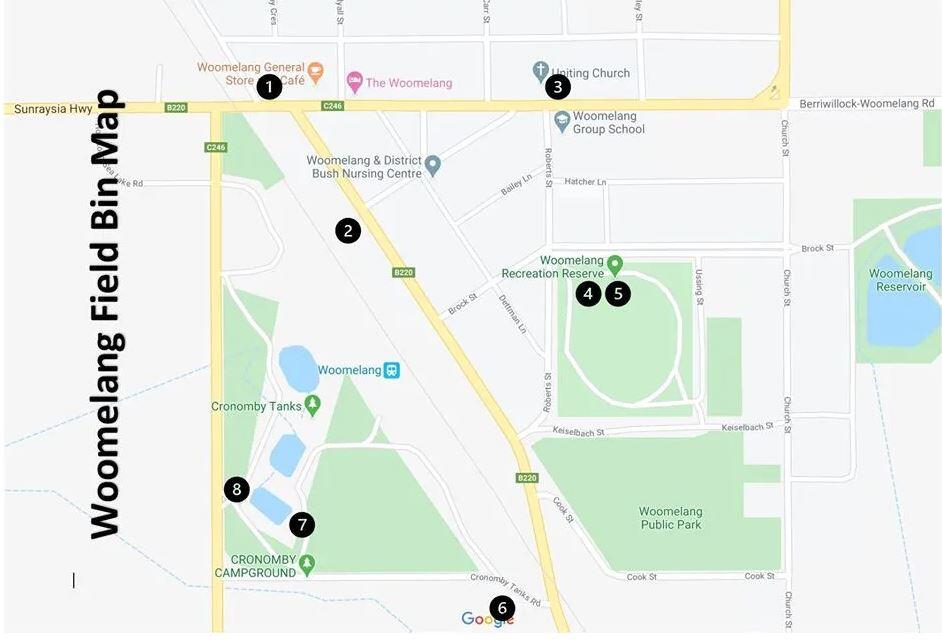
In June 2020, a group of seven artists, including Jimmy DVate, Andrew J Bourke, and Kaff-eine, converted mini silos into a popular tourist attraction for the town. The mini silos showcase endangered species that are native to the area.

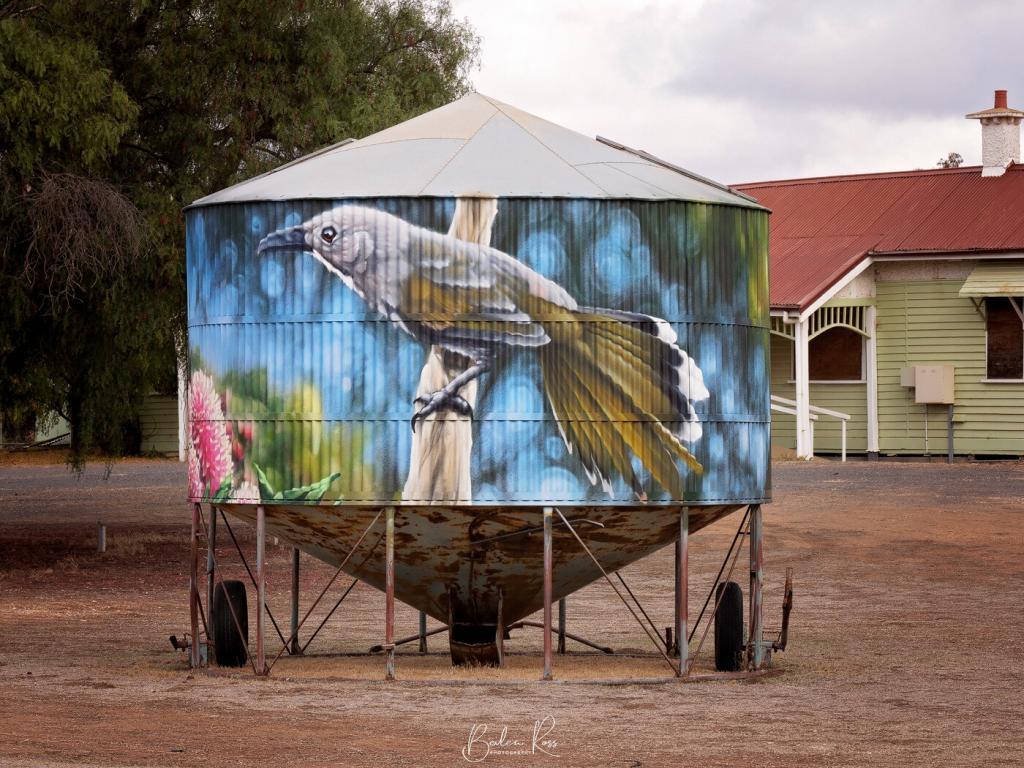


The Silo Art Trail showcases the transformative power of art in enriching communities. This painted silos project has revitalised rural Australia by using ordinary grain silos as canvases for extraordinary murals, providing an unparalleled cultural experience for both locals and visitors. As you travel along the trail, you will witness breathtaking artwork and become part of the collective effort to preserve the essence of regional Australia.
The Silo Art Trail symbolises resilience, creativity, and the indomitable spirit of the Australian outback. So, pack your bags, hit the road, and let the vibrant stories told by the silos take you on an unforgettable adventure!

Located in the heart of New South Wales, Australia, the quaint town of Gundagai is home to an enduring symbol of Australian folklore – the dog on the tuckerbox. This cultural landmark embodies the Australian spirit’s resilience, tenacity, and humour and has become an iconic monument. The story behind the dog on the tuckerbox has surpassed its origins and has become a beloved part of the country’s heritage.
The legend of the dog on the tuckerbox dates back to the mid-19th century during the construction of the Sydney to Melbourne railway line. Gundagai, situated along the route, became a significant hub for bullock teams and their drivers who transported goods between the two cities. Life on the road was challenging, with gruelling journeys that tested both man and beast’s endurance.

The Origin
The statue’s inspiration can be traced back to a poem called “Bullocky Bill,” published anonymously by “Bowyang Yorke” in 1857. The poem humorously narrates a series of misfortunes a bullock driver faces, ultimately ending with his dog either sitting on or defecating on the food in his tucker box.
BILL THE BULLOCKY (By “Bowyang York”).
As I was coming down Conroy’s Gap
I heard a maiden cry:
“There goes Bill the Bullocky,
He’s bound for Gundagai.
A better poor old ———
Never cracked an honest crust;
A tougher poor old ———
Never drug a whip through dust.
“His team got bogged at the five mile creek,
Bill lashed and swore and cried,
‘If Nobby don’t get me out of this
I’ll tattoo his ——— hide.’
But Nobby strained and broke his yoke,
And poked out the leader’s eye;
And the dog sat in the tucker box
Five miles from Gundagai.”
The Legend:
In the 1920s, Jack Moses wrote a less offensive poem than Bowyang Yorke’s. However, it referred to Bowyang Yorke’s poem “Nine Miles from Gundagai”. In Moses’ poem, a dog guarded the tuckerbox by sitting on it. The poem became famous and inspired the creation of a statue. Later, in 1937, Jack O’Hagan published a song titled “Where the Dog Sits on the Tuckerbox (5 miles from Gundagai)”, and Moses’ poem was included in his collection, “Nine Miles from Gundagai”, which was published in 1938.

Nine Miles From Gundagai
I’m used to punching bullock teams across the hills and plains
I’ve teamed outback these forty years in blazing droughts and rains
I’ve lived a heap of troubles down without a blooming lie
But I cant forget what happened to me nine miles from Gundagai
Twas getting dark the team got bogged the axel snapped in two
I lost my matches and my pipe ah what was I to do
The rain came on twas bitter cold and hungry too was I
And the dog sat in the tucker box nine miles from Gundagai
Some blokes I know have stacks of luck no matter how they fall
But there was I lord luvva duck no blessed luck at all
I couldn’t make a pot of tea nor get my trousers dry
And the dog sat in the tucker box nine miles from Gundagai
I can forgive the blinking team I can forgive the rain
I can forgive the dark and cold and go through it again
I can forgive my rotten luck but hang me till I die
I cant forgive that blooming dog nine miles from Gundagai
But that’s all dead and past and gone I’ve sold the team for meat
And where I got the bullocks bogged now there is an asphalt street
The dog ah well he took a bait and reckoned he would die
I buried him in that tucker box nine miles from Gundagai
The monument
A monument was erected in 1926, nine miles away from Gundagai. Two years later, Frank Rusconi, a stonemason, suggested a memorial based on the legend of the dog on the tuckerbox. In 1932, the Back to Gundagai Committee decided to take up the proposal. They chose the Five Mile camping site over the Nine Mile Peg as the location for the monument because it was more convenient to the Hume Highway and closer to the town, making it more beneficial for tourism.
Rusconi made a small clay model and sent it to Sydney, where a mould and a small bronze replica of the dog were cast at Oliver’s Foundry. After some minor modifications, the mould was enlarged and then cast in Olivers in Sydney. Rusconi thought the original plan for the dog was too much like a “thoroughbred”, and he changed the design to make it more like the “mongrel” dogs the drovers “really” used. Pattern maker Richard Fowler created the memorial’s base, also done at Oliver’s Foundry.
The dog on the Tuckerbox monument was unveiled in 1932 during ‘Back to Gundagai’ week. A large crowd gathered to witness the statue’s unveiling by Prime Minister Joseph Lyons on November 28, 1932. In addition to the monument, a souvenir shop was opened. Consequently, Gundagai Hospital, which holds the copyright of the memorial, received royalties from firms using its image for many years.
Later history
Since 1992, a festival to celebrate the “Dog on the Tuckerbox” monument has been held annually. The festival, which marks the 60th anniversary of the statue, includes a two-day Snake Gully Cup Racing Carnival and other festivities at the Dog on the Tuckerbox Centre.
Vandalised and Pilfered
On October 27, 1981, a group of students from the Canberra College of Advanced Education (now known as Canberra University) stole the statue as a prank under the cover of darkness. When the locals of Gundagai discovered their beloved dog statue was missing, the news quickly spread, and a nationwide search began. Later that morning, officers at Belconnen police station in Canberra received an anonymous tip-off. They immediately rushed to the campus, where they located and seized the dog statue. However, the perpetrators had already disappeared by then.

“We weren’t treating the situation lightly,” she recalls. “We thought what a stupid prank it was to steal a national icon, and we were focused on finding it and returning it to its rightful home.”
Melita Zielonko (Ret. Police Officer, Belconnen)

Unfortunately, in July 2019, the statue was vandalised when it was dislodged from its plinth, causing damage to the face and breaking off an ear. However, it was repaired and unveiled again on August 17, 2019. Sadly, a few months after its grand re-unveiling, someone deliberately chiselled away the name of Prime Minister Lyons from the base of the monument, presumably as a political act. According to Rusconi, the only way to fix this was to remove the marble slab and have it reworked.
Five mile creek
The Five Mile was initially established as an overnight stop on the overland route between Sydney and Melbourne. During the 1860s gold rush era, hopeful diggers prospected in the area. As time passed, a small farming community, which included a vineyard, grew up around Five Mile Creek in the 1880s.

Also, at the five-mile point, there was an inn run by Joseph and Rosanna Carberry. They opened the Limestone Inn in 1858, which had twelve rooms, a cellar, a detached kitchen, a storeroom, stables, and other stone-built outbuildings. The inn primarily catered to travellers passing between Melbourne and Sydney. In April 1861, Brushrange’ Jack in the Boots’ and an accomplice robbed patrons and staff of their money. After the Carberrys left, the inn was managed by a succession of licensees until it finally closed its doors in 1976.
Symbolism of Resilience:
The Dog on the Tuckerbox is an enduring image that symbolises the resilience of those who faced the harsh conditions of 19th-century Australia. The dog’s statue standing steadfast on the tuckerbox is a metaphor for the unwavering spirit of the pioneers and labourers who contributed to the nation’s development despite adversity.

Travel photography is all about capturing the essence of people. The landscapes, cultures, and experiences that one encounters while exploring different parts of the world. It is a visual diary, a record of one’s travels. It aims to transport viewers to unfamiliar destinations, evoking a sense of place. It’s also like a time capsule, preserving memories from a trip that can be cherished and enjoyed for years to come.

What is Travel Photography?
While travel photography is its own genre, it also encompasses food, landscape, portrait and street photography. In addition, every travel destination has its distinct characteristics, such as its culture, history, people, landscapes, and stories.
This entails capturing the beauty of the natural environment, exquisite architecture, local customs, and lively street scenes. It also includes people’s interactions within their cultural settings. Moreover, the photographer endeavours to capture the destination’s essence and create images that inspire viewers to explore and experience the world. Thus revealing its unique features through visual storytelling.

One Example
Picture yourself taking a road trip on the renowned Great Ocean Road in Australia. While driving along the rugged Victoria coastline, you come across the breathtaking Twelve Apostles. A striking formation of limestone stacks towering above the Southern Ocean. You position your camera on a cliff’s edge and capture the dreamy golden sunlight enveloping the apostles in a warm glow during the golden hour.

By carefully composing the scene, one can emphasize the striking contrast between the vivid blue ocean, the rugged rocks, and the dramatic sky overhead. You also effectively capture the crashing waves against the apostles, creating a dynamic and powerful image. One depicting nature’s raw beauty and immense power.
Your photograph captures a defining landmark of Australia’s coastline, showcasing the natural wonders of the Great Ocean Road. It invites viewers to immerse themselves in the breathtaking scenery, inspiring them to explore the country’s diverse landscapes. In addition, the image serves as a reminder of the vastness and awe-inspiring sights that Australia has to offer.

What Gear?
When taking photos while travelling, it’s crucial to balance having the right equipment while ensuring that your gear is lightweight and easy to carry. Here are some essential equipment suggestions for travel photography.
- Camera: When selecting a camera, it’s important to consider your specific needs and preferences. You have several options to choose from, including compact point-and-shoot cameras, mirrorless cameras, and DSLRs. Consider factors like image quality, size, weight, and versatility to make the best decision.
- Lenses: When packing for your trip, aim to bring a variety of lenses that can cover different focal lengths. A wide-angle lens, typically around 16-35mm, is ideal for capturing landscapes and architecture. On the other hand, a zoom lens like the 24-70mm or 70-200mm offers versatility for various types of shots.
- Tripod: For steady shots, long exposures, and self-portraits, a lightweight and sturdy tripod is essential. It’s important to find one that is compact and easily fits into your travel bag for convenience. (Carbon fibre tripods are the lightest).

Equipment is not just the camera.
- Extra Batteries and Memory Cards: Ensure you have spare batteries and sufficient memory cards. Nothing is worse than running out of power or storage space while on the go. It’s always better to have more than you think you’ll need.
- Camera Bag: Investing in a durable and comfortable camera bag is essential for protecting and organizing your gear. It’s important to choose one with padded compartments and convenient accessibility.
- Filters: When taking photos, it’s worth bringing along some useful filters like neutral density (ND) filters to manage the light and polarising filters to minimize glare and intensify colours.
- Cleaning Kit: It’s a good idea to have a compact cleaning kit. Look for one with a lens cloth, blower, and cleaning solution. This will keep your equipment in good condition and achieve dust-free pictures.
- Remote Shutter Release: When taking long exposures or self-portraits, a remote shutter release or cable release can come in handy to minimize camera shake.
- Portable External Hard Drive: It is important to regularly back up your images to avoid losing valuable data and to free up space on your memory card. You can use a portable external hard drive or cloud storage.
- Travel Adapter and Charger: When planning to travel abroad, it is advisable to bring a travel adapter and charger compatible with the destination country’s electrical outlets. This will ensure you can charge your devices and stay connected while travelling.

Tips to get you started
- Plan and Research: Before you travel, research your destination to understand its culture, landmarks, and points of interest. This will help you identify unique and photogenic locations.
- Pack Light and Smart: Travel photography often involves a lot of walking, so it’s essential to pack light. Carry only the necessary camera gear and accessories. Consider a versatile lens that covers a wide range of focal lengths.
- Capture the Local Culture: Focus on capturing the essence of the destination by photographing local people, their daily lives, traditions, and customs. Be respectful and seek permission when photographing individuals.
- Seek Unique Perspectives: Look for different angles and perspectives and experiment with low angles, high angles, and different compositions to add interest to your shots.
- Golden Hour and Blue Hour: Take advantage of the beautiful lighting during the golden hour (shortly after sunrise or before sunset) and the blue hour (before sunrise or after sunset). The soft, warm, and diffused light during these times can enhance your photos.
- Tell a Story: Look for scenes that tell a story or evoke emotions. Include elements that provide context and create a sense of place.
- Pay Attention to Details: Details can often make for compelling photographs. Capture close-up shots of interesting textures, patterns, architecture, or local cuisine to add depth and variety to your travel album.
- Be Mindful of Composition: Use the rule of thirds, leading lines, and framing techniques to create visually pleasing compositions. Consider the foreground, middle ground, and background to add depth and balance to your images.
- Experiment with Long Exposures: If you have a tripod, try long exposure photography to capture motion blur of waterfalls, flowing rivers, or bustling city streets.
- Practice Patience and Observation: Take the time to observe your surroundings, anticipate moments, and wait for the perfect shot. Patience can often lead to capturing unique and memorable images.
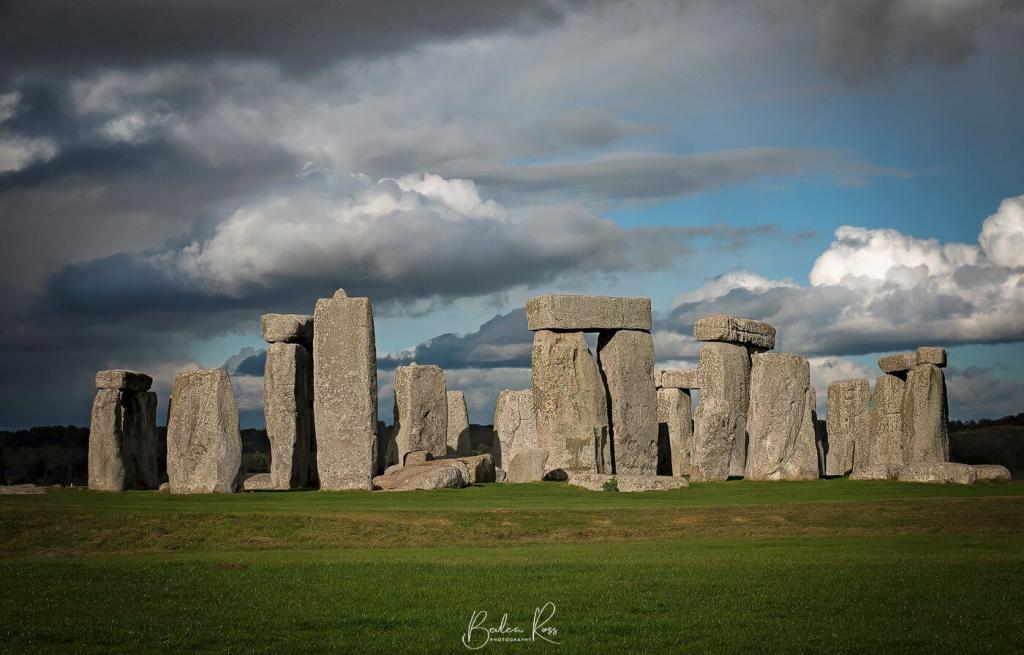
Locations not gear
Explore the world! Visiting breathtaking destinations will yield better photographic opportunities than investing in pricey equipment. Don’t underestimate the capabilities of your phone camera either – it can capture stunning shots.

Travel photography can transport viewers to different corners of the globe, fueling a desire to see these awe-inspiring landscapes in person. This is the essence of travel photography: to inspire adventure, ignite wanderlust and encourage appreciation for the beauty of the world’s natural and cultural wonders.

Dows Pharmacy at Chiltern was established in 1859. The pharmacy holds significant historical value as it is one of the few shops that have been preserved in its original state, providing a unique insight into the past. Although it closed in 1968, the pharmacy’s contents remained untouched, making it a unique time capsule of the past.
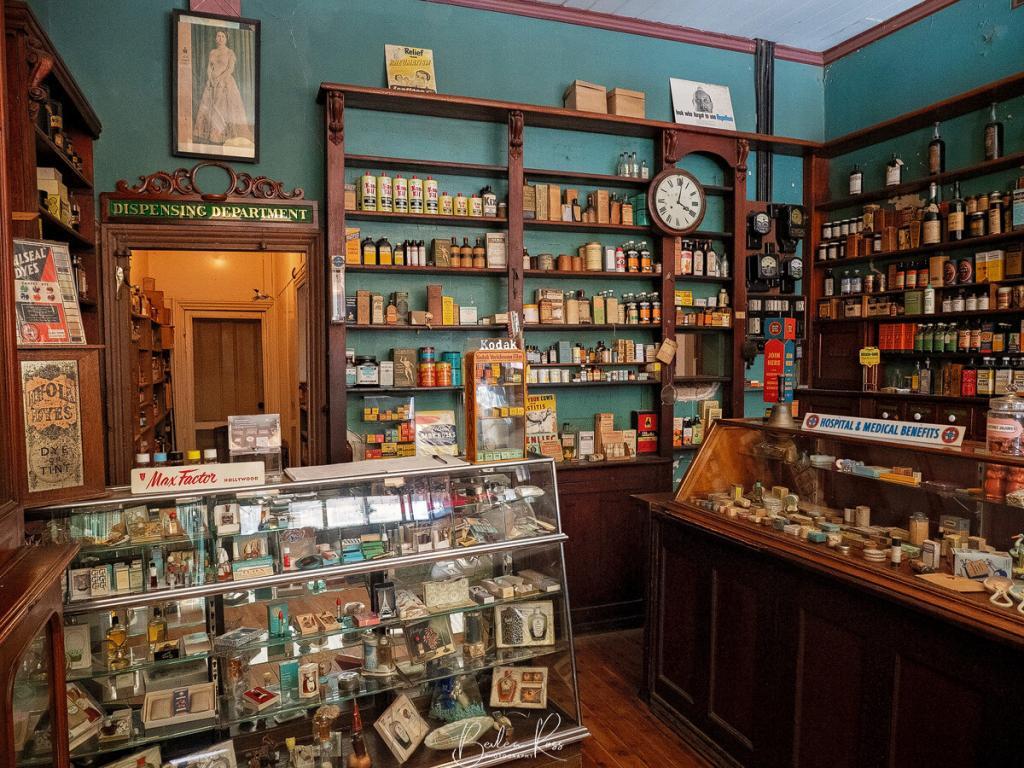
The Pharmacy was first run by William Witt, who opened the doors in 1859. David McEwen owned the pharmacy from 1864 to 1891. He was the father of the Australian prime minister, John McEwen, who took over the Prime Ministership in a caretaker role upon the disappearance of Harold Holt. In 1929, Hilda Dow purchased the pharmacy. The Dows ran it for the next 38 years until Hilda retired in 1968. During their tenure, the pharmacy became a thriving community hub, providing essential services to the people of Chiltern.
Hilda Dow
Hilda Dow (nee Grey) was the daughter of police magistrate Charles Grey and sister of Royal Melbourne Hospital Lady Superintendent Helene Grey, OBE. She became a student of the Victorian College of Pharmacy in 1919. In 1929, she worked at Poynton’s pharmacy in Morwell, when she purchased the pharmacy at Chiltern in Victoria. She was elected to the Pharmaceutical Society of Victoria as a member in 1930.
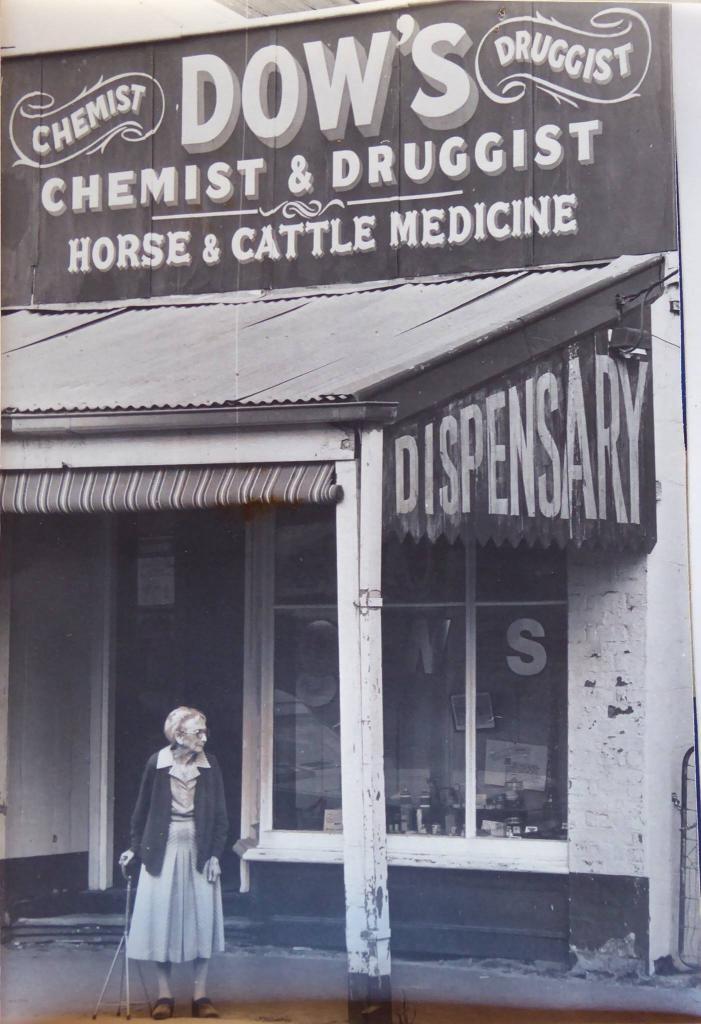
Hilda purchased the pharmacy in 1929 on the eve of the great depression. Until they married in 1931, Hilda resided at the hotel across the street while Roy lived in the residence at the back of the pharmacy. After their marriage, Hilda joined him in the residence. Hilda apprenticed Roy in 1933, and the couple ran the pharmacy in Chiltern until 1968 when they closed the doors.

After retiring in 1968, Hilda Dow attempted to sell her pharmacy, but unfortunately, no buyers were interested in purchasing it. As a result, it remained closed and abandoned for many years. Finally, in 1988, Mrs. Dow generously donated the pharmacy to the National Trust. Dows pharmacy is now a museum for visitors to explore. Hilda Dow was also a highly involved member of various organisations, including the North East branch of the National Trust, the hospital committee, the Infant Welfare Centre board, the Red Cross, and the Chiltern Branch of the County Women’s Association, where she held a leadership position.

National Trust
The National Trust now runs the pharmacy as a museum. A collection of more than 4,000 original items offers an fascinating insight into the history of medicine and pharmacy. Visitors can explore a variety of artifacts, such as bottles, jars, scales, measuring cups, dispensing equipment, and displays of medicines, photographic supplies, and shop fittings.
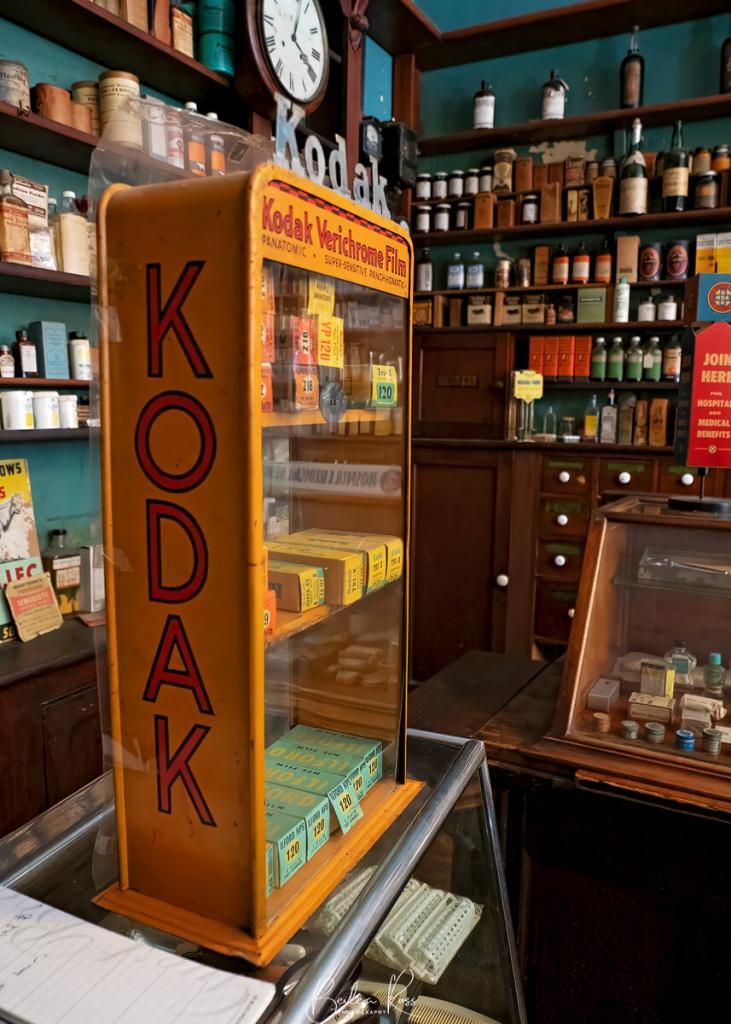
One of the most striking features of Dows Pharmacy is its time capsule-like atmosphere. The contents of the pharmacy were left untouched when it closed in 1968, and as a result, it feels like stepping back in time. The shelves are still stocked with medicines, the jars are still filled with herbs, and the scales are still set to weigh prescriptions.
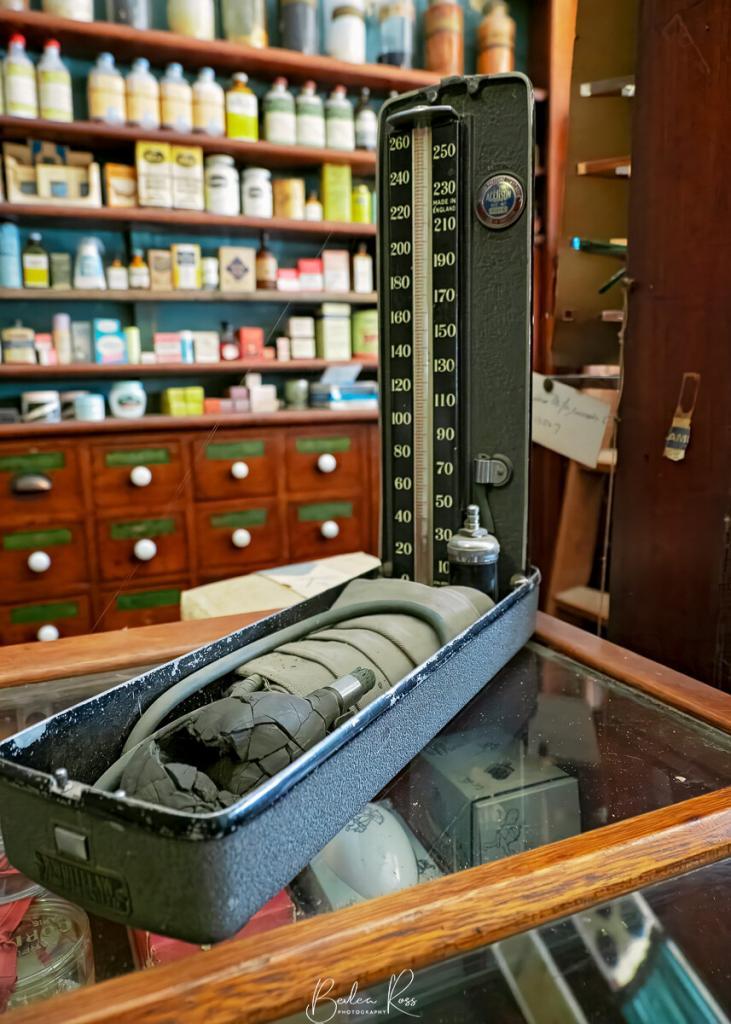
Hilda and Roy were both active members in the Chiltern community. Roy received an MBE in 1970 for his valuable services to pharmacy in Victoria. Unfortunately, Roy passed away in 1976, and Hilda followed fourteen years later, passing away in a care home at the age of 92.
Fast facts
- The pharmacy was built in the Victorian Italianate style.
- The original fittings and fixtures, including the mahogany counters, brass scales, and glass display cabinets, are still in place.
- The pharmacy’s collection of medicines includes over 1,000 different items dating from the 19th and early 20th centuries.
- The pharmacy also has a collection of photographic supplies, including cameras, lenses, and film.
- Dows Pharmacy was donated to the National Trust of Australia in 1988.

Visiting the Pharmacy
Dows Pharmacy is a valuable historical resource and a fascinating place to visit. It is also a reminder of the important role that pharmacies have played in our communities, and it is a window into the past. If you are ever in Chiltern, be sure to stop by and take a look.
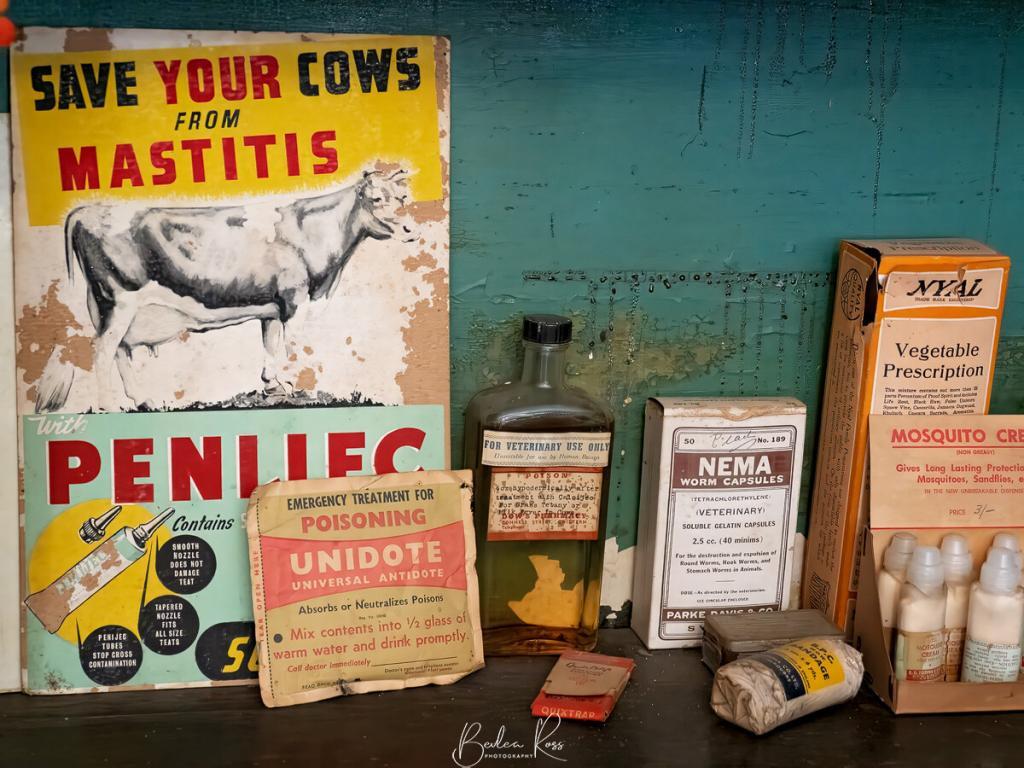
Dow’s pharmacy is open to the public on Tuesdays, Wednesdays, and Saturdays from 11 am to 2 pm. The pharmacy is also available for group tours by appointment.
National Trust Members: FREE
Adult: $5
Concession: $4
Child: $3
Family: $12
42 Conness Street, Chiltern

Nestled in the foothills of the Great Dividing Range, Chiltern is a quaint town located in the northeastern region of Victoria, Australia. With a population of around 1,000 residents, this charming town was established in 1857 during the Victorian gold rush. Despite the end of this era in the late 1860s, Chiltern remained a prosperous community with a thriving economy based on agriculture, timber, and small enterprises.

Chiltern was first known as Black Dog Creek, supposedly named after a black dingo that was hunted in the vicinity during the 1830s. It was officially gazetted as a town in 1851, surveyed in 1853, and later named Chiltern after the Chiltern Hills in England.
Famous Sons
- John McEwen (1900-1980), 18th Prime Minister of Australia
- Barrie Cassidy (born 1957), former political journalist
- Nigel Lappin (born 1977), a former Australian rules footballer
- Matthew Lappin (born 1979), a former Australian rules footballer
National Trust properties
Lake View House
The charming red brick house, constructed in 1870, has been recently restored and decorated in the fashion of its era. Significantly, it replicates the ambience of a lakeside country villa in a thriving mining town. Lake View House was also the home of Ethel Florence Richardson (a renowned Australian author who wrote under the pen name Henry Handel Richardson) in 1876. The house has a special significance in Australian literary history due to its association with The Getting of Wisdom.

Richardson cherished the memories of her early years spent in Chiltern, which she referred to as ‘Barambogie’ in her novel, The Fortunes of Richard Mahony. Today, Lake View House proudly displays a collection of Richardson’s personal items as a tribute to her legacy.
- 18-22 Victoria St, Chiltern
- Open 11 am – 2 pm Saturdays and every 3rd Sunday 1 pm – 4 pm.
Dow’s Pharmacy
A pharmacy for over a century, this fascinating commercial premises was built in 1859. One of the early pharmacists was David McEwen, the father of the Australian prime minister, John McEwen. John McEwan became caretaker Prime Minister of Australia following the drowning of Harold Holt. Hilda retired in 1968, closing the doors behind her. Significantly, everything inside remained intact.

Some stock and equipment even predated Hilda’s tenure and are from the nineteenth and early twentieth centuries. Stepping through the doors of the pharmacy is like stepping back in time. With everything still there, it’s like Hilda has just stepped out for a moment.

- Adult: $5, Concession: $4, Child: $3, Family: $12
- National Trust Members: FREE
- 42 Conness Street, Chiltern
- Open Tuesdays from 11 am to 2 pm, Wednesdays from 9 am to 3 pm & Saturdays from 10 am to 2 pm.
The Federal Standard
The Federal Standard Printing Works is one of the few substantially intact provincial newspaper printers from the gold mining era. Built in 1860, it was founded by Felix Ashworth, George Boyer, and George H. Mott in 1869. Their first publication was The Federal Standard, which ran for 110 years. The printing works also produced newspapers like The Murray Gazette, The Border Post, and The Ovens Constitution.

The printing works are still equipped with printing machinery from the 1870s to the 1930s. The machinery is still in working order and is maintained by volunteers.

- 24 Main St, Chiltern VIC 3683
- by appointment
- (03) 9656 9800
Other notable properties
Star Hotel and Theatre and Historic Grapevine: The Star Theatre is a hall connected to the Star Hotel, located at Main Street and Conness Street. Its construction dates back to 1866. Interestingly, the Star Hotel’s grounds boast the world’s largest Grapevine, which the Guinness World of Records has officially recognised.
From 1902 until 1964, the Star Theatre served as the town’s cinema. A projection box was erected outside near the stage, and the stage was transformed into raised seating. Though the projection booth has been demolished, the projection port holes can still be seen on the rear wall of the building. The theatre later closed and was repurposed as an antique store.
The Star Theatre, which was listed by the National Trust in November 1972, has been restored for films and live shows since 1996. It re-opened on May 18th of that year with a screening of “In the Good Old Summertime” starring Judy Garland. The theatre is fully equipped for 16mm presentations and can be hired for special screenings.

There is a grapevine planted in 1867 located in the courtyard. It has a trunk measuring 1.84 metres and a 12-metre-long branch, making it reputedly the biggest grapevine worldwide.
- Cnr Main St and Conness St
- 03 5726 1395

Chiltern Athenaeum: The brick building was built in 1866 to replace a previous timber structure. It previously served as the Council Chamber, Town Hall, and Library/Reading Room. Despite the Library relocating in 1970, a fascinating collection of Goldfield’s literature remained in the building. Today, the Chiltern Athenaeum Museum continues to operate, staffed by volunteers.
Kelly gang
Chiltern is significant in the Kelly saga, as Senior Constable James Lynch from Chiltern signed a warrant for the arrest of Dan Kelly and his cousin Jack Lloyd on suspicion of horse theft on April 5th, 1878. Unfortunately, this warrant sparked a series of events that ultimately led to the police murders at Stringbark Creek, the Kelly Gang manhunt, the siege at Glenrowan, and eventually, Ned Kelly’s execution by hanging.


The Goulburn Valley Canola season has begun, signalling the arrival of spring. The fields are bursting with vibrant yellow blooms, creating a stunning display. You can’t miss the beautiful yellow flowers that adorn the countryside when you travel from Melbourne to Ballarat or up to the ski fields. The fields in this region provide breathtaking views, particularly during the flowering season when the landscape is blanketed with these vibrant yellow flowers.

Goulburn Valley Canola Fields
Canola is a popular crop in several regions of Australia. However, canola is particularly prevalent in Victoria in the Goulburn Valley region. This region is well-known for its fertile soil and favourable weather conditions, making it ideal for growing canola and other crops. It’s home to numerous large and small-scale farmers specialising in growing canola. Other popular areas for canola cultivation also include the Murray Valley and the Riverina, which boast plentiful water resources and thriving farming communities, making them ideal locations for canola production.
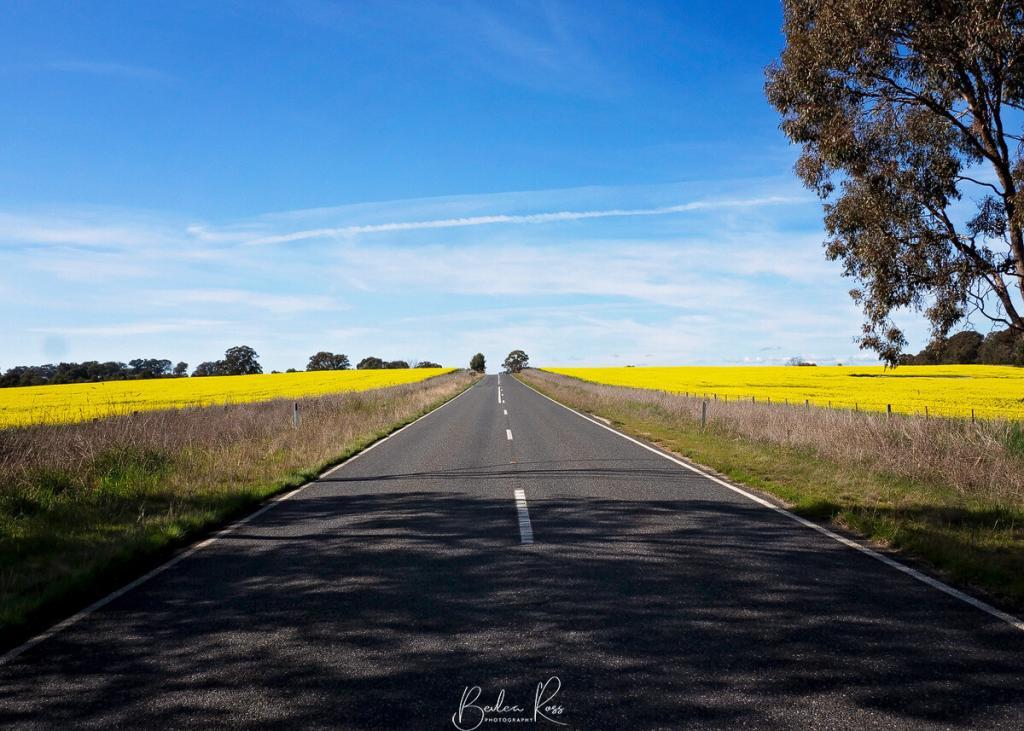
Driving the Goulburn Valley
With a friend visiting me for a few days, we decided to take a mini road trip through the Goulburn Valley to get as many canola fields as possible. Starting in Nagambie (check out the fields in O’Dwyers, Vickers and Nook Roads), we drove to Dookie and had a late breakfast at the Dookie Emporium. It’s a cafe/antique shop, and while the coffee was great, I don’t recommend the food. Or the service. Do yourself a favour and pack a picnic basket!
We photographed the Dookie poppy tree (opposite the Dookie Emporium) and a couple of fields near Tallis Winery before heading to Katamatite to check out the new silo, then Pfeiffer Wines and ended our day in Corowa. After breakfast in Corowa the next morning, we headed to Chiltern, then the Shiraz Republic, before returning home.
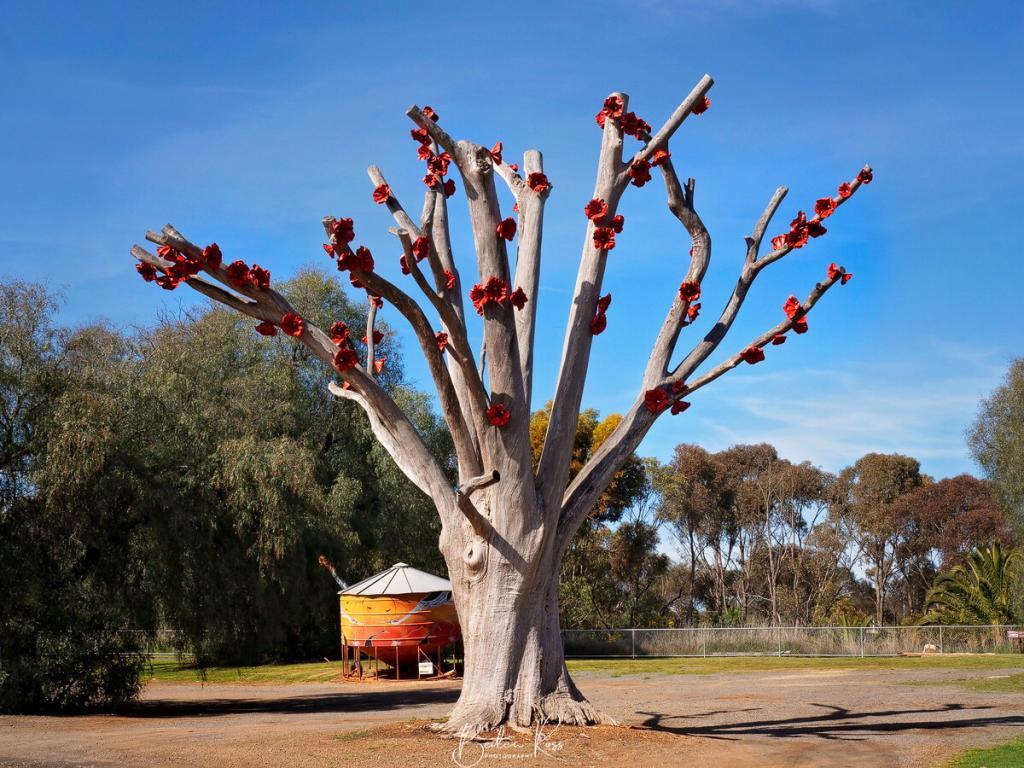
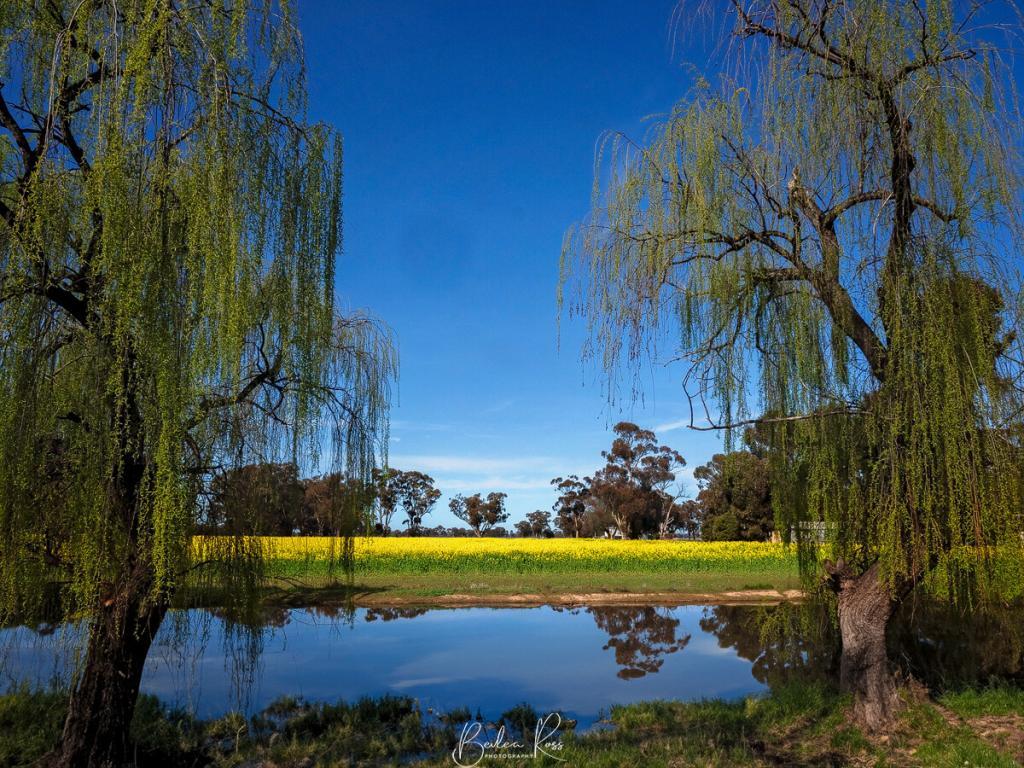
Goulburn Valley Locations
- Shepparton: A significant agricultural hub surrounded by rich and fertile farmland. This region is particularly popular for canola photography during the flowering season when the fields are ablaze with yellow blooms.
- Nagambie: The charming town of Nagambie is located in the heart of Northern Victoria’s agricultural region. Rolling hills and fertile farmland surround the area. Canola fields provide breathtaking views during the flowering season.
- Dookie: Located 30km from Shepparton is the tiny town of Dookie. Mt Major and Mt Saddleback are prominent landscape features, as are the rich red volcanic soil, historic buildings and other natural features, including a river, creeks and box ironbark forest.
- Shiraz Republic: Situated at 507 Hamblin Road, Cornella, the field is open Friday to Monday, 11 a.m. – 5.30 p.m. The Shiraz Republic is an award-winning winery and cellar door with a large canola field adjoining the Winery/Brewery. This particular canola field permits visitors to walk through it. However, an entry fee of $10 per person is required to enter the Canola Walk. There is no restriction on the duration of your stay, but please be mindful of other photographers. During our visit, a young couple who were taking Instagram photos had monopolised the truck for approximately an hour.

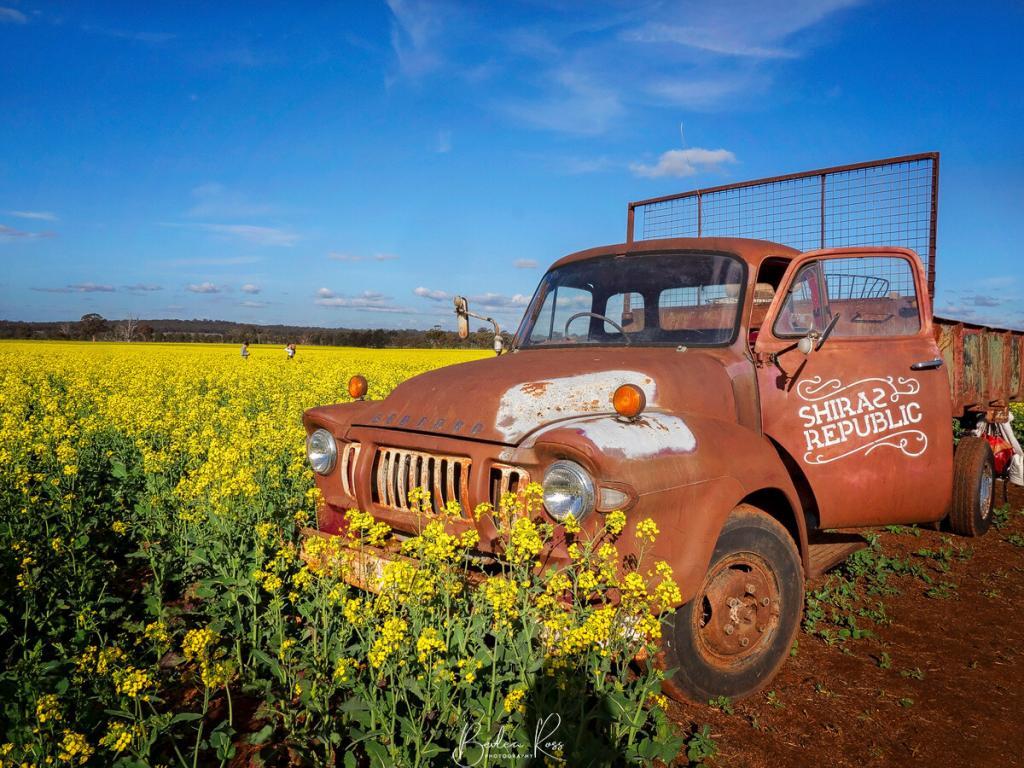
Tips for Canola Photography
Timing: The best time to take breathtaking pictures of Victoria’s canola fields is during their flowering period when they are covered in gorgeous yellow flowers. Although the timing and region depend on weather conditions, you can generally expect the flowering period to start mid-August, be in full bloom by mid-September and finish by mid-October. Additionally, the golden hour – which occurs just before sunrise or just after sunset – is an ideal time to capture striking images of canola fields, as it offers the perfect lighting for photography.
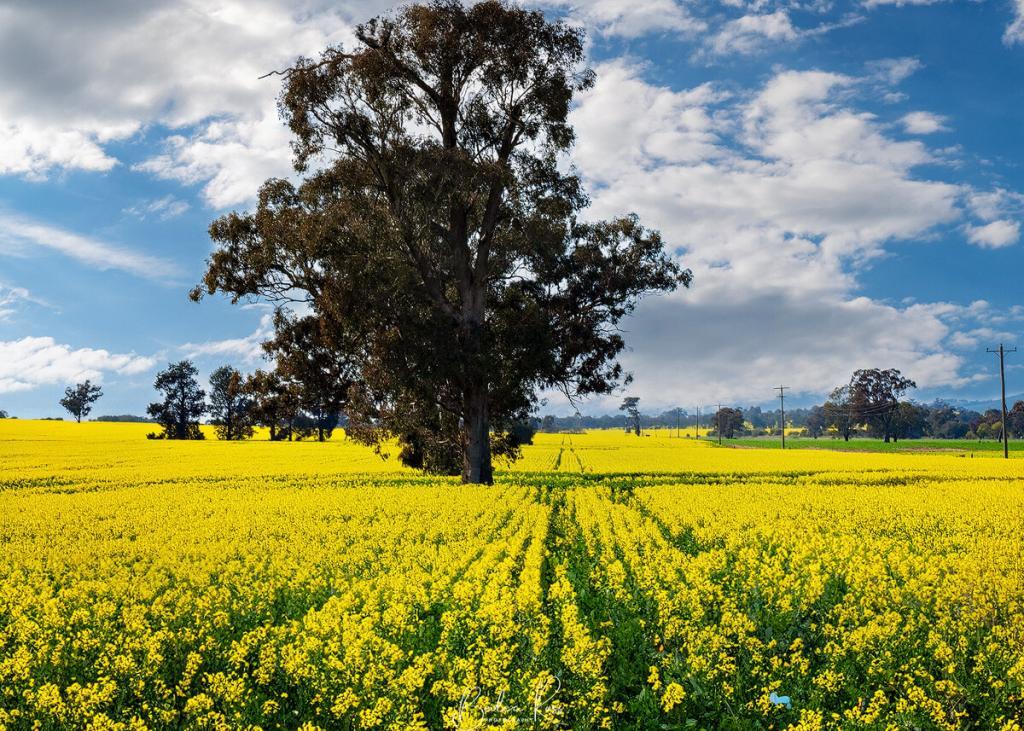
Angle and Perspective: Experiment with different angles and perspectives to capture the scale and beauty of the canola fields. Consider shooting from above or below or using a telephoto lens to focus on individual flowers.
Use of light and shadows: Pay attention to the lighting conditions when taking photos. The overhead sun can be harsh and create unflattering shadows. On the other hand, the side light is softer and can highlight the texture and detail of the canola plants.
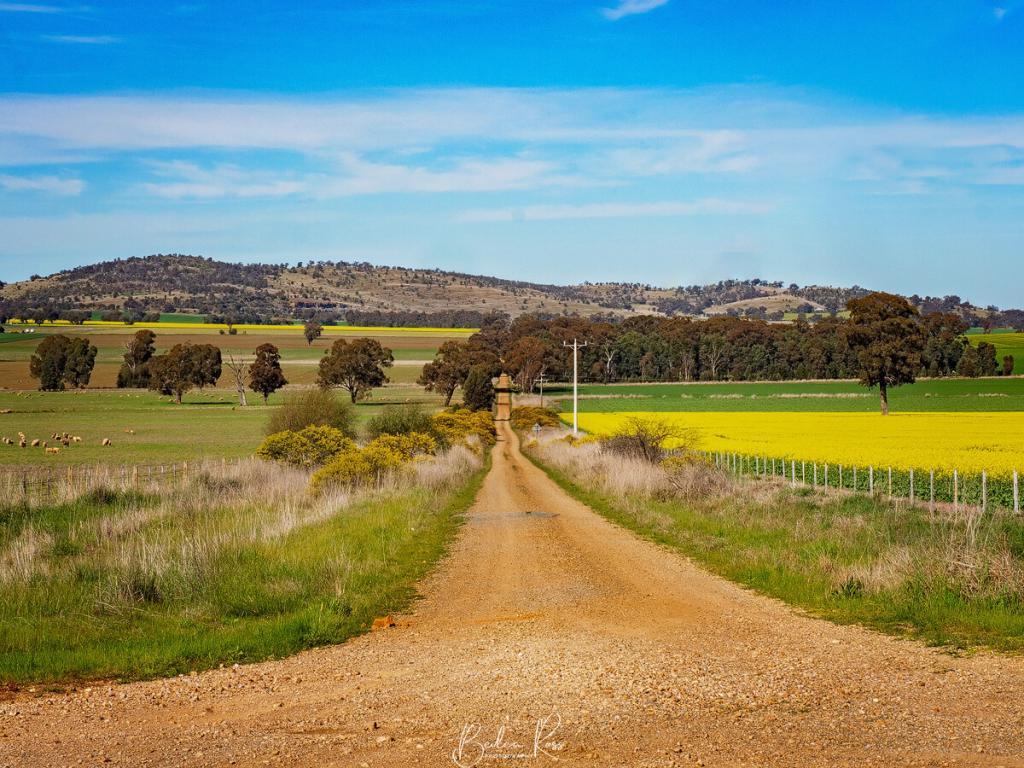
Composition: Use leading lines and patterns in the canola fields to create visually appealing compositions. Experiment with different framing techniques, such as the rule of thirds, to make your photos more engaging.
Weather: Inclement weather can add interesting elements to canola photography, such as mist, fog, or rain. Keep an eye on the weather forecast and be ready to take advantage of these opportunities.
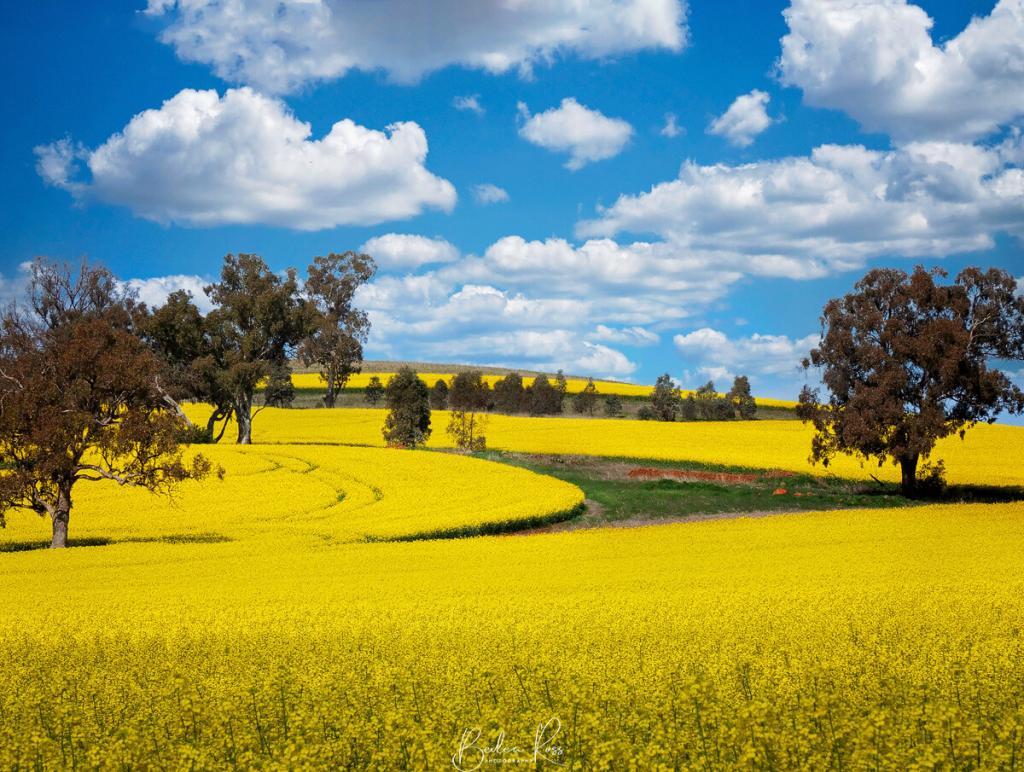
Post-processing: Experiment with post-processing techniques to enhance the colours and contrast in your photos. Consider using filters to bring out the yellow tones in the canola flowers.
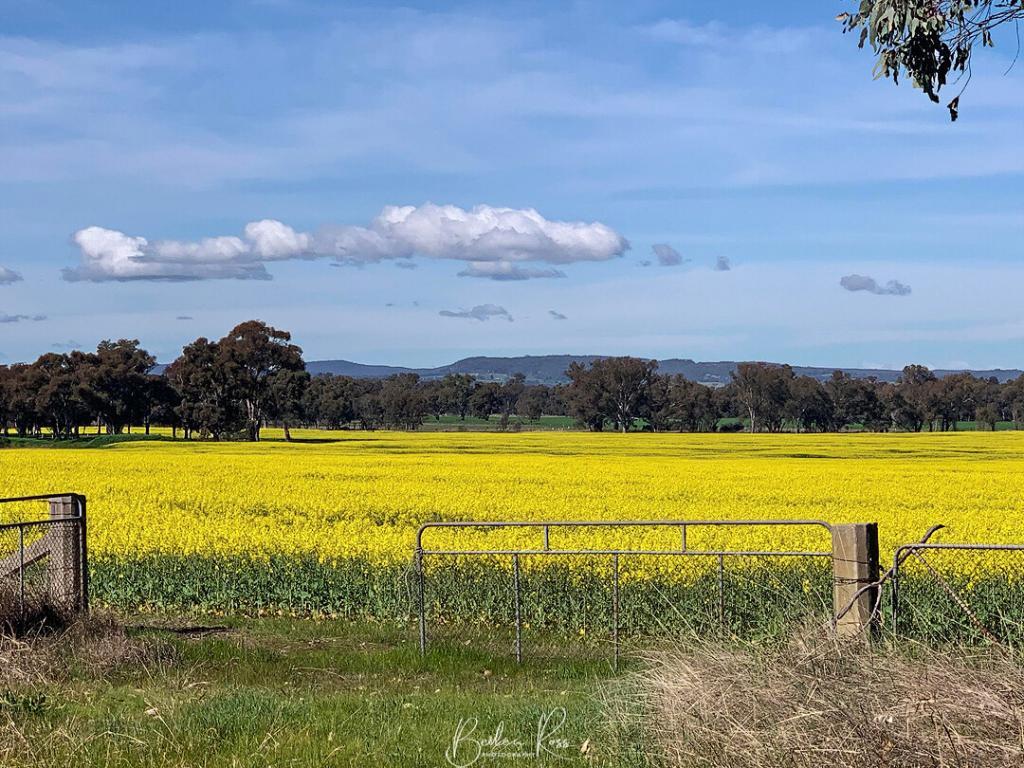
Just go!
Capturing the beauty of the canola fields in Northern Victoria during the flowering season is a unique and rewarding experience for any photographer. The rolling hills, vast expanses of golden fields, and picturesque countryside provide a stunning backdrop for capturing the essence of this region’s agricultural heritage.
So don’t hesitate; grab your camera and head out to capture the beauty of the canola fields. Whether you’re a seasoned photographer or just starting out, there’s no better way to experience the magic of Northern Victoria’s landscape than through the lens of a camera.
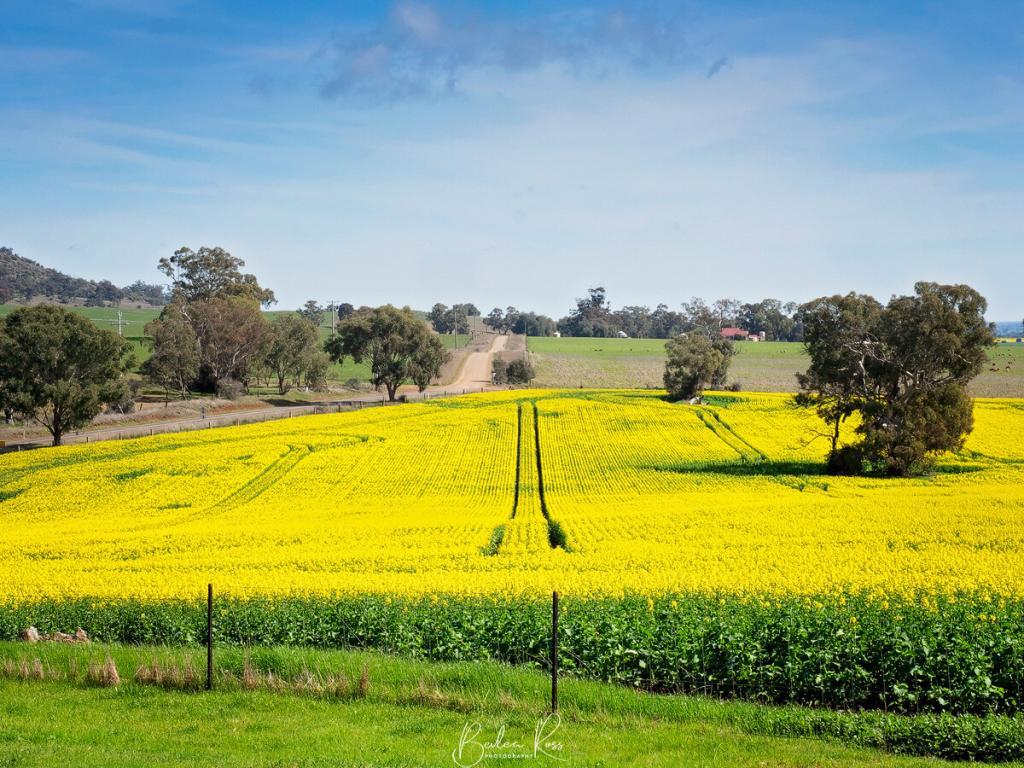
You’re bound to capture visually stunning images with the right preparation, a keen eye for detail, and a little creativity. So go ahead, take the leap, and see what you can capture!
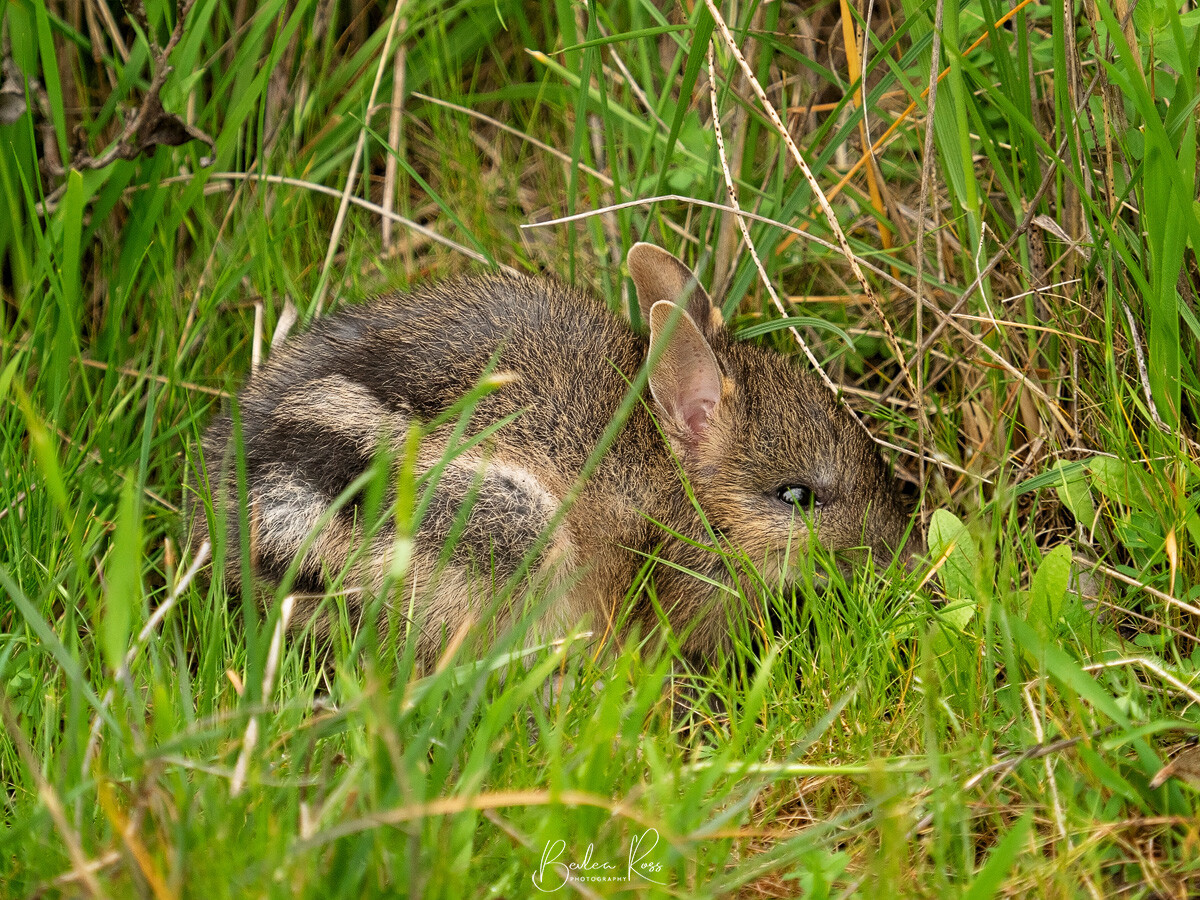
The state of Victoria, located in southeastern Australia, is known for its varied ecosystems and exceptional wildlife. One of its remarkable inhabitants is the Eastern Barred Bandicoot (Perameles gunnii), a small marsupial species believed to have been extinct in mainland Australia since 1991. Recently, however, it has become the first Australian species to have its conservation status revised.
Characteristics and Habitat:
The Eastern Barred Bandicoot is a small, stout marsupial that measures about 30 centimetres in length and weighs roughly one kilogram. Their distinct features include short, round ears and a pointed snout, while their fur colour ranges from sandy brown to grey, with white undersides and pale bars on their hindquarters, giving them their name.
Historically, Eastern Barred Bandicoots inhabited many grassland habitats across southeastern Australia, including Victoria. They primarily occupied the grassy woodlands, tussock grasslands, and open grassy plains that were once abundant in the state. These habitats provided ideal conditions for foraging on insects, spiders, plant tubers, and roots, which comprise most of their diet.
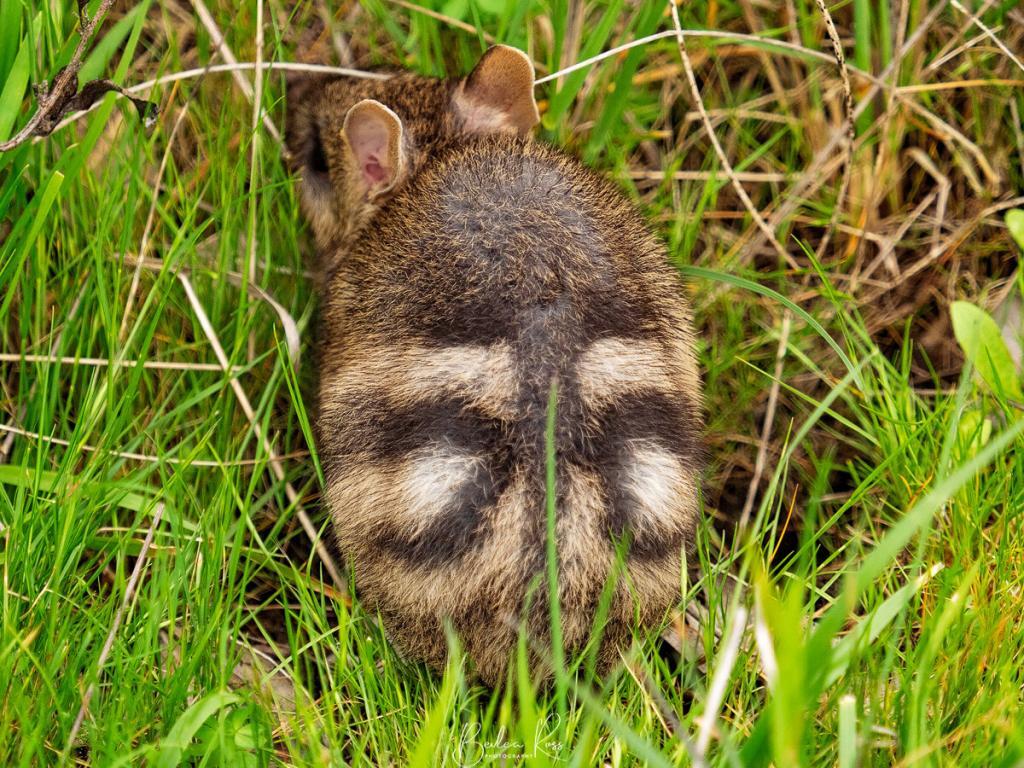
- When they dig for food, they create funnel-shaped holes.
- Under favourable conditions, they can produce up to five litters per year.
- Are pregnant for only 12 days before giving birth
- As omnivores, they have a diverse diet that includes invertebrates, plants, fungi, and fruit.
- On average, they weigh 800g and can measure up to 40cm in length, tail included.
Back from the Brink of Extinction:
Over the past century, the population of Eastern Barred Bandicoots has experienced a dramatic decline due to various factors. Agricultural and urban development activities have caused significant land clearance, which has resulted in damage and fragmentation of their natural habitat. This, in turn, has led to the loss of food sources for the bandicoots. Thus leaving them more susceptible to predators like foxes and feral cats. The number of these creatures dwindled to approximately 150 in a single area near Hamilton until conservation groups and government agencies created the Eastern Barred Bandicoot Recovery Team in 1988.
Conservation Efforts:
Recognising the urgent need to protect this unique species, dedicated conservation efforts have been undertaken in Victoria. Conservation organisations, government agencies, and local communities have collaborated to implement various initiatives to safeguard the Eastern Barred Bandicoot.
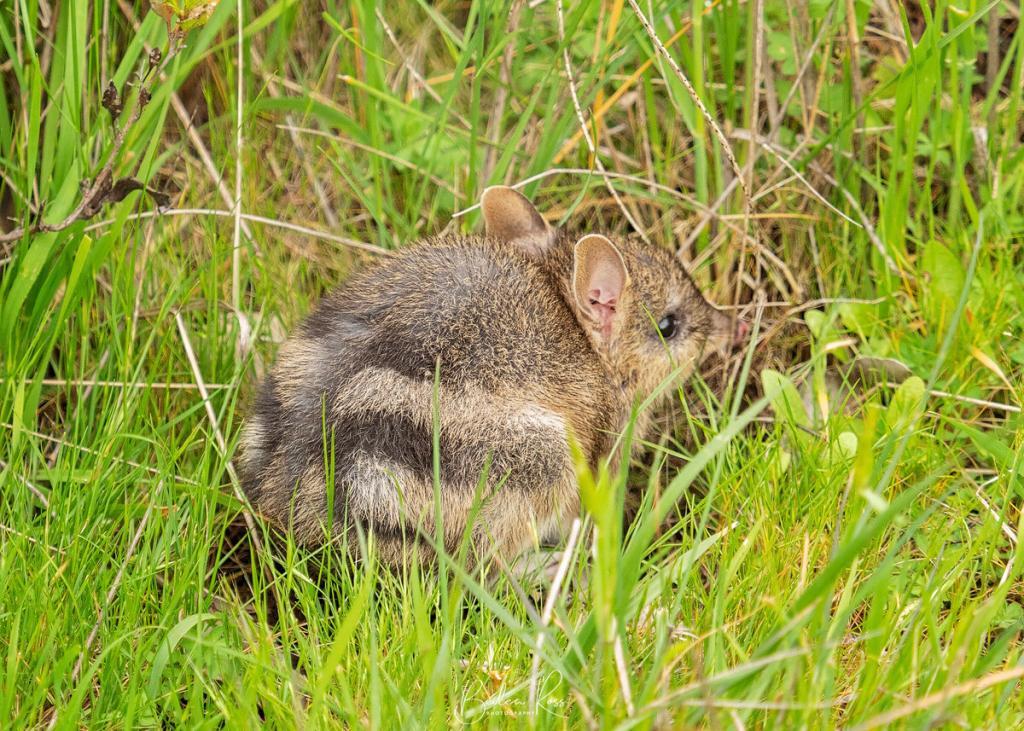
The eastern barred bandicoot remains on the endangered species list. However, new populations are thriving after successful breeding and release programs. One of the primary strategies has been the establishment of predator-free enclosures, also known as “safe havens.” These fenced areas protect them from introduced predators such as foxes or feral cats, allowing bandicoot populations to recover and breed in a controlled environment. The enclosures at Skipton and Dunkeld are carefully managed to ensure the bandicoots can access suitable habitats and sufficient resources. It is estimated that around 1,500 bandicoots live at these protected reserves in Victoria.
The third and final release of fifty-six bandicoots occurred on French Island in 2019. With no deaths reported, another eighteen were released.
Bandicoot Bodyguards
The bandicoot trials were planned in 2015, inspired by the success of the Middle Island penguin project depicted in the film “Oddball”. Maremmas were introduced to protect penguins from foxes, and it was hoped that they would also effectively safeguard bandicoots. Significantly, it was found that the bandicoots were not overly concerned by the presence of the dogs.
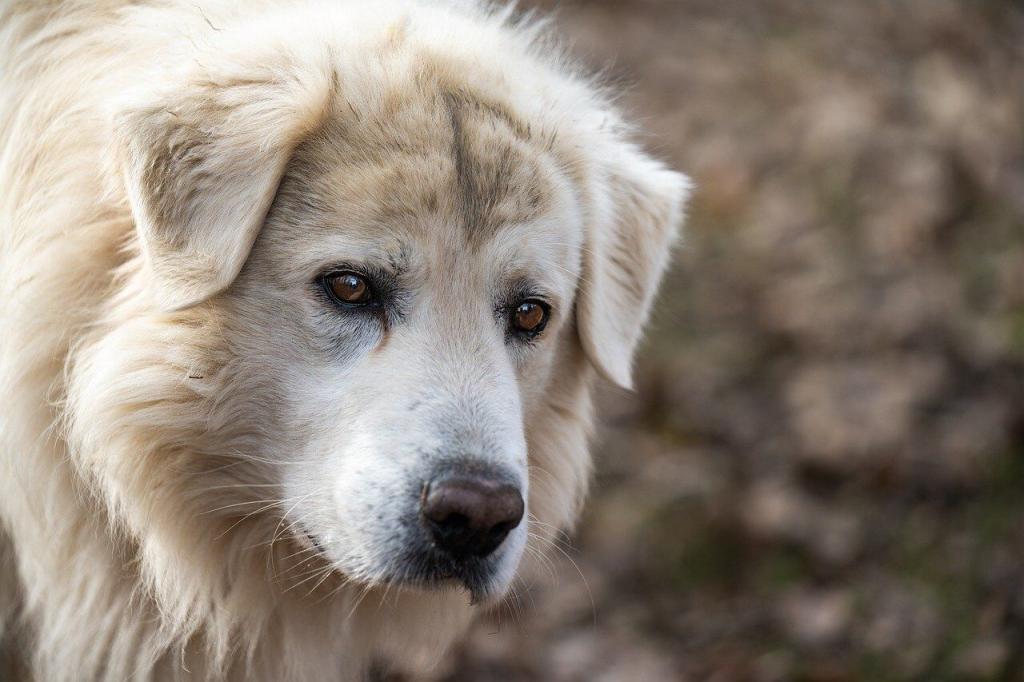
The challenge was that bandicoots are solitary and only active at night. On the other hand, the Maremma dogs are social animals that seek companionship. To overcome this challenge, a small flock of sheep was brought in as a potential solution. The idea is that the maremmas would focus on the sheep during the day and the bandicoots at night when the sheep are resting, thus meeting the dog’s social needs while protecting the bandicoots.
Currently, the Eastern barred bandicoots can only be found in two specific locations in mainland Australia, both enclosed by predator-proof fences. These sites are the only places where the bandicoots can live outside of captivity. Before this, the bandicoots were only found in the wild on multiple islands, such as Churchill and Phillip, where they were introduced to protect their species from extinction.
Importance of Conservation:
Preserving the Eastern Barred Bandicoot for Victoria’s biodiversity and ecological equilibrium is crucial. Being an endemic species, it serves a significant purpose in sustaining healthy ecosystems by dispersing seeds and regulating insect populations. Additionally, the bandicoot’s existence reflects Victoria’s grassland habitats’ overall health and wellness.
Efforts to conserve the Eastern Barred Bandicoot go beyond just protecting the species itself. These initiatives also play a role in preserving the habitats of other native wildlife and restoring the ecosystem services they provide. The conservation of the bandicoot is closely linked to larger environmental objectives such as preventing species extinction, safeguarding biodiversity, and promoting ecological resilience.

The magnificent Curtain Fig Tree can be found in the heritage-listed Curtain Fig Tree National Park, situated in the breathtaking Atherton Tablelands region of Far North Queensland, Australia. The park, part of the Wet Tropics World Heritage Area, is approximately a ninety-minute drive from Cairns. The vegetation of the park is a mabi rainforest, which is a complex notophyll vine forest that is native to the area and is classified as endangered.

The Curtain fig tree, similar to the Cathedral Fig Tree in Danbulla National Park, is a gigantic strangler fig tree estimated to be more than 500 years old. It boasts a trunk circumference of approximately 39 meters (128 feet) and is about 50 meters (160 feet) tall. The tree’s canopy spans an impressive 30 meters (98 feet) in every direction from its trunk, making it an awe-inspiring sight to behold.

The Cathedral Fig tree is towering and upright, while the Curtain Fig tree is slightly different. It fell and leaned against a neighbouring tree when its host rotted away, and over time, it also consumed that tree too. As a result, it now lies at an angle, creating an impressive curtain-like appearance.


Forest fauna
Once a host tree has fully decomposed, it creates a hollow area that provides a natural home for various animals. These animals, such as birds, bats, rodents, and insects, utilise the hollow space as a secure shelter, nesting site, or food storage area. The Papuan Frogmouth, Orange-footed Scrubfowl, reptiles, possums, and Lumholtz’s tree kangaroos are some species that inhabit the area around the tree. Furthermore, succulent fruits from strangler figs attract Rose-crowned Fruit Doves, Emerald Fruit Doves, and Pale-yellow and Grey-headed Robins. In the Curtain fig tree national park, forty-one bird species are listed as inhabitants.

Life Cycle of Strangler Figs
The life cycle of a strangler fig tree begins with a seed that an animal drops onto the branch of a host tree. The seed germinates and begins to grow as an epiphyte, meaning that it does not have its own roots in the ground. Instead, it gets its nutrients from the host tree.
As the strangler fig grows, it produces aerial roots which gradually descend along the trunk of the host tree, until they finally reach the ground. Upon contact with the ground, these roots start to absorb essential nutrients and water from the soil. This enables the strangler fig to thrive and grow bigger, eventually becoming self-sustaining.
The aerial roots of the strangler fig play a crucial role in supporting its growth. These roots wrap around the host tree trunk, forming a latticework that keeps the strangler fig steady and upright. Gradually, the fig’s roots will cover the host tree trunk, impeding the flow of nutrients and water, leading to the death of the host tree. However, the strangler fig will keep growing and eventually stand independently as a tree.

As time passes, the strangler fig tree steadily thrives and develops, yielding fruits that lure in wildlife to assist in spreading its seeds. This process repeats over and over again. Subsequently, the strangler fig tree becomes the host for other plants and trees, helping to create a rich and diverse ecosystem.
Waps and Fig Tree
The hollow spaces inside the strangler fig trees also play a vital role in the tree’s reproductive cycle. Many species of figs rely on specific wasps to pollinate their flowers and disperse their seeds. Significantly, each species of the fig wasp is only able to fertilise the flowers of one species of the fig tree. The female wasp bores into the fig and deposits her eggs. In the process, the wasp fertilises many of the surrounding flowers.
As the larvae grow, they secrete a substance that prevents the fig fruit from reaching maturity. This mechanism is crucial in protecting both the larvae and the fruit from being consumed. When the larvae mature, they emerge from the fig and fly off to find a new fig tree to lay their eggs.
Getting there
From Cairns, drive to Yungburra and head towards Atherton along the Gillies Range Rd. Then turn onto Fig Tree Road. A short drive down this road takes you to the carpark. From the carpark, it’s a short 180m return walk along an elevated boardwalk to the tree.
Strangler figs are a fascinating example of how plants can adapt to their environment. They are able to grow in dark and shady areas where other plants would not be able to survive. And they are able to kill their host trees, which frees up resources for the strangler fig to grow even larger.

Swan Lake, Phillip Island, is the only freshwater lake on the island and home to an abundance of birdlife. It is accessed off Ventnor Road, 7kms before the Penguin Parade and near the Nobbies. The pleasant walk starts from the small unpaved carpark and, at only 1.7kms long, is a leisurely 40-minute return.
The Walk
The swan lake trail is slightly undulating and a pleasant stroll, thus making it ideal for prams and wheelchairs. It is also bicycle-friendly, and picnic tables are provided. The gravel path weaves through open bushland and gives way to a boardwalk across ecologically sensitive areas as it nears the lake edge. Next to the boardwalk are two bird hides.

Historically, Swan Lake was a significant food source for the Bunurong Aboriginal people. Historians believe the Bunurong people previously lived in the area and fed on the wetland birds, fish, eels and plants, as evidenced by the ‘Middens’ items made from shells and charcoal that have been found there.
wildlife

On the day we visited, apart from the Black Swans, we also saw Cape Barron Geese, various ducks and Welcome Swallows. The Welcome Swallows were abundant in the trees alongside one of the hides. They also had a nest in the corner of the door leading into a bird hide. Watching them, they darted around and stopped to perch on the branches for us. Very accommodating of them. We also spotted a Swamp Wallaby as we continued our walk.


Getting There
The reserve is located on Ventnor Road. Keep an eye out for the Swan Lake guest house as you approach the penguin parade carpark. The carpark is situated to the left, before the penguin parade carpark and just a few metres past the guest house. Swan Lake is open daily.

NOTE
Unfortunately, Swan Lake has no toilets, and dogs are not permitted. The track also offers no shade, save for when in the bird hides, so a hat, sunscreen and insect repellant are recommended (though the mosquitos weren’t as bad as elsewhere on the island)