
Tag:photography

Light Painting with Orbs and Steel Wool had been on my list of “awesome things I must do” ever since I saw a photograph of someone twirling steel wool. Finally, last night, in an old disused factory guided by the highly knowledgeable and fantastic Bill and Deanne Holmer. I scratched that itch and then some.

Lightpainting Tools
We started with a brief chat on what they use. Just about all of which is made by themselves, from your everyday household items (think secret love children of McGyver). This was followed by the critical safety message of ‘don’t fall in any holes. Being a disused factory frequented by morons who can’t stand the sight of an unbroken window, there was glass and debris everywhere. And lots of holes that used to once house equipment footings etc., Bill twirled and swirled his lights, spun the wool to many encores.
Follow the Leader
We lined up in front with tripods and snapped away. We were all using bulb mode, with Bill calling when to “shutter open and shutter off”. I hadn’t used bulb before, and it was fun to do. And something I plan to do more of. At the end of the group shooting, we broke off into smaller groups and, using their lights, experimented some more.

Orbs
I had moved off to photograph an old car as we played lights over it. Bill joined us and quickly set up a new scene. The shutter is on, light up the car, play red lights over it, then blue lights on the wall. Follow this up with an EL wire coil that glows and looks like smoke due to the motion blur. The end effect was incredible and something I wouldn’t have known how to do without his help.


They forgot one crucial safety warning: Caution, light painting can be addictive!

Back in January, when the weather was warm, we decided to take a day trip down to one of my favourite spots, Queenscliffe and its near neighbour Point Lonsdale. We drove down to Queenscliffe, stopped a while there and ate our picnic lunch on the beach. Then we paddled into the water and bemusedly watched three fully clothed women swimming.

Queenscliffe Lighthouse
The lighthouse at Queenscliffe is famous for being only one of a handful of black stone lighthouses globally. Constructed 1963 from solid bluestone and never painted, it’s the only black lighthouse in the southern hemisphere. It is also known as the High Lighthouse as it’s located inside the historic Fort Queenscliffe and guards the entrance to Port Phillip Bay.

Searoad Ferry
After our lunch, we headed for the Harbour and took the SeaRoad Ferry across to Sorrento. The ferry carries both cars and foot traffic in a 40 min journey. It crosses back and forth between the Bellarine and Mornington Peninsula on the hour all day long. We didn’t get off at Sorrento as we were making the return trip as a scenic ride rather than transport between the two peninsulas. On the way back to Queenscliffe, we were followed by a small pod of dolphins from Sorrento as far as the South Channel. To watch them surf alongside the boat was an incredible sight!


Point Lonsdale
Back at Queenscliffe, we retrieved the car and drove the ten minutes to Point Lonsdale. The pier at Point Lonsdale is excellent (and safe) for getting under. Especially at high tide with the waves crashing in. Point Lonsdale sits on a headland opposite Point Nepean, known locally as ‘the heads’. They frame the ‘rip’ and the entrance to Port Phillip Bay. The Heads are just over 3kms apart, but reefs restrict the shipping channel to 300m wide. Over 20 shipwrecks dating back to the 19th century lie between the heads.

While at the pier, we got out an old broken Nikon camera that we had brought along as a prop for some photos (see the first image). We photographed it in the sand, and then I placed it in a small rockpool to photograph. Standing nearby was a man and his sons, and the look on the youngest son’s face when I dumped the camera in a pool of seawater was a classic. I wish I had got a photo of that! Unfortunately, I had gone out without my CPL filter, so none of those shots worked. There was way too much reflection.

Melbourne Open House is an annual event held at the end of July. Its goal is “connecting people with good design and architecture in the city”. Over 100 buildings of significance that are generally closed to the general public are open during the two days it runs. Either through tours or self-guided.
It’s always massively popular, with tickets for some locations (all of it is free) going within minutes of bookings opening. I missed out on the tours with ticketed entry. But I was taking part in the ones where you joined a long, snaking queue or took a self-guided tour.

Victoria Police Mounted Branch
Constructed in 1912 and one of the most extensive stables built and remaining in Melbourne, it houses 17 horses. They will move to new, purpose-built, modern stables at Attwood in the next few months. The Victorian College of Arts recently purchased the building.

After a refurbishment that keeps the heritage aspect intact, it will open as an art gallery space. The queue here took an hour to get to the door, and we were in and out in about 20 mins. The police horses are used in crowd control and search and rescue. The horse is nudging the ball (how they teach them to push people back) is massive. He’s the tallest one they have and stands at 17 hands high.

State Library of Victoria
Opening in 1856, with the famous dome completed in 1913, the State Library takes up an entire city block. It is Australia’s oldest public library and one of the first free libraries in the world. They claim to be Australia’s most patronised library, with 1.7 million visitors through the doors each year and another 3 million online. The state library is about to undergo an $83 million renovation, with $53 million being spent on Queens Hall alone. The renovation of Queens Hall will restore it to a reading room, reopen the skylights, and feature a new rooftop garden terrace.


It’s a truly magnificent building, with the Latrobe Reading Room under the great dome at its heart. Its massive rooms and high vaulted ceilings are exhibitions of paintings and sculptures, and books. The forecourt features statues, gently sloping lawns, and two large chess boards. Queens Hall is located in the oldest part of the building and, except for special events, has been closed since 2000. It’s a vast hall 145 feet long and was the original reading room until the domed hall opened in 1913.

Substation J
We arrived at the substation shortly after it opened on Sunday, and the queue was small. Substation J is an operating substation with live electrical equipment. So, we had to dress up with hairnets, lab coats, and hard hats (not that I understand how a lab coat would save me from electrocution. The substation was considered ‘state-of-the-art’ when it opened in 1953. However, Substation J has been a hidden time capsule since it closed in 1980. It remains a functioning power station. However, it is now fully automated, and the old control room is shut off and off-limits to all except a few. As the old control room was offline, there was no danger of us plunging the city into darkness ;). So we were encouraged to play with the buttons and handles while there.

Tasma Terrace
Considered one of the finest examples of a 19th-century, three-storey terrace house, Tasma Terrace began life as a guest house in 18. In the 1970s, there were plans to demolish the building and build high-rise towers. However, the National Trust of Victoria purchased it after a successful public campaign.


I love waterfalls and the Otway Ranges, and Hopetoun Falls had been on my wish list for some time, esp now that I have finally got my head around F stops and slow shutter speed. I haven’t mastered it, but at least now I understand the concept 😉 In June, I went down to the Otway Ranges with my sister and niece for the niece’s birthday. All Canon girls. We drove down in the sunshine, but it was pouring rain most of the day we were shooting. In a rainforest in winter, who would have thunk?
We knew it would be cold, so we were prepared with waterproof coats, gloves, and thermal underwear. But, pity, no one remembered to pack an umbrella!
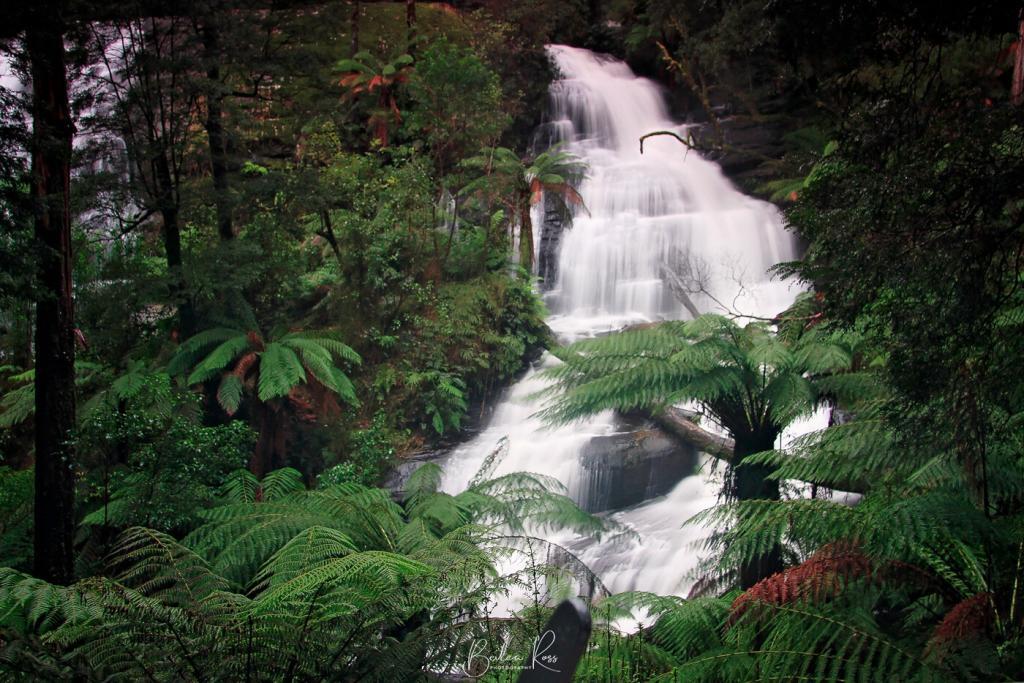
We made sure we kept our cameras dry, but we were all soaked to the skin. Ah well, we dry better and with more minor damage than cameras and lenses. We booked a little cottage at the top of The Otways, which was comfortable, cosy and contained all we needed. once we got the fire going. Unfortunately, it wasn’t lit when we arrived, and it was so cold in there our breath was coming out in condensation! If you ever stay there, phone ahead and insist they light the fire for your arrival!

Hopetoun and Triplet Falls
Saturday morning, we woke to rain and mist. Our first stop was Hopetoun Falls, very photographed but very photogenic. We spent about an hour there getting wetter and wetter before moving to Triplet Falls. The walk to both falls is reasonably straightforward. Hopetoun Falls has more steps, while Triplet has boardwalks all the way in. And we found there is a short way and a long way. Hopetoun Falls is also the most photogenic of the two. Unfortunately, Parks Victoria doesn’t signpost, which is the shorter, and we spent about 45 mins walking in a long way, only to find we were about 10 mins from the carpark taking a different path back!

The Otways are beautiful and totally worth multiple trips back. Don’t go in the middle of winter like we did unless you are happy with wet conditions.

After months of planning, bookings, and revised dates with real-life intruding, Lucy and I finally got away for our weekend to Wye River in the first week of December.
Lorne
As is the way, the weekend we were due to go initially in October was glorious. Sunny, mild, a great weekend to be alive. The weekend we went was overcast, wet (very wet), cold, and one to remind us it’s best to stay rugged up at home. We drove to Lorne to stretch our legs and photograph the entrance with a brief stop.

Big 4 Wye River
After leaving Lorne, we finally arrived at the Big 4 Holiday village in Wye River; I say finally as I think we broke our U-turn record. Once there, we booked in and got lost INSIDE the Holiday village… it sounded simple enough: drive through the gate, turn left, then left at our ‘street’ Currawong Way.. how many times can you do a U-turn in a caravan park? LOTS.

The sign for our street was non-existent. The numbers didn’t run logically. Watched by the increasingly curious gazes of other cabin dwellers, all who seemed to know where THEY lived, we drove around, and around, and around. Finally, before asking for help on our last U-turn, we tried a street with no name and found our home!

Once parked, unpacked, and settled in, we started ‘arting’ Our goal was to complete some dolls that Lucy’s hubby John had cut from MDF (like Mary Jane Chadbourne’s class). We had a scouting party on the deck later that afternoon. Who totally turned his nose up at the sourdough bread.
Wildlife
The following day brought an abundance of wildlife we would see all weekend: birds, koalas, and kangaroos. We spent loads of time on our deck feeding the visitors first thing in the morning. Then, we were up and out of bed, coffee in hand, bread bag tucked under the arm to wait for the ‘guests.’


Saturday, we braved the cold and walked around Maits Rest before the rain drove us back to the cabin.


The highlight of our weekend was visiting a koala. He/she came by Saturday afternoon and stayed till Monday morning.


We didn’t see half the things we planned to visit. But I had a great time and got some art done. just two dolls: the one on the left is mine, and Lucy’s is the one on the right

This last pic was taken Monday morning before we left, and yes, as you can see, it was still overcast, wet and foggy when we left. So much for playing it safe and going in December!

After a terrible night of almost no sleep at the Daintree River Village Lodge (I really should learn to travel with my own pillow!), we were up before the sparrows and down on the Daintree River Jetty by 6 am, still in the dark. The light came pretty quickly, though, and by the time we pushed off at 6.30 am, it was light enough to see. We took a cruise with Ian ‘Sauce’ Worcester,
Cape Tribulation Rainforest
Cruising up the various arms of the Daintree and up to the Barretts Creek bridge that you drive across to enter the village was a silent and serene experience. Cape Tribulation Daintree Rainforest expands over 1200 square kilometres and is the largest area of continuous tropical rainforest in Australia. It is believed to be around 135 million years old. It is also considered to be one of the most ancient and primitive rainforests in the world. The river is totally still and silent save for the occasional bird call… it was like entering a prehistoric world. The river banks are totally overgrown with lush vegetation and bring to mind what I would expect the Amazon to look like. I wouldn’t be surprised to see a native with a dart gun peering out of the trees).


Daintree River

Ian is an extremely knowledgeable guide with eyes like a hawk. How he spotted birds and snakes from a moving boat camouflaged was a skill to behold. We saw plenty of wildlife on the cruise, including Crocodiles, Tree Snakes, Sacred Kingfisher and Ulysses Butterfly. However, in a small moving boat, none are easy to photograph, especially the crocs. As soon as they slithered off the bank into the river, Ian throttled up and got out of dodge 😉


Hartleys Crocodile Farm
Returning to the jetty, we packed up our room, headed to civilisation, and headed back down the Captain Cook Hwy to Cairns, stopping at Hartleys Crocodile Adventures for yet more crocs.
Hartleys, while commercial, is extremely good. The entry price is fair, and their cafe serves some of the best food we had while in Cairns at excellent prices. The entire place is outstanding value for money. We had a delicious lunch (chicken schnitzels and salad) and then boarded the lagoon cruise boat, which is included in your entry fee. The cruise is only about 15 minutes around the lagoon, but you get to see a jumping croc. They rise straight up out of the water. So scratch sitting in on a low-hanging branch tree as an effective haven from crocs in the wild.

With our croc adventures complete, we continued into Cairns and booked into our hotel. We had chosen the Hilton alongside Trinity Inlet for its proximity to the reef cruise centre and esplanade. The room was lovely, and the view was great, but the service was pretty average. If I get back to Cairns again, I won’t stay at the Hilton. We had a delicious meal on the esplanade returned to the hotel, and crashed out early (was becoming a theme, up by 5.30 – 6 am and in bed by 9 pm lol)
Next Morning.
was another gloriously sunny day, and we left the hotel by about 7 am and headed up into the Atherton Tablelands and Waterfall Way.

The first stop was Curtain Fig Tree in Yungaburra… it’s a HUGE old tree with a massive canopy. They are Strangler Fig trees with the fig seed dropped by birds on the top of a tree. It germinates and sends aerial roots, some as long as 15 metres, down to the ground, eventually strangling the original tree as it takes over.
Waterfall Way
From the Curtain Fig Tree, we headed to Ellinjaa Falls, a beautiful waterfall that’s about a 15-minute downhill walk from the car park. Getting back up was a little taxing, but not as bad as some I have been to.

We drove from Ellinjaa to Milla Millaa, probably the most famous waterfall on the Palmerston Hwy circuit. It’s got a lot going for it. It is stunning, and just over 18 metres tall. There is plenty of water pounding over the top, and a pool below it that’s popular to swim in. Even better, it’s right beside the carpark!

We left the tablelands late afternoon and headed back for Cairns, a hotel with thoughts of a shower, wine and dinner… and suitably accomplished all three before crashing out again at about 9.30 pm.

I have a strong fondness for Cairns and Far North Queensland (FNQ). In my opinion, the warm and humid tropics feel more genuinely “Queensland” compared to the typical tourist destination of Surfers Paradise. However, during my last visit in 2012, I unfortunately missed a few experiences. Therefore, I eagerly accepted my sister’s proposal to revisit and explore the area together.
Flight Out

We had an early flight from Melbourne, so we had to wake up at 3.30 am and leave the house at 4.15 am. Fortunately, we left early because we struggled to find the entrance to the long-term parking lot. The darkness and heavy rain caused us to miss it entirely, and we ended up back on the freeway. We had to take the next exit, return to the highway, and head to the airport. All the while, we were stressing about missing our flight! We finally parked the car, boarded the shuttle bus, and arrived at the terminal by 5 am.

Our flight departed on schedule, and we arrived in Cairns, FNQ, at 9:20 am. The weather was windy, but it was a pleasant change from the chilly 12C temperature we left behind in Melbourne. We stopped for lunch at the Wildlife Habitat in Port Douglas after breakfast.
Wildlife Habitat
The Wildlife Habitat has been around for 25 years. Besides the birds, the habitat houses Kangaroos, snakes, koalas, and crocodiles. The venue is beautiful and reasonably priced, and once you are in, there are numerous free shows to enjoy. However, I suggest skipping the buffet lunch and ordering something from the cafe instead. In my opinion, the lunch buffet was not very impressive.

After leaving Wildlife Habitat, we booked in to Thala Beach. Upon arrival, you drive up to the entrance, where you hand the keys to the valet and head inside. While they take your luggage to your room and park your car, you can relax and enjoy the view from the sitting area. All while sipping on your complimentary tropical punch.
Thala Beach

We were only at Thala overnight with our next stop, the Daintree River – so we called up for the golf buggy to take us to breakfast; while we ate, they took our luggage back to the car and then had the car waiting for us at the foot of the steps ready to drive off (gotta love the Thala VIP treatment!)

Mossman Gorge
Leaving Thala Beach, our first destination was Mossman Gorge. The place had undergone significant changes since my last visit. They now boast a beautiful new visitor centre and deluxe coaches that transport visitors from the centre to the gorge for a fee of $15. On my previous visit, we had to self-drive a bumpy, floodway-riddled goat track before squeezing into a small parking lot. Mossman Gorge, located at the southern end of the world heritage-listed Daintree Rainforest, is the oldest surviving rainforest in the world.

Below is the Rex Creek Bridge. It’s a swing bridge, and boy, does it swing. Trying to take a photo while standing on it is a challenge. People kept walking over it, and it would start swinging again. One step from the edge, and you can feel it instantly in the middle. It’s like trying to take a photo standing on jello. I waited for ages until traffic had left both sides, and it stopped wobbling enough to get the shot quickly.


Daintree River
We stopped in at the visitor centre on the way out for coffee and a muffin. Next, we drove up the Captain Cook Hwy again towards the Daintree, stopping at Daintree Cruise Centre, just before the village. We booked a 2-hour Croc Cruise with Adam on the Matilda II. Yes, I had the theme song of Gilligan’s Island stuck in my head for hours.

According to Adam, a veritable Crocodilia encyclopedia, the Daintree River has about sixty crocs. Which he said is a ‘low’ population, while Kakadu has more. But in his quote for the day, “It only takes one to ruin your day.”


Reflecting on my unforgettable journey through Cairns and Far North Queensland, I am grateful for the remarkable experiences and natural wonders I have encountered. From the vibrant coral gardens of the Great Barrier Reef to the lush rainforests of the Daintree, this region has left an indelible mark on my soul. Simply basking in the tranquillity of nature, every moment spent here has been a treasure. Until we meet again, Cairns and FNQ, thank you for the adventure of a lifetime.

One of our favourite gardens is Alfred Nicholas Gardens in Sherbrooke. We visited during the summer and made plans to return in the autumn to see the English trees changing colours.
Picnic Lunch
Expecting to spend most of the day there, we packed the cameras and a nice picnic lunch with cakes and wine and set off. The gardens are in the Dandenong Ranges, and the property is hilly and steep, as stunning as the gardens are. Very hilly and steep. By the time we got back to the car, I had wished we had packed an oxygen tent instead of the wine. However, we drank it anyway. So we were sitting on the car’s tailgate sipping wine while everyone else going back to their vehicles looked just as winded and puffed as we were.
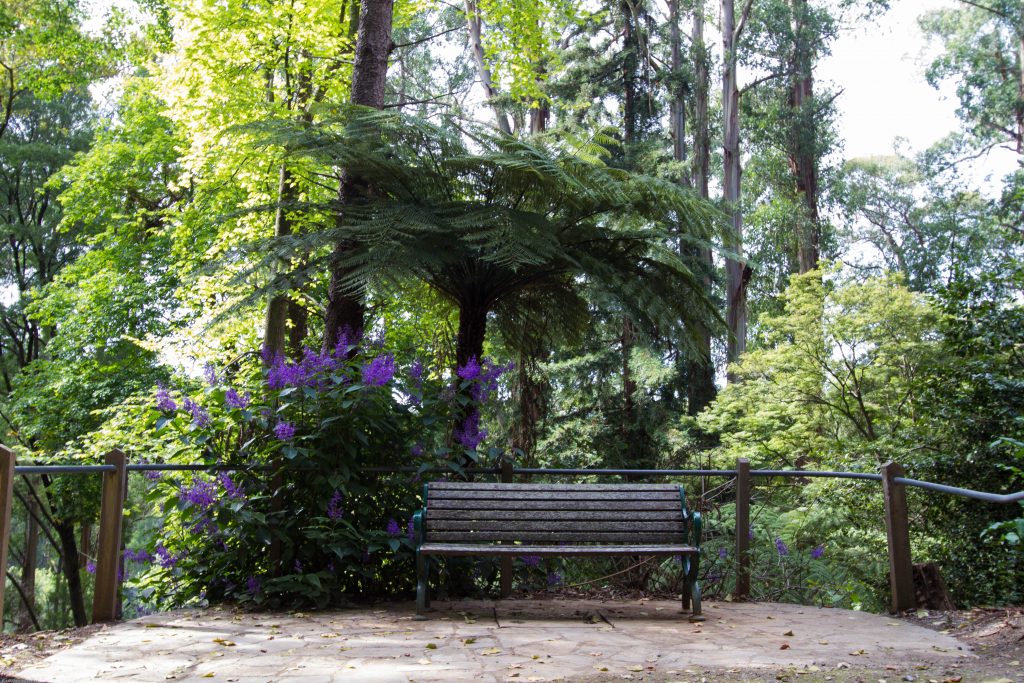
Burnham Beeches
Originally named Burnham Beeches, it was built in the 1920s and owned by Alfred Nicholas, the ‘Aspro’ magnate. The beautiful gardens cover about 13 acres and feature tree ferns, mountain ash trees, lakes and waterfalls. Walking down to the ornamental lake brings you to a small series of islands connected by footbridges At the end of one is a small boathouse.
The gardens are alive all season long with masses of plantings. We had hoped to photograph the gardens as the leaves turned. But the unseasonably warm weather had kept everything green. So we decided on the way out that we would have to back again next year, but much later in autumn.

The Gardens
The gardens are worth a visit, but plan your day well. Unfortunately, there is no cafe on site. You need to carry everything in if you plan to eat there. Bins are scarce, so we carried our rubbish around for a while until we found one. And bear in mind, it’s a long way back up! Take the paths. They are easier than the steps! As you can see from the images, we didn’t leave it late enough in autumn to get the shots we wanted. Consequently, another trip is planned for the future.


In February, we took one of the free boat tours around the port, run by the Port of Melbourne Authority. These ran once a month out of both Victoria Harbour at the Docklands and Gem Pier at Williamstown.
Gem Pier
We chose the tour from Gem Pier because driving to Williamstown is a pleasant drive, and parking options aren’t too demanding (compared to the nightmare of navigating the docklands and paying exorbitant parking fees). I didn’t think to take a pic of the boat that did the tour, but it was VERY nice. Not a tug or old rust bucket like I was expecting, but a large, comfortable, very well-staffed private vessel that the Port of Melbourne pays to do these tours.
Cruising
It was a really, really warm morning – we were on the 11 am tour and sitting at the front in the open as it was the best spot for photographs. Some fellow passengers started wilting and moved inside, allowing us to move closer to the show. We were fading too, but stoic. I wanted those pics and knew the breeze would make it about 10 degrees cooler upfront once she started moving, which was the case.

Webb Dock
The Williamstown tour takes you to Webb Dock. Seeing those enormous container ships and the cranes operating and moving the containers around was terrific. Those ships and containers are HUGE, and to watch the cranes move them around like dominoes was a highlight.

HMS Castlemaine
After the cruise ended, we took a walk around the HMAS Castlemaine. She’s a mine sweeper permanently berthed at Gem Admission was $6 per adult or $15 for a family. Although it was an exciting learning experience to wander around the ship, the staff volunteers advised us to go down the stairs backwards. And I can tell you few hail marys were said when we looked at them and descended, and we’re not religious. The steps were about as wide as a 3″ plank and went down at about a 70-degree angle!

The engine room required about three lots of take-your-life in-your-hands stairs but was worth the descent. I loved the old dials and machinery rising and dropping up and down as it ran.


Highly recommend both the Port of Melbourne tour and the HMAS Castlemaine.
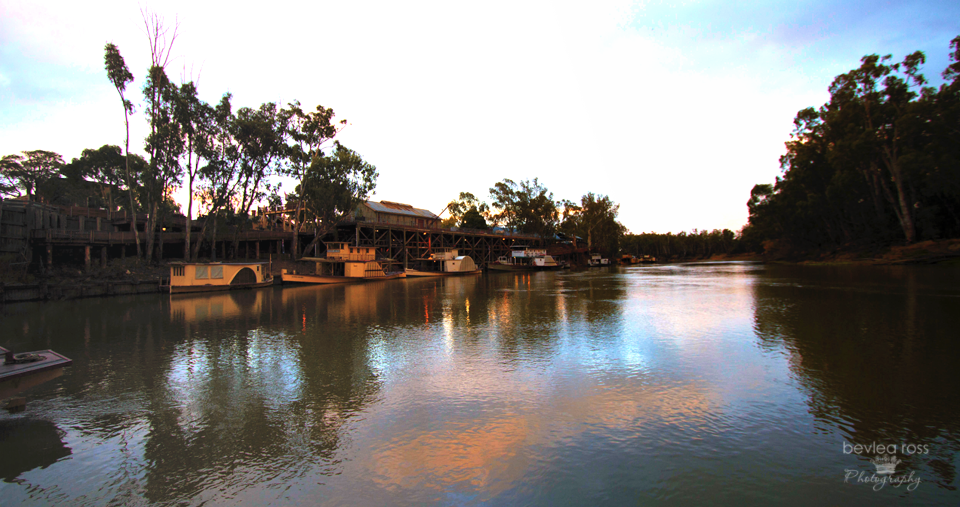
The historic Port of Echuca is nestled along the picturesque banks of the Murray River in Victoria, Australia. This riverside town is steeped in rich maritime history and offers visitors a glimpse into Australia’s bustling river trade of yesteryears. Echuca was established in the mid-1800s during the height of Australia’s paddle-steamer trade. The Port of Echuca played a pivotal role in transporting goods and passengers along the Murray River. Today, Echuca’s heritage buildings and bustling wharf area are meticulously preserved and serve as a living museum, inviting visitors to immerse themselves in the sights and sounds of the past.

History
Echuca was founded by Henry Hopwood, a former convict, in 1850. Hopwood purchased a small ferry to transport people and goods across the Murray River near the Campaspe junction. The settlement, initially known as Hopwood’s Ferry, later became the town of Echuca. The Hopwood’s Punt Post Office opened around 1854 and was renamed Echuca Post Office in 1855. One of the main attractions of the Port of Echuca is its authentic steam-driven sawmill. The sawmill showcases the power of steam as it cuts the timber, just as it did over a century ago. Additionally, the Port features a collection of beautifully restored historic buildings. These include the Echuca Wharf, the Customs House, and the Port of Echuca Discovery Centre.
Paddle steamers
A visit to the Port of Echuca is incomplete without a relaxing cruise on one of its famous paddle steamers. The PS Emmylou, or the PS Canberra, will take you on a nostalgic journey down the mighty Murray River.

Sunday morning, the rain had thankfully stopped. We decided to go to the Port early in the morning to get some river shots as the sun rose. The Port Precinct is home to the world’s largest paddle steamer fleet. This includes the world’s oldest operating wooden hulled paddle steamer, the PS Adelaide, built in 1866. Many of the old original buildings are still standing. And a stagecoach you can ride pulled by this lovely pair of greys.
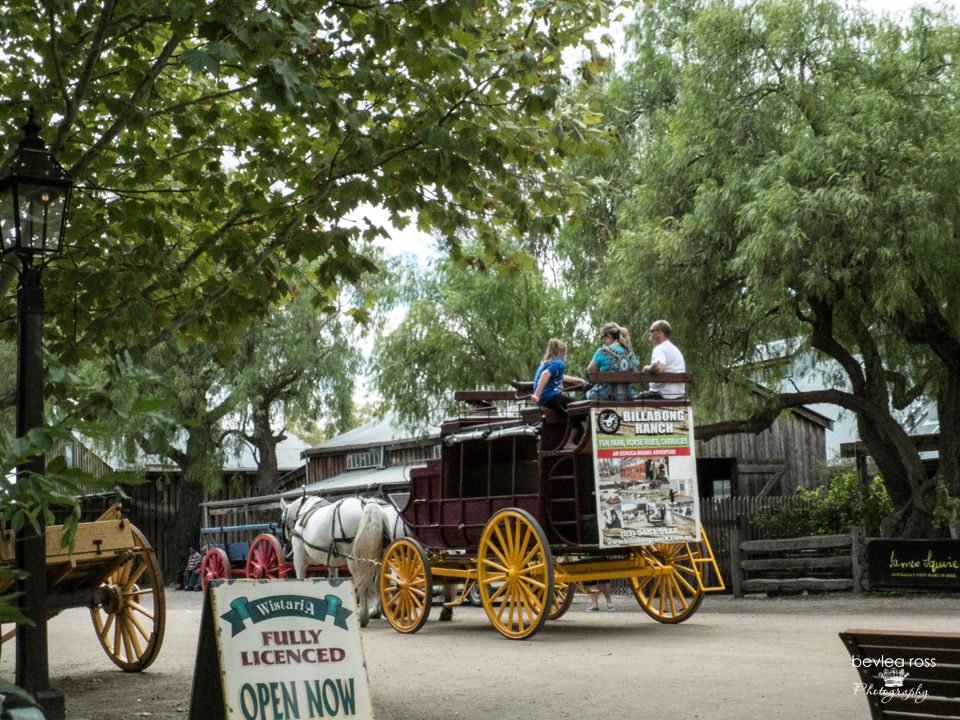
We took the ride. Kudos to the pioneers. I didn’t realise how awkward climbing in and out of the old coach was. I don’t know how the ladies of the 1800s managed in long dresses and corsets!
A visit to the historic Port of Echuca is more than just a journey through time – it’s an opportunity to connect with Australia’s rich maritime heritage and experience the beauty of river life firsthand. Whether you’re drawn to the nostalgic allure of paddle steamers, the captivating stories of the past, or simply the tranquil beauty of the Murray River, the Port of Echuca promises an unforgettable adventure for visitors of all ages. So, step back in time and prepare to be captivated by the timeless charm of this riverside gem

Today, we were heading home. This leg would take us from Menindee to Mildura.
After the wind and overcast day yesterday at the Menindee Lakes. We awoke to a gentle breeze and brilliant sunshine. As it was our second to last day, and the following day would be in the ‘civilisation’ of Mildura, we decided to cook up the last of our supplies for breakfast. Fried eggs, Tomatoes and toast. I cooked, and the short person was a ‘toast girl’. Sister had a rare lie-in. After we had eaten and cleaned up, we headed off around 8.30. into the ‘town’ of Menindee, turn right at the General store with no bread and past the supermarket with no meat. Turn right again and head towards Wentworth.

Dirt Roads
About 10 km out, we hit the dirt road, and except for the excellent bitumen cattle grids, it stayed like that until we were about 6 km out of Pooncarie – 106 km of dirt road!
We saw almost no roadkill for the first 50 km. The speed you needed to drive ensured you had time to avoid anything! Saw lots of emu’s in scrub beside the road – had to stop a couple of times from allowing them to pass. We sat in the car (in the middle of the road), snapping away for so long that they got curious and started walking toward us.
Middle of Nowhere

These were the only two live roos we saw on our entire trip. And that’s not a driveway—that’s the road we were travelling on! They were sitting in the middle of the road, and we stopped until they took off. We made it into Pooncarie and sealed roads at about 10:30—it took nearly two hours to do 120 km. After that, we headed off again to Mildura, this time on sealed roads all the way.
Perry Sandhills

We arrived in Wentworth around 1 p.m. and decided to detour to the Perry Sandhills for a picnic lunch. We sat under this large river of red gum in the canopy’s shade. Its trunk is buried in the dunes. It was just beautiful there. Silent, quite spiritual, with nature vibes, it was easy to visualise what it would have been like a couple hundred years ago as Burke and Wills came past.

Geologists say the Perry Sandhills originated after an ice age (40,000 years ago) and are formed by wind erosion over thousands of years. The dunes are located six kilometres outside of Wentworth and are a unique land formation of 400 acres of continuously shifting dunes.

Mildura
After lunch, we headed to Mildura. Booked back into the Mildura Motor Inn. The pool was clean and open, so the short person was straight off for a swim. We all showered a ton of the Perry Sandhills off us, put on our glad rags and headed into town for the last night’s dinner. We spotted a restaurant called Rendezvous earlier in the day and decided to go there. They had a lovely outdoor dining area, and the menu looked good. It was better than good; the food was exceptional.
We started with Warm Turkish bread accompanied by house-made dukkah, Robinvale Estate olive oil & lemon (knocked Stefano’s bread and dipping sauce out of the park). Followed by Veal chops (the short person had the child’s eye fillet again but requested ‘medium rare’ when she ordered), our meals were to die for, and we would return to Mildura again to eat there. We then ordered two desserts and three spoons to finish the night off. First, warm Chocolate berry pudding served with raspberry ice cream & topped with a hot chocolate fudge sauce and Chocolate Indulgence. Chocolate cake, choc mousse, choc ice cream, chock fairy floss cream. Yummo!! After that meal, we rolled back to our room: lights out and goodnight.

Our last day was a straight run home.
With alarming regularity, we were awake early. Sister and I read in bed while the short person snored away till we woke her at 7.30 – packed the car and out the door by 8 am Breakfast at McDonald’s (hotcakes), then in the car and home. We stopped in Sea Lake for average coffee and cake. Then continued to Inglewood. We picked up excellent fish and chips, which we ate in the car while we drove, arriving home safe and sound at 3 pm. In total (city to city, not counting smaller trips to dinner and sightseeing), we did 1820 kms. Fabulous holiday. Great company. Already planning the next one 🙂
Monday, we woke to wonder where our sun had gone. It was still warm but quite overcast and cloudy. But, as was ‘de rigueur’ of our days, we were up, fed, showered, car packed and on the road by 8.30 am (a bit of a sleep-in today). Today, we travelled from Broken Hill to Menindee and had a van booked at the Menindee Lakes Caravan Park. Menindee is 112kms from Broken Hill so that it would be an easy run. We filled the tank before we headed out (driveway service, too! I haven’t seen that since 1920!)
Road Kill abounds
The road from Broken Hill to Menindee was excellent, with a single lane each way and little traffic. What little we did see was kept to 110 km; there was not a slow caravan in sight. We were seeing so much Road Kill that we started counting it. If you’re planning a trip from Broken Hill to Menindee – it is a 16 RK (RoadKill) trip 🙂

We saw lots of dead roos. Seriously, it’s not a busy road. Can’t they wait 2 mins till the car passes. or look left? I came around one corner and across a dead wild mama big and piglet, two roo’s and a lizard – talk about dead man bend. I hope it wasn’t just one car that collected them! Loads of floodplain signs along the road and depth markers for the water, but nary a drop of water is in sight. And passed quite a few dry creek beds.
Menindee
We arrived around 10 am and called in at the general store for bread… “that’s delivered at 11 am. Do you want me to save you a loaf?” umm ok, then over to the supermarket. “do you have any fresh meat”? “no, that’s delivered tomorrow” Sheesh, save me from tiny towns! We found our caravan park with directions from the general store with no bread. We unpacked and looked around. 5mins that was done. So we made lunch with the last of our bread and sliced meat. We decided to check out the Kichega National Park.
Kichenga National Park

I had heard lots of good things about Kichega. However, It is definitely a 4WD place only. Dirt roads are everywhere, even though they said it’s 2WD, and they are BAD dirt roads. I thought we were going to shake the car apart. We did stop off at the Kichega Woolshed, which was great, except for the very friendly swarming flies. That drove us back to the car pretty quickly and smartly. I would have hated it out there in the 1800s

Kichega Woolshed
Remarkable for its size and design, the Kichega woolshed was constructed in 1875. It illustrates the vast scope of pastoral holdings in the arid areas of inland Australia. Kinchega lies amongst the beautiful Menindee Lakes, fed by the Darling River amid forests of river red gum, coolabah and black box trees.

I had been driving that morning – letting my sister take it easy as she still wasn’t 100%. But she took over as we left as she wanted to get out of there and felt I needed a break while we drove around in circles for a while (no signs) along shuddering, bone-jarring dirt roads. We had visions of our whitened bones being found years from now. Eventually, we found the exit and returned to the general store to claim our bread. Last loaf, lucky she saved it, and bless her, she also had roast chickens to take care of dinner. We returned to the cabin and chilled out reading for a while, which turned into nana naps for all of us.

Sunset on the lake
Towards sundown, with more directions on the best spot to photograph the lakes, we headed up the road. “go up the bitumen, cross over the channel, and turn left at the first dirt road. There’s no sign. Drive to the end. You can’t miss it. Sure. They don’t know us! We missed it, turned left at the dirt road after the creek (thinking that was the channel) and took the first dirt road to the end. Parked the car, walked across the railway line and to the water… fab spot! I could see where we were meant to be, but this one was good!

The light was amazing. Almost naturally monochromatic. It had been such a dusty day that the sky was full of dust, creating total haze across the sun. On the side of the channel we were on, the other side was a weir with water spilling through the channel into the lakes. Lined up at the weir was a back row of pelicans. And a front row of Seagulls, all waiting for the channel to spit out dinner. A little silvery fish would come through and down the spillway every few minutes, and they would dive on it. It went on for ages and was hilarious to watch 🙂 Gradually, the light changed as it got darker, and bearing in mind all the roadkill we had seen thus far, we packed up and headed back to the cabin before it got totally dark.


The cabin beds were comfy, and the shower was ‘ok’ (rain tank, no water pressure), but we were fed, showered and comfy, and in bed again, lights out by 9.30. tomorrow was back to Mildura.
