
Tag:photography

Summerlands at Phillip Island have been the natural habitat of Little Penguins for centuries. During the day, they venture out to catch fish and return to their nests on Phillip Island at the Summerlands Peninsula as night falls. Here, they incubate their eggs, care for their young, and shed their feathers. The spectacular sight of these penguins returning to their homes at sunset has been a popular attraction for over a century.
How it all began
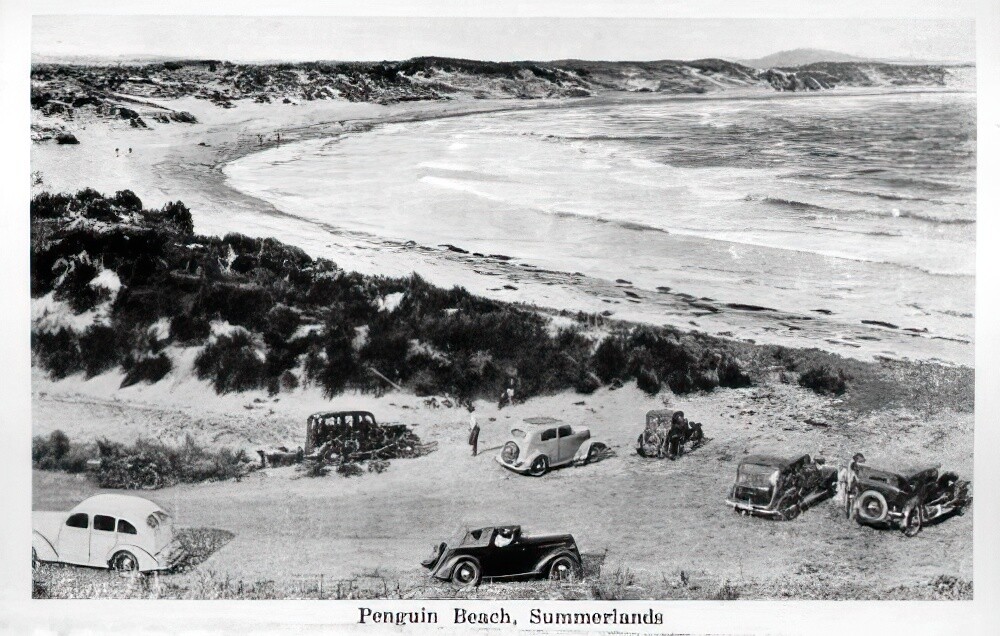
The story of Summerlands Beach and its beloved penguins dates back to the 1920s and three Phillip Island locals, Bert West, Bert Denham, and Bert Watchorn. The three Berts were the first to open the beach for organised penguin viewings. They greeted visitors getting off the ferry and offered personalised tours of Summerlands and Phillip Island for just five shillings a piece. For an extra shilling, you could get strawberries and cream.
In the 1940s, visitor numbers soared when the bridge from the mainland to Phillip Island was erected at San Remo. At this point, tourists began flocking to the pristine shores and started building houses around Summerlands Beach.
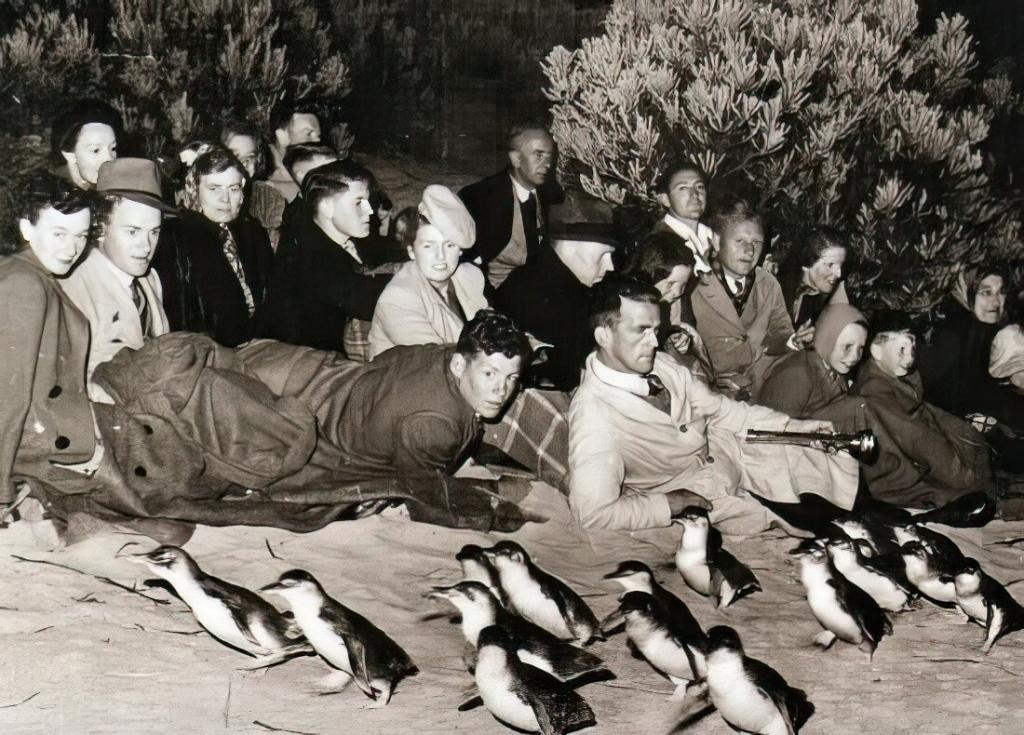
Prior to a formal sanctuary, beachgoers would pack their baskets and gear, heading to the shores to witness the enchanting sight of penguins emerging from the water. Although seemingly innocent, this practice took a toll on the penguins’ natural habitats and homes, as the influx of tourists disrupted their daily routines.

Summerlands Estate
During the 1920s, the peninsula was divided into 900 plots of land and named Summerlands Estate. It mainly consisted of exposed land bordered by steep cliffs that dropped into the Bass Strait. In the late 1940s, several families from Melbourne purchased plots and constructed simple fibro holiday homes.
Over time, the number of homes in the area grew to around 177 by the 1980s. However, this growth brought challenges, as dogs and foxes began endangering the penguin population, and road accidents became more frequent. As a result, the local penguin study group became increasingly worried about the declining penguin numbers. They feared the penguin colony wouldn’t survive if something wasn’t done.

More concerning, however, was the danger that the holidaymaker’s canine companions posed to the Little Penguins. The introduction of dogs to the area contributed to a significant drop in their population. Before long, all but one of the colonies on Phillip Island were decimated. Only the Summerlands colony remained. It became clear that a change in public behaviour towards these valuable creatures was necessary to avoid causing more harm.
The Great Govt buy back
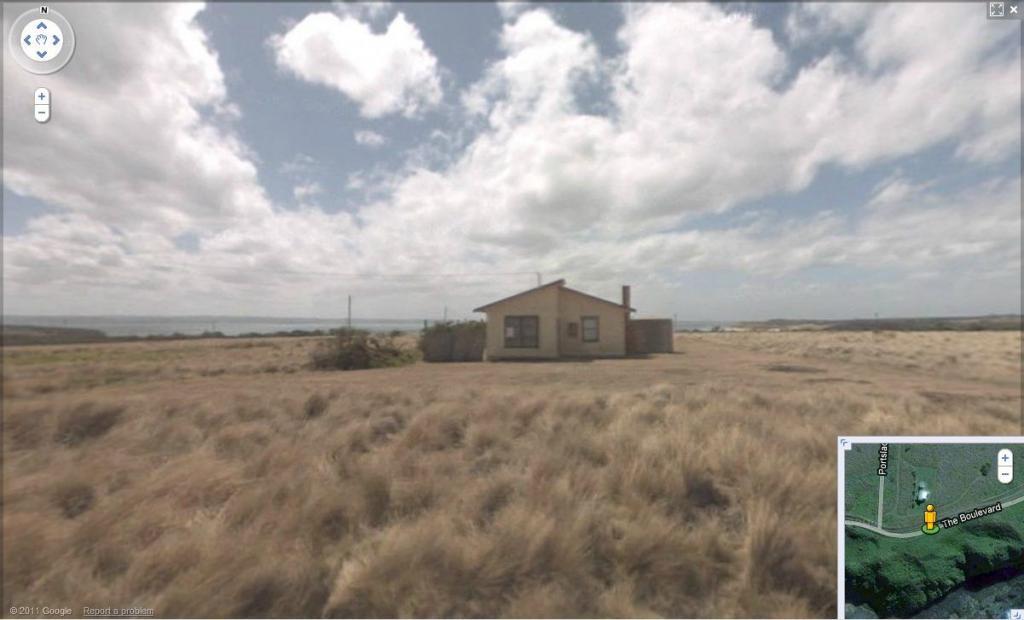
In July 1985, the state government, under the leadership of then-premier John Cain, made a groundbreaking decision. After much lobbying and discussions, they decided to purchase the entire Summerlands estate. They would buy back all 774 allotments and transform it into a wildlife reserve for the little penguins. Nevertheless, this decision brought about significant distress. Understandably, the residents of Summerlands were not pleased with this decision as it would end their community.
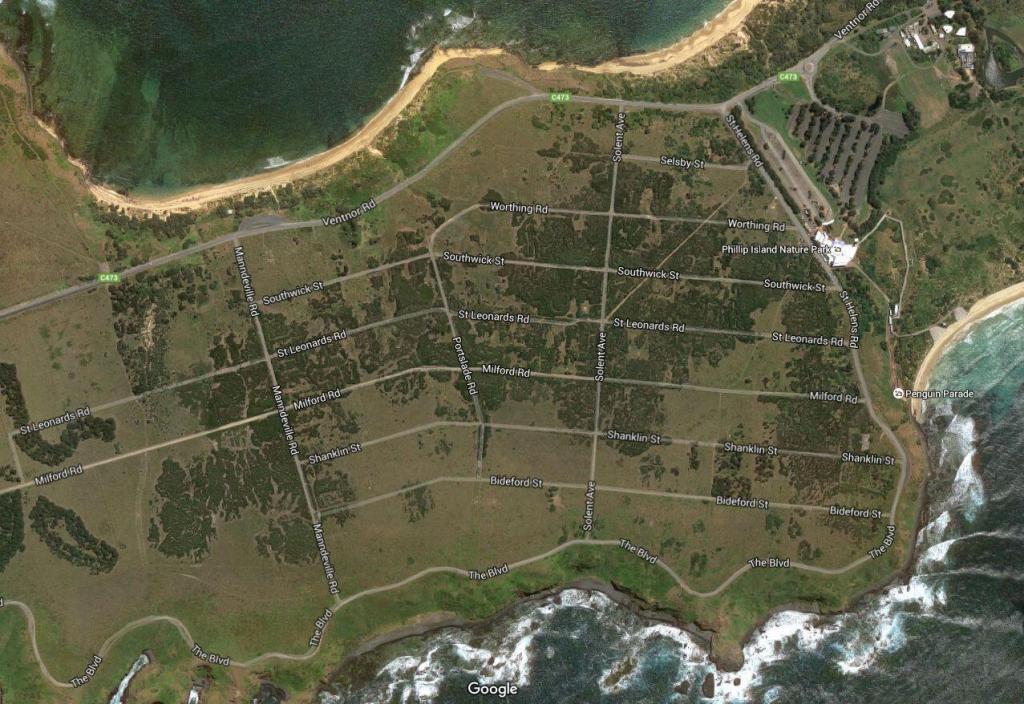
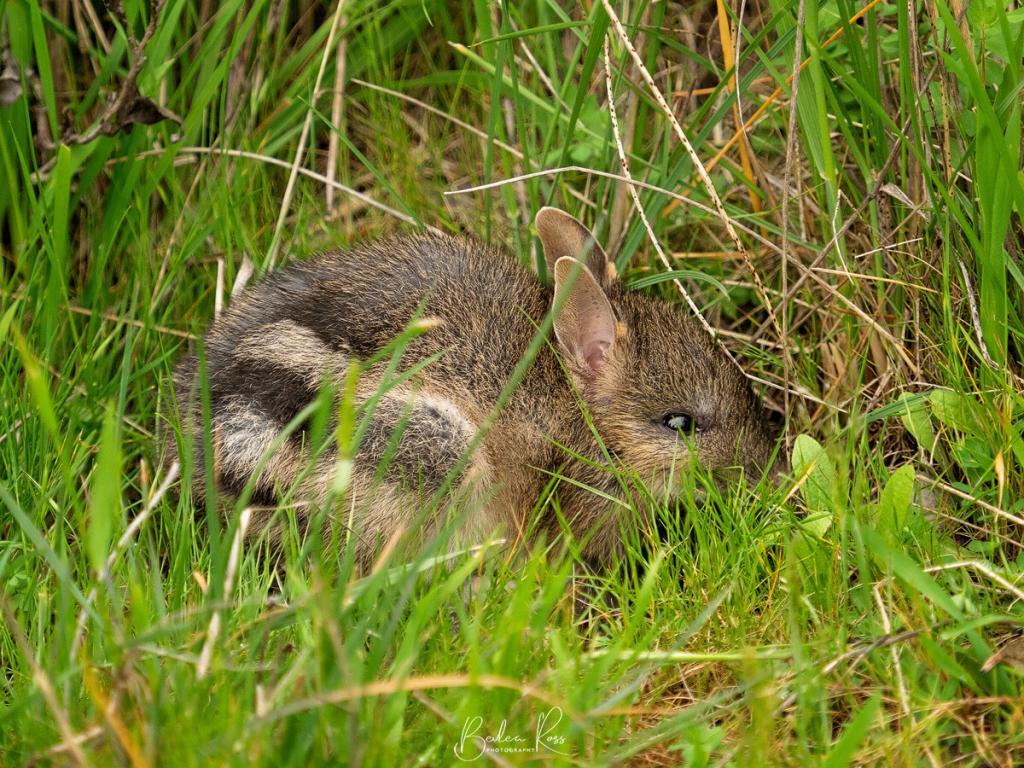
By 2007 there were just a few holdouts left. The government then compulsorily acquired the final 42 properties. Twenty empty blocks and twenty-two with houses, held by 34 private owners. After a tumultuous period, the buyback program finally ended in 2010, which many attributed to insufficient funding. During this time, the estate’s future was uncertain, and residents could not work on their properties, much to their dissatisfaction. After the completion of the buyback, all the houses were demolished or removed. The government then spent $3.4 million on a habit restoration program. They continue to install and maintain nesting boxes as well as pest control (eliminate foxes, feral cats and rabbits).
the Little (fairy) Penguins
Little penguins, also known as fairy penguins or Little Blue Penguins, are aptly named due to their small size, weighing just under a kilogram and being slightly larger than a bowling pin. They are the smallest among the 18 penguin species worldwide, and their blue and white feathers are unique to their kind. Along the coastlines of southern Australia and New Zealand, you can find little penguins. However, the largest colony and the last one located on Phillip Island is on Summerland Peninsula, with an impressive 40,000 breeding penguins.
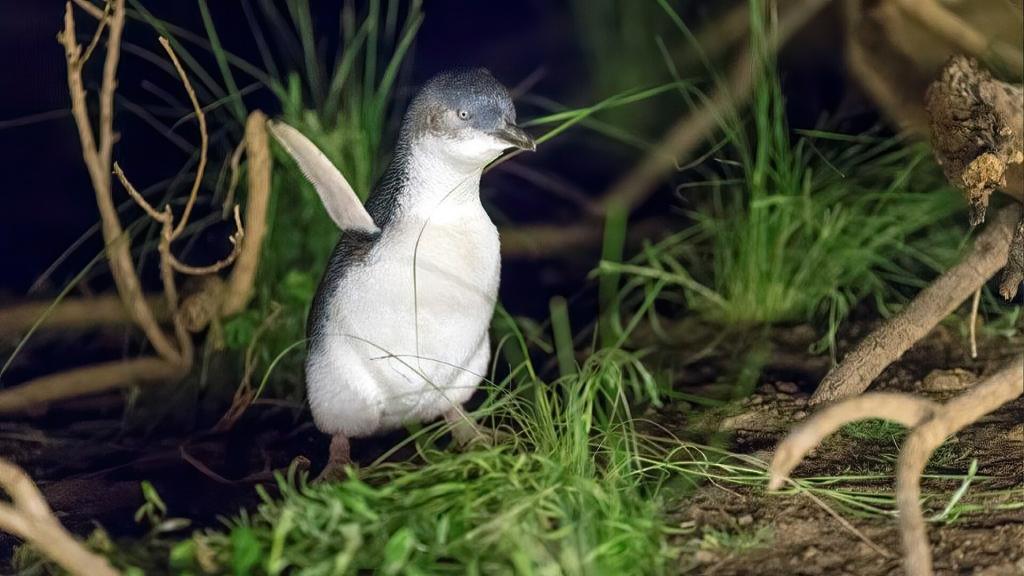
A win for the penguins
The buyback initiative has been deemed a significant victory for conservationists. It immediately resulted in a notable reduction in penguin fatalities from road or dog accidents. In the past, the penguin population was estimated to be between 12,000 to 14,000 in 1984. Fast forward to today, and it currently stands at approximately 40,000 breeding penguins. The region’s preservation has also positively affected other creatures, such as Short-tailed Shearwaters (aka mutton birds).
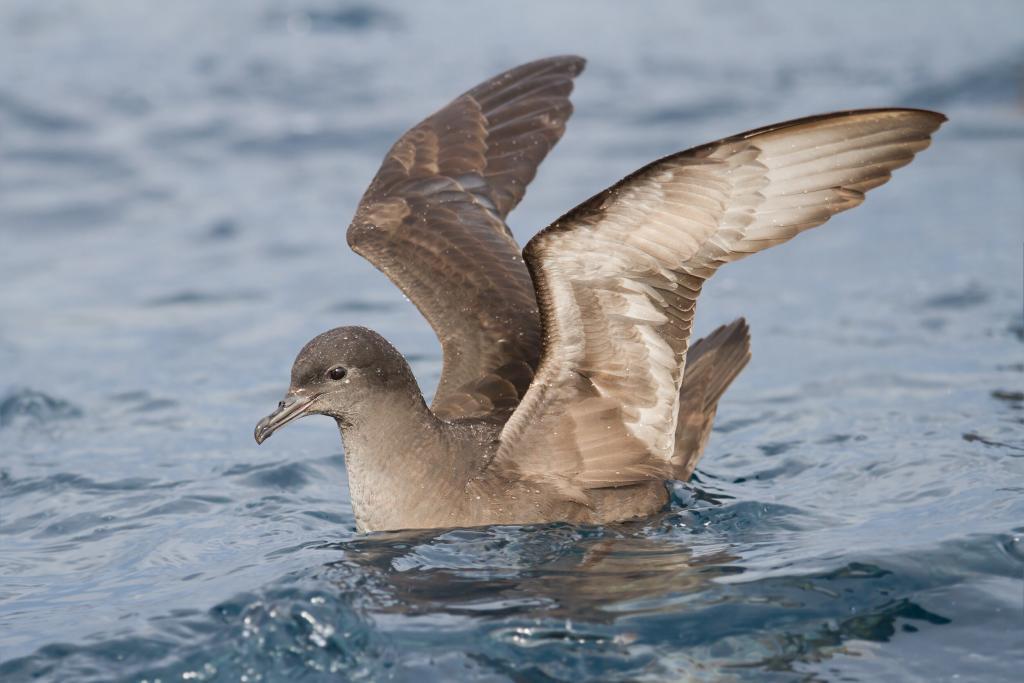
In another clash of progress and wildlife, the short-tailed Shearwaters are known to flock to the San Remo bridge lights during their migration. Therefore the bridge lights are switched off for a few nights around April 25 during the departure peak. Signs at either end of the bridge warn drivers of the changed traffic conditions.
Another win for conservation at Phillip Island has seen the recent release of the endangered Eastern barred bandicoot.
Facilities Today
At the main penguin viewing area, visitors can enjoy a 180-degree elevated platform that overlooks the coast. The penguins usually spend their day in the ocean hunting for food, so they only swim up to rest for the night. Returning at sunset from a long day of fishing, the penguins make their way up the beach to their burrows. The penguin parade platform is right along the sandy shore, offering guests a front-row seat as the penguins waddle up the sand.
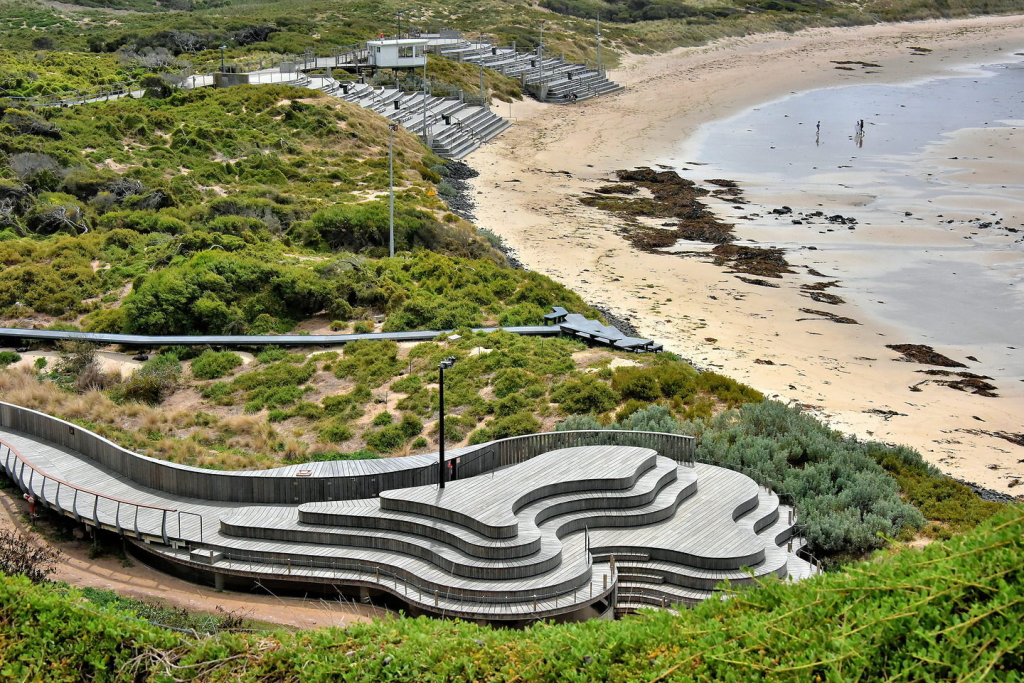
There are ‘levels’ for those wishing to purchase tickets, with the top tier ticket being in the underground viewing section. This allows eye-level viewing of the penguins as they come ashore and the comfort of being inside, out of the weather. It does get freezing on the beach at night.
The Phillip Island Nature Park is one of the best eco-tourism facilities in the world. It balances scientific research and conservation with visitor education and unique wildlife experiences.
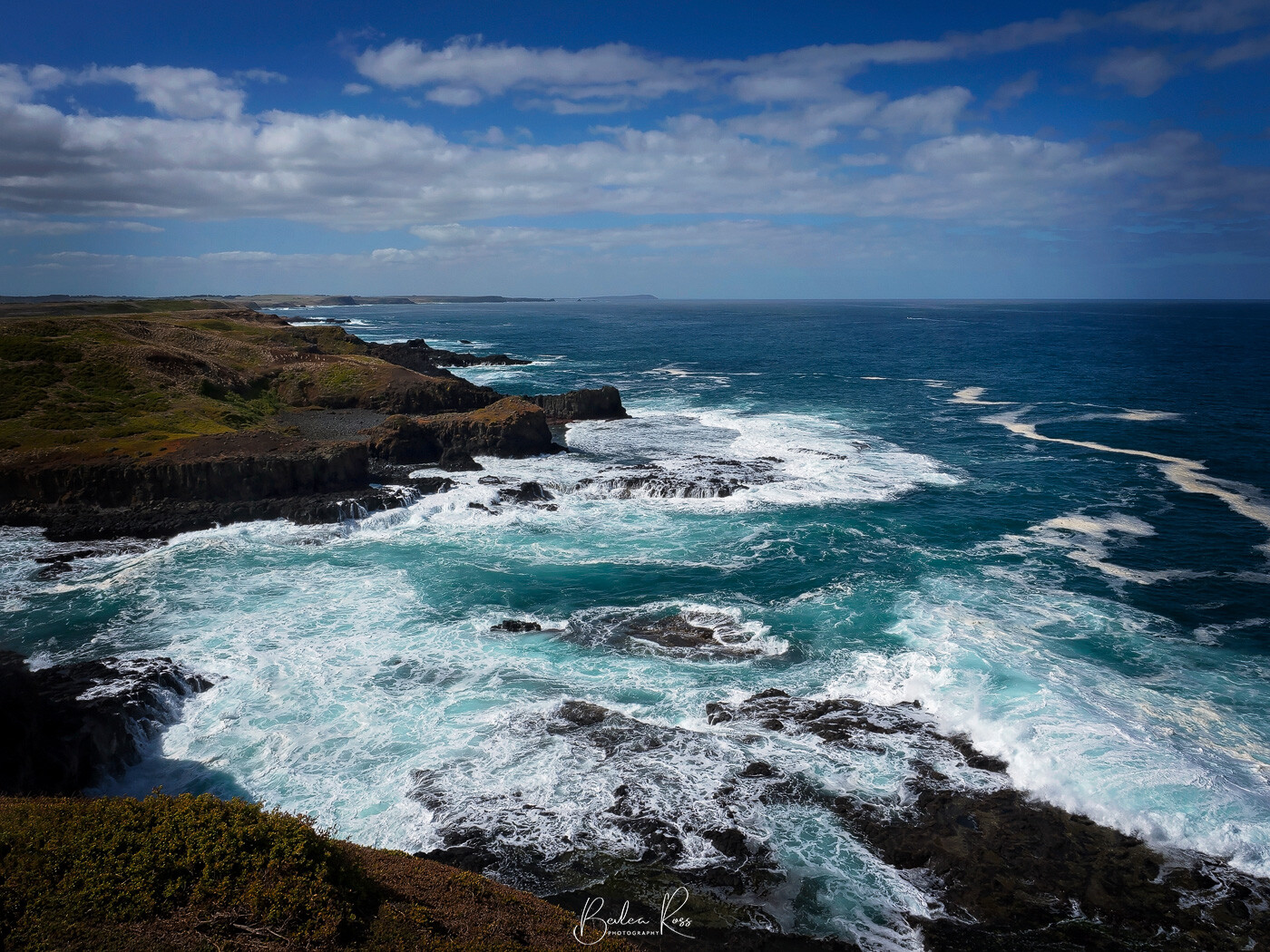
Renowned for its breathtaking landscapes and diverse wildlife, The Nobbies on Phillip Island is one of Victoria’s must visit spots. This area abounds in natural wonders, vibrant sea creatures, and pristine allure.
Located on the southwestern coast of Phillip Island in Victoria, The Nobbies is a popular tourist destination that offers a breathtaking view of Bass Strait.

Geological Marvel
The Nobbies is a remarkable headland that displays awe-inspiring views from the clifftops. Its stunning rock formations result from millions of years of natural forces at work. The area comprises basalt formations shaped by the relentless pounding of the Southern Ocean, creating a mesmerising landscape of sea cliffs, caves, and rock stacks. This geological wonderland attracts visitors from all around the world who come to marvel at its stunning natural beauty.
Marine Life Extravaganza
The Nobbies is more than just a geological wonder. It also boasts a thriving marine ecosystem with various plants and animals. The chilly waters surrounding the headland offer an ideal home for seals, penguins, and many seabirds. Likewise, nearby Seal Rocks are home to a sizable population of Australian fur seals, which delight visitors with their playful behaviour and elegant dives. These charming creatures enhance The Nobbies’ appeal and emphasise the island’s important role in safeguarding marine biodiversity.
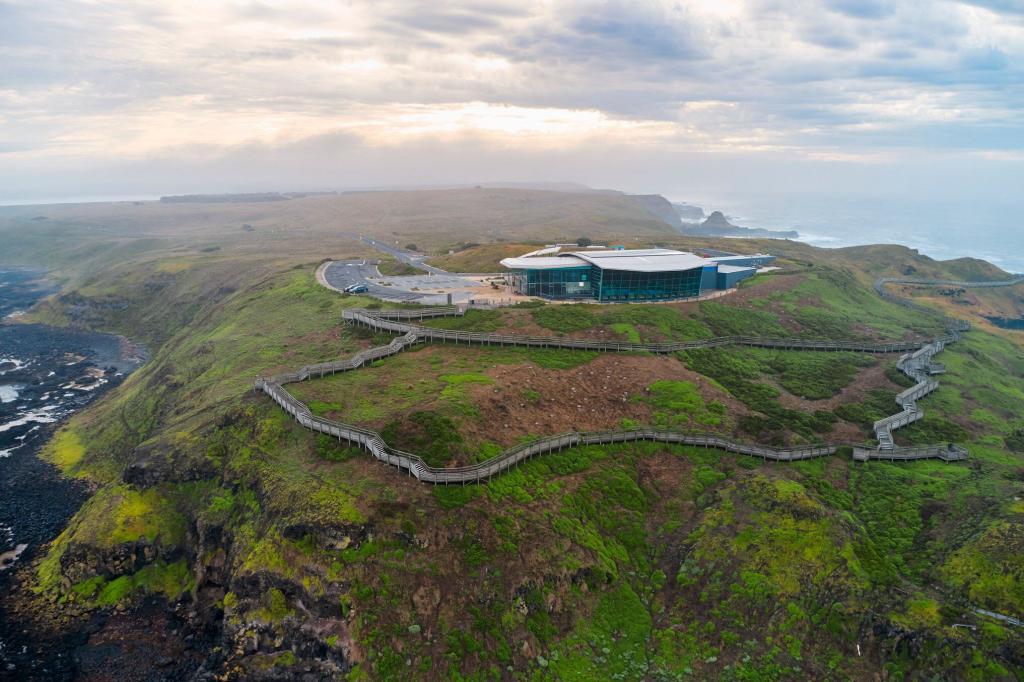
Penguin Parade
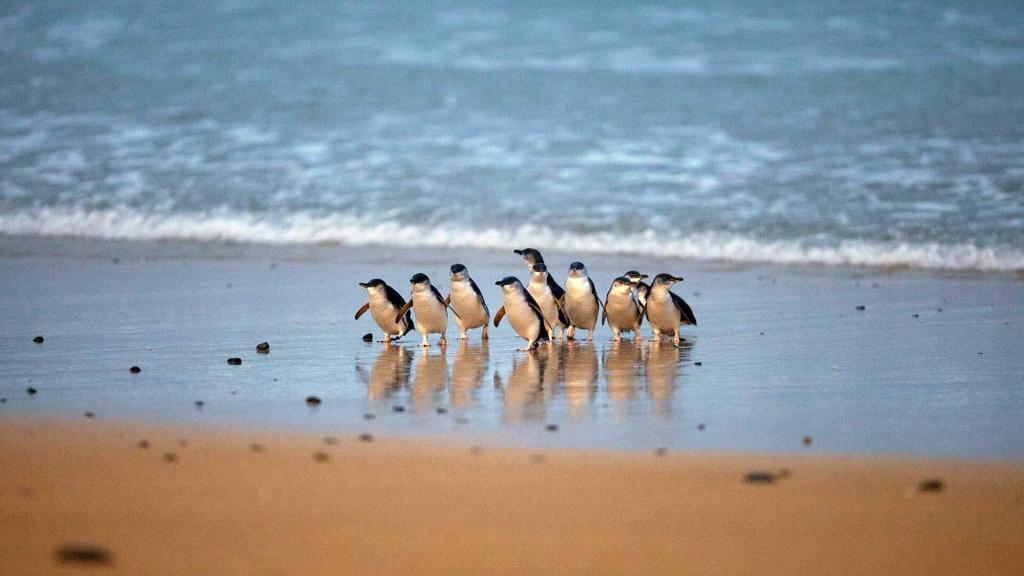
The Penguin Parade at The Nobbies is a significant draw for visitors. It’s an incredible sight at sunset as the hundreds of tiny penguins return to their burrows on Summerland Beach. Specially built viewing platforms allow visitors to watch these charming creatures waddle onto the shore after a day of hunting in the sea. This daily spectacle serves as a valuable educational experience, highlighting the importance of preserving the natural habitats of these vulnerable seabirds.
Please note that there is an entry fee for attending the penguin parade, and photography is prohibited. The reason provided for this rule is to avoid disturbing the birds, although some may argue that this is an exaggerated claim. Especially in light of there being numerous locations worldwide where penguins can be photographed without any negative impact on their well-being.
Conservation Efforts
The Nobbies and surrounding areas hold great ecological significance, and various conservation initiatives have been taken to protect and preserve this remarkable ecosystem. Parks Victoria has collaborated with local authorities and environmental organizations to implement strict regulations for site management. These measures include visitor guidelines, habitat restoration projects, and ongoing research to monitor the marine environment’s health. Phillip Island aims to balance tourism with conservation to maintain the delicate equilibrium between human enjoyment and preserving its natural treasures.
Fast Facts
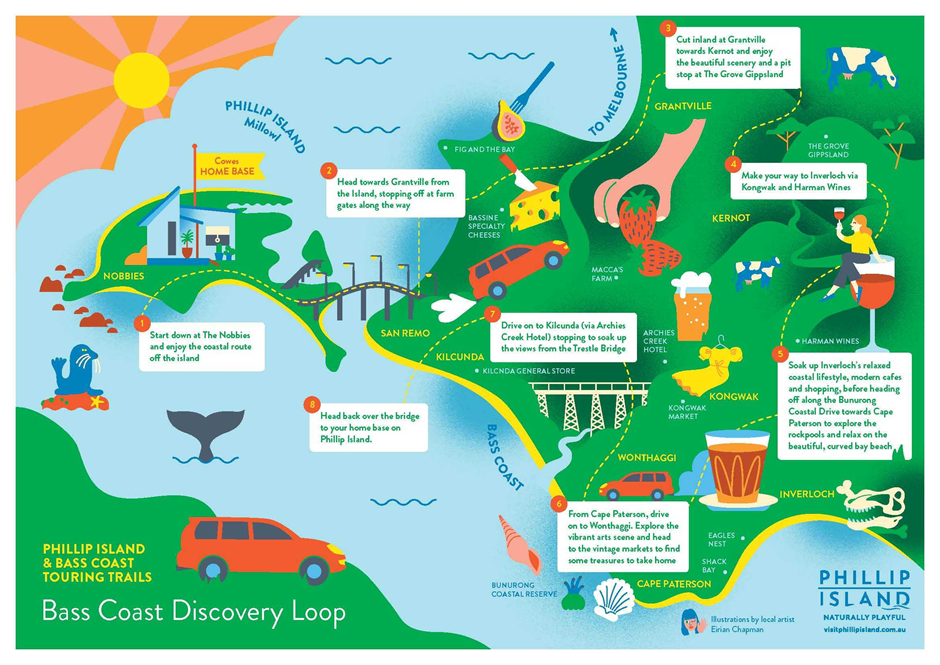
- Entry toThe Nobbies is free
- Distance/Time – 800 metres return / 20 minutes return
- The easy, primarily flat timber boardwalk around the headland; however, the lower section has steps
- Ample parking at Nobbies Centre (sealed) car park
- Designated Accessible Parking and toilets available
- Suitable for Wheelchairs for approx first 800m of timber boardwalk in the upper-level Pram friendly
- Bicycles and Dogs not permitted

Olive Cotton (1911-2003) was an Australian photographer known for her poetic and lyrical images of everyday life, landscape, and portraiture.
She was born on 11 July 1911 in Hornsby, Sydney. Her parents were Leo Cotton, a Professor of Geology at Sydney University, and Florence, a painter and pianist. Both of her parents were English immigrants. Her father, in his role as a geologist, took photographs of Sir Ernest Shackleton’s expedition to the Antarctic in 1907
Early Life
As a child, Cotton displayed a strong inclination towards art and enjoyed creating drawings and paintings. She was also captivated by the stunning natural scenery that enveloped her family’s farm, which later ignited her interest in photography. At 11 years old, her aunt bestowed upon her a Kodak No.0 Box Brownie camera, which she used to take her first black-and-white photos. Together with her father’s help, they converted their home laundry into a darkroom, where Cotton developed films and produced her earliest photographs.

Cotton attended the Methodist Ladies College in Burwood from 1921 to 1929. During her final year there, she became a member of the Photographic Society of NSW. She enrolled at Sydney University in 1930 and joined the Sydney Camera Club at around the same time. There, she received guidance and instruction from the renowned Pictorialist photographer Harold Cazneaux. While completing her Bachelor of Arts, with a focus on mathematics and English, she continued to pursue photography as an amateur. She graduated in 1934.

Marriage and Family
In mid-1934, she started working with Max Dupain, a photographer, at his studio located at 24 Bond St in Sydney. Although her official position was an “assistant,” she also focused on her own photography projects. Cotton and Dupain had been friends since childhood and used to spend their summer vacations taking pictures at Newport Beach. Their shared interest in photography cemented their friendship, and they eventually got married in 1939 and had two children. However, their marriage was short-lived and ended in separation in 1941. They officially divorced in 1944.
In 1938, Cotton joined the short-lived Contemporary Camera Group. She also tried her hand at fashion photography and worked in the commercial section of the Commemorative Salon, which was organised by the Photographic Society as part of the 150th-anniversary celebrations in Australia. It was during this period that Cotton and Dupain relocated their studio in Sydney to a more spacious one on Clarence Street.

Divorce and solo career
After her divorce in 1941, Cotton found work teaching mathematics at Frensham School, a progressive girl’s school in Mittagong, NSW. When Dupain left Australia to serve in the military from 1942 to 1945, Cotton managed his studio. Cotton received numerous commissions during this time, including creating wartime propaganda photographs for AWA, a wireless manufacturer. She also designed a mural for architect Sam Lipson’s modern house, which unfortunately was destroyed in the 1980s. The original mural measured 182.9 x 76.2 cm.
The only known print of a smaller version of the mural can be found at the National Gallery of Australia. The client had shown interest in ballet figures after seeing a mural created by Max Dupain. The brief for the mural was flexible, and it took Cotton over one hundred hours to complete. Cotton did not intend to make a Surrealist work but focused on using techniques to capture her desired image. Helen Ennis has documented the processes and techniques used by Cotton to create this piece in her entry for Heritage: The National Women’s Art Book.


Remarriage
She married Ross McInerney in 1944, and together, they relocated to Koorawatha, near Cowra. For the first three years of the marriage, they lived in a tent before buying ‘Spring Forest’ a two-room cottage. Later, they moved into the old barracks on the property.
The marriage produced two children. A daughter named Sally, born in 1946 (while they were still in the tent), and a son named Peter in 1948. Cotton quit her job as a professional photographer and returned to teaching.
From 1959 to 1963, Cotton was a mathematics teacher at Cowra High School. In 1964, she established a studio in Cowra where she specialised in professional photography services such as children’s portraits, wedding photography, and landscape photography using a Rolleiflex camera for her work.
Additionally, she ventured into uncharted territory by exploring alternative photographic techniques. These included photograms and camera-less photography, enabling her to craft dreamlike and unconventional visuals.
Later Life
Unfortunately, while at home, Cotton suffered a fall that resulted in a broken leg. She was hospitalized in Orange and later moved to a nursing home. In 2003, Cotton passed away at Cowra Hospital, aged 92, with her husband of 60 years, Ross McInerney, by her side.

Cotton’s photographic works are renowned for their meticulous attention to detail, use of natural light and sensitivity towards her subjects. One of her notable works is “Teacup Ballet,” which has become an iconic representation of Australian photography. The image was featured on the 1991 Australian postage stamp honouring the 150th anniversary of photography in Australia.
Olive Cotton’s work has been recognised through various retrospectives in Australia and globally. The Art Gallery of New South Wales hosted a significant exhibition in 2018 called “Olive Cotton,” displaying over 130 of her photographs. The exhibit featured a diverse range of Cotton’s career, including her experimental works, portraits, still lifes, and surreal images. Many of these works were rare and had never been seen before.

Posthumous Fame
The National Gallery of Australia in Canberra curated an exhibit in 2021 titled “Olive Cotton: A Life in Photography,” showcasing over 100 of her photographs. These delved into the themes of nature, domesticity, and the female perspective in her artistic vision. The exhibit also presented archival materials such as letters, notebooks, and personal photographs, offering a glimpse into Cotton’s life and creative process. In 1995, the National Library of Australia published a book chronicling her life and artistic oeuvre. Many of her works can be viewed at the Art Gallery of NSW
Cotton’s photography has gained global recognition through exhibitions at prestigious venues such as the International Center of Photography in New York and the Museum of Photographic Arts in San Diego. These retrospectives have solidified Cotton’s position in the esteemed group of Australian photographers and introduced her work to a new wave of enthusiasts and academics.

Camera straps are a crucial accessory for your kit, yet they tend to be neglected or forgotten when upgrading your gear. As a photographer, the first thing I do upon unboxing a new camera is remove the cheap and uncomfortable kit neck strap and replace it with my preferred sling strap. Despite spending thousands on the new camera, the neck strap supplied with it is usually the cheapest item in the box, second only to the cardboard packaging.

Pros and cons of the kit strap?
Keeping the strap that comes with your camera can be a good idea for a few reasons. First off, it does a great job of keeping your camera safe and secure. Plus, you might like the branding or model information on the strap. Lastly, it’s more budget-friendly to stick with the original strap instead of buying a new one.
However, while it is functional, it’s also most uncomfortable, especially with the weight hanging around your neck. As for the brand name on the strap, that’s a matter of personal choice – aesthetic-wise, they’re ugly, made from cheap plastic, and I’m not a fan. Yes, the sling straps can be expensive, but some are also reasonably priced, and what price do you put on comfort? If you are like many photographers and me, you probably also suffer from GAS (gear acquisition syndrome). Just think of all the camera bags you bought, looking for the perfect bag. A good strap is just as important.
Which strap?
When choosing a camera strap, photographers have many options: Neck straps, wrist straps, shoulder straps, harness straps, hand grips and camera clips.
Let’s bite the bullet and dispense with the neck strap right now. It’s the most uncomfortable way to carry your camera. Position-wise, a shoulder strap across the body and shoulder is more comfortable than hanging it around your neck. Your shoulders can disperse the weight better, and you won’t have a stiff and sore neck at the end of the day. Trust me, it happened. I carried my Canon 7D Mk II with a 100-400 attached all day at the zoo. That night, I could barely move my neck. So, that same night, I went online and bought a sling strap for my camera. Problem solved.
Another option is the wrist strap – and while this may be okay for lighter point-and-shoot cameras, for a mirrorless or DSLR, it’s too heavy to carry on the hand all day. There are also camera clips on the market now, but my preference, especially for women, is still a sling strap.

Camera Strap Options
Having decided you will get a new sling strap to do your camera justice – the next decision is which one? The market is filled with many companies making camera straps, but if we cull it down to sling straps, the leading companies we are left with are Black Rapid, Peak Design and Joby.
I initially used a Joby side strap before switching to Black Rapid. Both straps attach to the camera’s base, but I found it inconvenient that the Joby strap took up the tripod plate and had to be removed to attach the tripod. Furthermore, the Joby strap became unusable when I used an L bracket on my camera. I also experimented with a generic version from eBay, which I do not recommend, and a hand strap. Ultimately, I opted for the Peak Design strap, which I have been using for more than five years now.
Benefits of a Sling Strap
- Cross-Body Design: Wearing the sling strap diagonally across the torso can evenly distribute the camera’s weight. This reduces strain on the neck and shoulders, unlike traditional neck straps.
- Quick Access: Positioning the camera at the hip or lower back and sliding it along the strap can be quickly brought up to the shooting position..
- Comfort and Ergonomics: Padded sling straps are designed to enhance comfort when carrying heavy gear for extended periods of time..
- Versatility: There are camera sling straps available that can be used with different camera systems. They come with adjustable features, which allow them to fit various body sizes and cater to different shooting styles.
- Tripod Compatibility: Certain sling straps have the option to connect to tripods or come with quick-release mechanisms, allowing for seamless transitions between sling strap and tripod usage.
- Freedom of Movement: A sling strap is preferable to neck straps as it offers a more natural range of motion and is particularly beneficial for photographers who are frequently on the go. Neck straps may cause an obstruction at times, whereas a sling strap provides greater flexibility.
- Durability: Sling straps are often made from high-quality materials to withstand the demands of professional photographers and outdoor shooting conditions.
Peak Design
The Peak Design Slide is my sling strap and a hands-down winner for me. It attaches to the camera via the strap loops with its unique dongle system or to the bottom of the camera with a mounting plate. The strap is made of sturdy, internally padded webbing. The strap loops are the way to go if you use an L bracket. You can lengthen or shorten the strap with the webbing glides. Peak Design also has narrower Lite slide straps for lighter or smaller cameras. The Slide comes in four colours. RRP $130

Black Rapid
The best-selling of the black rapid range are the RS-4 and the Breathe Sport. The difference between them is that the sport is more comfortable, but the tradeoff is extra weight. Another one from Black Rapid is the Sport X QD. With this one – you can attach the strap to an L bracket – but you need a QD-compatible L bracket. All of the Really Right Stuff plates are QD compatible. Black Rapid also makes a dual strap sling strap for those who carry two cameras.
Breathe Sport RRP $124

Joby
The Joby Ultrafit approaches things a little differently and makes one strap for women and one for men. The difference is that the women’s strap has a slight ‘S’ bend, and the pivot ring is smaller. It attaches to the camera via the pivot ring at the bottom of the camera.
Joby Ultrafit RRP from $30

Choosing the right sling straps for your camera is crucial. It needs to be compatible with your camera model and meet your individual requirements. With so many brands and models available, you can select one that matches your photography style and provides maximum comfort and protection for your equipment.

Back in 2020, I did a post on photographing flowers frozen in ice. Fast forward to 2023, and with autumn coming on, I decided to try the same thing with autumn leaves. Not having frozen-over lakes here in Australia, I again commandeered the freezer. The turning leaves tell a story of the approaching winter chill and colder nights. Encased in ice, that story added a new level.
The frozen leaves also create interesting patterns and textures in the ice. And a bonus is that leaves in ice can be done in the comfort of your own home without having to brave the cold!
Supplies
Apart from your camera (and you could use a phone camera), you will need the following;
- a plastic container to fit your leaves
- water (tap, distilled or demineralised – all will give different effects)
- an assortment of leaves
- ice cubes.
Look for different shapes and colours of autumn leaves; you can even add some gum nuts or acorns. Both tap, distilled and demineralised water will work. However, demineralised water will be less cloudy than tap or distilled water. However, I have found that tap water also becomes clearer as the ice starts to melt.

Method
Freeze around 5cm (1 inch) of water in your container. When frozen, take the container from the freezer and arrange your leaves on top of the ice.

Next, place a couple of ice cubes on top of each leaf. This will keep them in place and stop them from floating when you add more water. Once you complete step 5, the ice cubes become almost invisible, but they add more detail to the ice block.
Note: With the flowers in 2020, I just added a couple of mm of water to anchor them, but the leaves are much lighter and float, hence the ice cubes hack.

Add a small amount of water to the container, just a cm or so, to ‘glue’ the leaves into ice when it freezes. Return the container to the freezer

Final step – Take the frozen container from the freezer and top it up with water to cover the leaves by a cm or so. Return to freezer.
Photographing the ice block
Once your block of leaves in ice is frozen solid, it’s time to have some fun. If using a camera, you can use a standard lens or macro. The back (or bottom) of the block is the best side to photograph as the air bubbles start there; it’s also perfectly flat and smooth, and it’s closest to the leaves.

Olympus 12-100 mm lens F11, ISO 200, 1/25 sec at 41mm
Flash really won’t work with the ice, though you can use soft boxes, paying careful attention to reflections or hot spots. However, I prefer natural light. You can set it up in front of a window with well-diffused light (or outside if you have a good, flat surface). If doing it inside against a window, you need one where the sun isn’t shining directly on the block. Take your block from the freezer, and leave it on the bench for 5-10 mins, allowing it to melt just enough to pop out cleanly or run some cool water over the back of the container, and it will pop straight out.

Olympus 12-100 mm lens F11, ISO 200, 1/25 sec at 41mm
Setting up the shoot
If photographing inside, place a small table in front of the window, and if using a glass-top table, place a folded paper towel under the block. It will stop it from it sliding. Putting a bath towel or paper towel under the table to absorb the melting water is also a good idea. Stand the block upright on the paper towel so the block is backlit. You can also photograph the leaves in ice straight down with the block on a towel, but the colour of the towel will show through, so give some thought to that. I prefer it upright, so the light brings out all the bubbles and cracks in the ice. It also nicely highlights the leaf veins when backlit.

Olympus 60mm Macro 1/15 sec, F11, ISO 200.
The weather was a balmy 30C the day I took my shots, so I stood the block on the veranda railing outside. It gave me good filtered light and no mess with the water dripping onto the garden bed below. I ran off some shots and left it for half an hour, shot some more and left it again.

Olympus 60mm macro, 1/4 sec, F11, ISO 200
Settings
F11 to F16 will give you the best depth of field
ISO 100-400
Shutter speed – watch the highlights, but if backlighting, overexpose by about 0.7 so your leaves aren’t in shadow.
You will need a longer shutter speed depending on the light in the room, so place your camera on a tripod. However, it’s more important to have a good depth of field than a faster shutter. So stay between F11 and F16 and adjust the shutter speed accordingly. For all images above, I used aperture priority.
Once you have taken enough shots with the solid ice, allow it to melt naturally or speed things up with a hairdryer. You will get different images as it melts and partially exposes the leaves. The detail also comes out in the leaves more as it melts and becomes thinner.

Editing your shots
I edit in Photoshop, but Lightroom’s slider settings are the same. Bring the highlights down to -100, Shadows +25, Texture +30, Clarity +25, Dehaze +16 and Vibrance +50. In Lightroom and Adobe Camera Raw (ACR), you can synchronise the settings across all the images to save having to edit one by one.
Syncing in Lightroom
- Make the changes to your first image either using your favourite preset or the slider suggestions above.
- While the first image is highlighted, click and highlight the other images you want to edit by holding down the SHIFT key (CMD on a Mac) and then clicking on the last image you want to edit.
- Click the Sync button, which is found on the lower right-hand side of the screen at the bottom of the Develop Panels.
- A synchronise settings menu will pop up. Just click Synchronise
- The same settings will be applied to all images.

Syncing in Photoshop ACR
- Adjust the sliders using the settings above or your preferred preset/settings
- Right-click on the image in the filmstrip and click ‘copy edit settings.’
- with the first image still highlighted right, click on the last image in the filmstrip and select “paste edit settings”
- Next, click Open (or open as Object if you prefer to work with smart objects)
- from here, you can edit with your regular workflow

Frozen leaves are a beautiful and fascinating natural phenomenon that occurs naturally during the winter months in colder climates. However, they can still be photographed in warmer climates using the above method. While they may seem simple at first glance, frozen leaves are complex structures with intricate patterns and colours. Whether you’re a nature enthusiast, a photographer, or just someone who enjoys the beauty of winter, frozen leaves are definitely worth exploring and admiring.

The magnificent Curtain Fig Tree can be found in the heritage-listed Curtain Fig Tree National Park, situated in the breathtaking Atherton Tablelands region of Far North Queensland, Australia. The park, part of the Wet Tropics World Heritage Area, is approximately a ninety-minute drive from Cairns. The vegetation of the park is a mabi rainforest, which is a complex notophyll vine forest that is native to the area and is classified as endangered.

The Curtain fig tree, similar to the Cathedral Fig Tree in Danbulla National Park, is a gigantic strangler fig tree estimated to be more than 500 years old. It boasts a trunk circumference of approximately 39 meters (128 feet) and is about 50 meters (160 feet) tall. The tree’s canopy spans an impressive 30 meters (98 feet) in every direction from its trunk, making it an awe-inspiring sight to behold.

The Cathedral Fig tree is towering and upright, while the Curtain Fig tree is slightly different. It fell and leaned against a neighbouring tree when its host rotted away, and over time, it also consumed that tree too. As a result, it now lies at an angle, creating an impressive curtain-like appearance.


Forest fauna
Once a host tree has fully decomposed, it creates a hollow area that provides a natural home for various animals. These animals, such as birds, bats, rodents, and insects, utilise the hollow space as a secure shelter, nesting site, or food storage area. The Papuan Frogmouth, Orange-footed Scrubfowl, reptiles, possums, and Lumholtz’s tree kangaroos are some species that inhabit the area around the tree. Furthermore, succulent fruits from strangler figs attract Rose-crowned Fruit Doves, Emerald Fruit Doves, and Pale-yellow and Grey-headed Robins. In the Curtain fig tree national park, forty-one bird species are listed as inhabitants.

Life Cycle of Strangler Figs
The life cycle of a strangler fig tree begins with a seed that an animal drops onto the branch of a host tree. The seed germinates and begins to grow as an epiphyte, meaning that it does not have its own roots in the ground. Instead, it gets its nutrients from the host tree.
As the strangler fig grows, it produces aerial roots which gradually descend along the trunk of the host tree, until they finally reach the ground. Upon contact with the ground, these roots start to absorb essential nutrients and water from the soil. This enables the strangler fig to thrive and grow bigger, eventually becoming self-sustaining.
The aerial roots of the strangler fig play a crucial role in supporting its growth. These roots wrap around the host tree trunk, forming a latticework that keeps the strangler fig steady and upright. Gradually, the fig’s roots will cover the host tree trunk, impeding the flow of nutrients and water, leading to the death of the host tree. However, the strangler fig will keep growing and eventually stand independently as a tree.

As time passes, the strangler fig tree steadily thrives and develops, yielding fruits that lure in wildlife to assist in spreading its seeds. This process repeats over and over again. Subsequently, the strangler fig tree becomes the host for other plants and trees, helping to create a rich and diverse ecosystem.
Waps and Fig Tree
The hollow spaces inside the strangler fig trees also play a vital role in the tree’s reproductive cycle. Many species of figs rely on specific wasps to pollinate their flowers and disperse their seeds. Significantly, each species of the fig wasp is only able to fertilise the flowers of one species of the fig tree. The female wasp bores into the fig and deposits her eggs. In the process, the wasp fertilises many of the surrounding flowers.
As the larvae grow, they secrete a substance that prevents the fig fruit from reaching maturity. This mechanism is crucial in protecting both the larvae and the fruit from being consumed. When the larvae mature, they emerge from the fig and fly off to find a new fig tree to lay their eggs.
Getting there
From Cairns, drive to Yungburra and head towards Atherton along the Gillies Range Rd. Then turn onto Fig Tree Road. A short drive down this road takes you to the carpark. From the carpark, it’s a short 180m return walk along an elevated boardwalk to the tree.
Strangler figs are a fascinating example of how plants can adapt to their environment. They are able to grow in dark and shady areas where other plants would not be able to survive. And they are able to kill their host trees, which frees up resources for the strangler fig to grow even larger.

Frank Hurley was an Australian photographer, filmmaker, and adventurer born in Sydney, Australia, in 1885. Hurley is best known for his images of the Antarctic and his photographs and films of the Australian Imperial Forces during World War I. He is also remembered for his ability to capture the spirit of adventure and endurance in the face of extreme hardship and danger. Hurley’s images, notably his antarctic ones, continue to inspire generations. They are considered a testament to the bravery and determination of the early explorers of the Antarctic.

Career
Hurley became interested in photography in his late teens. He purchased a Kodak Box Brownie for 15 shillings and joined Henry Cave in a postcard business in Sydney. Working with Cave, he began to develop a reputation for the highly technical quality of his work. He also gave talks at photographic clubs and held the first exhibition of his work in 1910 at age twenty-five.

Mawson Expedition
In 1911, Sir Douglas Mawson invited Hurley to be the official photographer on the Australasian Antarctic Expedition. Hurley worked willingly under arduous conditions, taking still photographs and movie films. His cheerful and willing nature made him a popular and valuable team member.

Upon the expedition returning to Sydney in 1914, Hurley quickly assembled his movie footage into a documentary, “Home of the Blizzard”. This was successfully presented to the public in August 1914

“Hurley is a warrior with his camera, and would go anywhere or do anything to get a picture.”
~ Lionel Greenstreet, First Officer of the Expedition Ship Endurance.
Shackelton Expedition
The Shackleton Expedition, also known as the Imperial Trans-Antarctic Expedition, was a 1914-1917 Antarctic exploration led by Sir Ernest Shackleton. Their goal was to cross the Antarctic continent from coast to coast via the South Pole and to be the first to do so. However, the expedition, plagued by numerous difficulties and setbacks, never accomplished its goal. These setbacks included being trapped in ice for eleven months before the ship was crushed and sank. Fortunately, the men escaped, however, with limited supplies and only three lifeboats. They then spent the next five months floating on an iceberg before landing on Elephant Island.

A stern view of ‘Endurance’ (1912), a wooden auxiliary Discovery vessel, heeled over to port in the ice. The pressure and movement of the ice floes pushed the starboard side of the ship upwards on 18 October 1915, causing damage to the sternpost and planking.
On Elephant Island, they established a makeshift camp. The ‘island’ was just a rock in the ocean with a few penguins and seals for food. With winter approaching, the only option was for Shackleton and a small team to go for help. Shackelton decided to attempt the difficult 1200km (800-mile) journey across the Southern Ocean, one of the roughest seas in the world, to South Georgia Island. He chose six men, and they took off in a 22-foot lifeboat while the rest of the team, including Hurley, remained stranded on Elephant Island. Shackelton and the six men arrived at South Georgia Island whaling station 17 days later after dodging pack ice and sailing through a hurricane. They then had to cross forty miles of uncharted mountains.

Rescue
A Chilean trawler with Shackleton on board returned to Elephant Island four months later and rescued the rest of his team. Not one man had been lost. Instead of being regarded as a failure, the expedition was hailed as a triumph of human endurance and perseverance in the face of extreme hardship and danger. The story of the Shackleton Expedition continues to inspire generations. It is widely regarded as one of the greatest survival stories in the history of exploration.

WWI Intervenes
Frank Hurley was the first official photographer of the Australian “Imperial Forces “AIF) during World War I. In 1916 he accompanied the AIF to the Middle East with the rank of honorary Captain. However, the troops dubbed him the “mad photographer” upon seeing the risks he took when capturing images of the Australian troops and the battlefields they fought on.

Hurley’s photographs are an important visual record of the experiences of the Australian soldiers during the war. They helped to build a sense of national identity and pride in the country’s military. Many of his images are now considered iconic and are held in the archives of the Australian War Memorial in Canberra, Australia.

Composite Images
Hurley was a strong defender of pictorialism. He believed photographs should express ideas, tell stories, and excite emotions in much the same way as paintings. Subsequently, he began manipulating war pictures. Though not widely known, some of his most famous battle scenes are, in fact, composites of several negatives.


Composite images are created by combining multiple photographs into a single image. Hurley used this technique to create dramatic and visually striking images of the Antarctic and the battlefields of World War I. For example, Hurley used composite images to show the destruction of the Endurance during the Shackleton Expedition. He also created composite images of the Australian troops in the trenches during World War I.

Clash of Ideals
Under the direction of official war historian Charles Bean, Hurley’s job was to record the fighting for “propaganda purposes”. However, confronted with the horrors and sheer scale of the battlefields and unable for obvious reasons to photograph out of the trenches, Hurley created composites. He often used multiple photographic negatives to create a single image with heightened drama. While not a new technique, it was such a departure from the literal truth that historian Bean was horrified, and the two clashed bitterly.

As a result, Bean forbade Hurley from publishing his composites. Hurley then approached the chief of the Australian forces, and a compromise was reached. Bean conceded the images could be exhibited, but Hurley had to have captions saying they were composites. However, in later exhibitions and publications, the captions somehow disappeared. This resulted in the public taking all of Hurley’s pictures as accurate. In the images below, Hurley cropped the image to a vertical one and added a new sky, creating a much more powerful image.


“Press photography in this war is such a construction of flimsy fake… That is the last thing a historian wants to build on”.
Charles Bean, Official Australian World War I Historian

In January 1918, Hurley was in Palestine, and he borrowed troopers and officers from General Harry Chauvel and filmed their procession through the newly captured streets of Jerusalem. History records that the Australians took no part in the capture of Jerusalem. Regardless, the film lives on as if to prove they did.
Later Career
In 1918, Hurley held successful exhibitions and lecture tours. Sir Ross Smith, the pioneer aviator, invited Hurley to join him on the final stage of his historic flight from England to Australia, allowing Hurley to film Australia from the air.
From 1920 to 1923, Hurley filmed the Torres Strait Islands and Papua. His film “Pearls and Savages” was a major commercial success. He became the pictorial editor for the Sun newspaper in Sydney in 1927 before joining Mawson again for another antarctic research expedition.
WWII

During WWII, he served again as the official photographer of the AIF in the Middle East. Returning to Australia at the war’s end, he published several books on Australian landscape photography and city portraits. He also worked as a journalist and gave lectures. In his lifetime, he was awarded an OBE, the Polar Medal, and two bars in 1934 for the 1929-1931 Antarctic Expeditions.
Hurley continued to travel up to his death of myocardial infarction in 1962. He was survived by his wife of forty-six years and four children.
Frank Hurley Photography Awards
The Mawson’s Huts Foundation Ltd is a non-profit organization based in Australia. It was established to conserve and protect the huts that Sir Douglas Mawson and his team used during their expedition to Antarctica in the early 20th century. The huts in the Commonwealth Bay region of Antarctica are the only surviving site from an Australian Antarctic expedition. Hurley operated a 1.2m² darkroom in the main hut. They are considered one of Antarctica’s most important historical sites and are protected under the Antarctic Treaty System.
The foundation is dedicated to preserving this piece of Australia’s heritage and maintaining the huts as a site of international significance. It works with the Australian Antarctic Division, the Antarctic Heritage Trust, and other organisations to ensure that the huts are preserved and protected for future generations to enjoy. The foundation raises funds through the Frank Hurley Photography Awards, donations, and sponsorships to support its conservation efforts. It also offers educational programs and other opportunities to learn about and support the huts.
The impact of Frank Hurley’s work on photography and exploration cannot be overstated. His exceptional ability to capture extraordinary moments and push the limits of his craft left an enduring mark on both the artistic and scientific aspects of photography. Even today, his contributions are celebrated and serve as a testament to his incredible talent and adventurous spirit.

Swan Lake, Phillip Island, is the only freshwater lake on the island and home to an abundance of birdlife. It is accessed off Ventnor Road, 7kms before the Penguin Parade and near the Nobbies. The pleasant walk starts from the small unpaved carpark and, at only 1.7kms long, is a leisurely 40-minute return.
The Walk
The swan lake trail is slightly undulating and a pleasant stroll, thus making it ideal for prams and wheelchairs. It is also bicycle-friendly, and picnic tables are provided. The gravel path weaves through open bushland and gives way to a boardwalk across ecologically sensitive areas as it nears the lake edge. Next to the boardwalk are two bird hides.

Historically, Swan Lake was a significant food source for the Bunurong Aboriginal people. Historians believe the Bunurong people previously lived in the area and fed on the wetland birds, fish, eels and plants, as evidenced by the ‘Middens’ items made from shells and charcoal that have been found there.
wildlife

On the day we visited, apart from the Black Swans, we also saw Cape Barron Geese, various ducks and Welcome Swallows. The Welcome Swallows were abundant in the trees alongside one of the hides. They also had a nest in the corner of the door leading into a bird hide. Watching them, they darted around and stopped to perch on the branches for us. Very accommodating of them. We also spotted a Swamp Wallaby as we continued our walk.


Getting There
The reserve is located on Ventnor Road. Keep an eye out for the Swan Lake guest house as you approach the penguin parade carpark. The carpark is situated to the left, before the penguin parade carpark and just a few metres past the guest house. Swan Lake is open daily.

NOTE
Unfortunately, Swan Lake has no toilets, and dogs are not permitted. The track also offers no shade, save for when in the bird hides, so a hat, sunscreen and insect repellant are recommended (though the mosquitos weren’t as bad as elsewhere on the island)

Located in Murchison South, Victoria, Days Mill is a well-preserved steam-driven flour mill with a rich history. It’s also considered the best-preserved flour mill from the 19th century in Victoria. The property spans four hectares of land in the Goulburn Valley, south of Murchison, and includes the mill, a residence, and farm buildings. The mill contains all the original milling machinery in its original setting, just 150 km north of Melbourne.

History
Days Mill was established in the late 1850s by William and Ann Day, migrants from England. William ran the flour mill, a bush sawmill, and a punt on the Goulburn River. Ann also ran the local store. In August 1870, William was thrown against a fence by a cow suffering severe injuries to his legs and arms. He never fully recovered from this accident and died in 1872.
After her husband, William passed away, Anne was left to care for her seven children, aged 5 to 19. Thankfully, William’s estate was worth more than £5,000, which provided Anne with financial security. From 1872 to 1891, she successfully managed the farm and the mill, making it one of the most advanced properties in the area. Through a collection of letters, it’s evident that Anne was a capable and determined woman excelling in the male-dominated Victorian business world. Her letters document her struggles with poor selectors and her endeavours to sell flour in the Melbourne market. They also shine a light on her disputes with tardy agricultural machinery manufacturers and her efforts to sell her farm’s produce at a reasonable price in Melbourne.

By 1870, traditional rural mill stone operations were being displaced by new iron roller technology. This led to the cessation of the mill’s commercial operation in the late 1880s. Anne Day, who had been farming and storekeeping, retired and passed on the reins to her eldest son, Joseph. The property then functioned solely as a farm, with Joseph occasionally grinding chicken feed for his neighbours. In 1910, Joseph extended the size of his farm by acquiring an additional 320 acres. Meanwhile, his younger brother, Henry, acquired 244 acres.

The Buildings
The exact date of the residence’s construction remains unknown. However, the Day family believes the kitchen area was built around 1865, which coincides with the mill’s construction. The two-story house featured a cast iron verandah and was constructed later. The interior walls are adorned with hand-painted stencils and marbling that date back to 1910.

The Mill complex includes a complete collection of farming and flour milling equipment from the nineteenth century. Entering the property, past the gatehouse, down a long driveway lined with peppercorns and pine trees, brings you to a two-story brick house beside the three-story brick mill. In addition, a granary annex with a two-story surrounding veranda was constructed around 1905.
The mill operated using a unique early E T Bellhouse steam engine connected to a Cornish boiler that is still fully functional. There are also several other buildings, such as a stable, chaff shed, blacksmith, butchery, dairy, shearing shed, milking shed, piggery, and chook shed. The original machinery and equipment have been preserved. These include three under-driven millstones, grain and meal elevators, a bolting reel, an air leg aspirator, a sack hoist, and other equipment.

Heritage listed
The Day family owned the Days Mill until 1985, after which the Department of Conservation Forests and Lands acquired it. Since 1996, the Days Flour Mill Complex has been under the management of Parks Victoria. Visiting the mill complex by appointment or during special events held throughout the year is possible.

The Days Flour Mill Complex is a remarkable representation of the milling techniques commonly used in the 19th century. It consequently has earned a spot on the Victorian Heritage Register. The Victorian Government’s Living Heritage Program in 2018/2019 granted it $500,000. This funding allowed significant conservation efforts on the Mill, Gatehouse, and Residence buildings. Reconstruction and repair of the roof, brickwork, windows, chimney, and Pulley House were also made possible by the grant.

Days Mill is located on Day Road, Murchison

Australia is often associated with the image of kangaroos hopping across the horizon or on a beach. Just like the koala, the kangaroo is a global icon of Australia. They are prominently featured on Australia’s coat of arms alongside the emu, and the flying kangaroo serves as the emblem of the national airline. The animals represent a nation that is constantly moving forward, as they are unable to walk backwards.
These hopping macropods (the name means big foot) are the world’s largest marsupials. They are native to Australia and the offshore islands of Tasmania and Kangaroo Island, New Guinea and the Bismarck Archipelago. Varieties of Kangaroo include the eastern grey kangaroo, red kangaroo, western grey kangaroo, common and black wallaroo and antilopine kangaroo, as well as fourteen species of the Macropus genus, called Wallabies. Overall there are 45 varieties of kangaroo.

Male kangaroos are called bucks, boomers, jacks or old men. Females are flyers or jills. Their young are called joeys, and a group of ‘roos is a mob, court or troop.
Appearance
Kangaroos are marsupials with large feet and powerful hind legs, enabling them to travel at 70 km/h and jump more than 9 metres in a single bound. In addition, their small front legs and long, powerful tail provides balance when jumping. The red kangaroo is the tallest; the males can grow up to 2 metres tall, weigh 140 kg and is 3 metres long from nose to tip of the tail, which they use like a fifth leg.

In contrast, the smallest kangaroo is the musky rat-kangaroo at only 40 to 50 cm. Kangaroos have exceptional hearing and can swivel their ears to pick up sounds. They also have excellent eyesight but only react to moving objects. Their coat can be red, grey or light to dark brown, depending on the species. Kangaroos are superb swimmers and use their tails to propel them through the water and paddle with their front legs. They swim to avoid predators and can use their forepaws to drown pursuers.
Behaviour
Young kangaroos will playfight, but the fighting becomes more serious as they age. Fighting is either over access to the females, to establish dominance and move up the mob hierarchy or against enemies. They use their forelegs to grip an enemy, rock back on their tail and swiftly drop their huge, sharp, clawed hind feet. This action has been known to disembowel dogs and humans.

When chased by hunters with dogs, they often head for water and have been known to turn and hold down on the dog with their forefeet in an attempt to drown it. When alarmed, a kangaroo will hiss and growl. The females make clicking noises when communicating with their young. Males also ‘chuckle’ during courtship.
Reproduction
Like all marsupials, kangaroos have pouches where the joeys are reared. The pouches also contain four teats producing two different types of milk. A newborn is attached permanently to one (neonatal) teat and receives a protein-rich fluid. The other teats produce ‘mature’ milk for the joey at her feet. Grey kangaroos allocate more protein to sons than daughters.

Kangaroos produce one young annually. The joey is born at a very immature stage, is only about 2 cm long, and weighs less than a gram. Immediately following birth, it crawls up the mother’s body, enters her pouch, and attaches itself to the neonatal teat. The teat then enlarges to hold the joey in place. The joey leaves the pouch after nine months but continues to suckle until twelve months.

Within a few days of giving birth, the females enter heat again, mate and conceive. However, after one week of developing, the embryo enters a dormant state. This dormancy remains until the young Joey leaves the pouch. Development of the embryo will then resume, and the female gives birth after a 30-day gestation, and the cycle starts all over again. Female kangaroos are literally permanently pregnant!
Diet and Habitat
Kangaroos are herbivores and graze on grass, young shoots, leaves of heath plants, and grass trees. They get most of their water from the plants they eat; thus, they require very little water to survive and can go months without drinking water. They also conserve water by only being active when the weather is cooler. During the day, they will rest in the shade, coming out to eat in the late afternoon and at night when it’s much cooler. They can be found across woodlands, forests, plains and savannahs of Australia. Like cattle, kangaroos regurgitate their food. They chew it twice before it passes into their chambered stomach.

Population
The current kangaroo population in Australia is estimated to be around 50 million. To slow the rising population of kangaroos, which has doubled in the last six years, scientists are asking people to eat more kangaroo meat (which has been legal to consume since 1993). The rise in population is attributed to an abundance of food after three years of heavy rains due to La Niña. Concerns are a loss of diversity if the population keeps growing. Calls for a kangaroo cull are growing. Kangaroos have only three natural predators – dingoes, humans and wedge-tail eagles. Unlike many species, European settlement has actually benefited their numbers.

Settlers cleared vast forest areas and put in bores, dams and tanks, providing permanent water resources and abundant pasture grasses. Coupled with the extinction of the Tasmanian tiger and the dingo fence, they have become overabundant in some areas. As a result, there are now more kangaroos than people in Australia.
Caution Required
Kangaroos may look cute and friendly, and some are quite tame as they have become used to humans as they encroach on suburbia. But they are still wild animals, and not all are friendly and docile or as ‘smart’ as the star of the 1960s television show ‘Skippy’. Some have been known to attack humans and dogs.

While most attacks aren’t serious, in 1938, a New South Wales man died from injuries he received protecting his dogs. This year, in Western Australia, a 77-year-old man died after being attacked by the western grey kangaroo he had hand raised from a joey. Kangaroos are protected under federal conservation laws, and it is an office to harm or keep them as pets.

David Moore was an Australian photographer known for his documentary work in the 1950s and 1960s. He was a member of Magnum’s prestigious photographic agency, and his photographs have been widely exhibited and published. Some of his most famous works over a sixty-year career include his photographs of post-war Australia and his portraits of Indigenous Australians.

Early Years
Moore was born in Vaucluse, Sydney, Australia, the second son of Dorothy and architect John Moore. He was educated at Tudor House primary school, Australia’s only preparatory boarding School. At age eleven, he was given a Coronet box camera. His father then gave him a Kodak 1A folding camera, further encouraging his son’s interest in photography.
With the Kodak 1A, he photographed a fellow Geelong Grammar student and future Prime Minister, Malcolm Fraser, sailing a toy yacht. Moore also used it to make a self-portrait aged 15 while studying at Geelong Grammar School from 1939-1945. After turning eighteen, he enlisted in the Navy and served 18 months as an ordinary seaman on the destroyer HMAS Bataan.
Documentary Photography
Consequently, as he delved into the documentary work of photographers like Walker Evans and Dorothea Lange, Moore was inspired to capture the reality of his own city. As a result, in 1949, armed with a borrowed speed graphic camera from Dupain, he roamed the streets of Redfern in Sydney’s inner west to capture its essence. While in Redfern, a woman mistook him for a newspaper employee and asked him to take pictures of a gloomy setting in a terrace house typical of the suburban area.

She led him to a bedroom that epitomised the living conditions of many slum dwellers in Sydney. The walls with cracks and stains, a double bed, and a rudimentary baby cradle with a ragged canvas base. After processing the film, Moore was overcome with guilt for invading their lives under false pretences. He even considered destroying the negatives. Some years later, this now iconic photograph of life in a Sydney slum was included in Edward Steichen’s exhibition Family of Man.

A photography career
In 1947 Moore abandoned his architecture studies and decided on photography as his career. He began his professional photographic career in Sydney at Russell Roberts’ studio in 1947. In 1948 he worked with Max Dupain on architectural, commercial and industrial assignments. In 1951 Dupain offered him a junior partnership; however, he declined and decided to move to London.

During the 1950s, Moore became the first Australian photojournalist to work for various international picture magazines. He resided in the UK for seven years and captured photographs while on assignment in Europe, Scandinavia, Africa, and the USA. Several reputable journals, including The Observer, Sports Illustrated, Time-Life, Look, and The New York Times published his work.
Additionally, Moore was one of only two Australian photographers (the other being Laurence LeGuay) to be included in the Family of Man exhibition at MOMA in New York in 1955. The exhibition also included photographers such as Ansel Adams and Margaret Bourke-White. That same year he married Jennifer Flintoff. They had four children before divorcing in 1968.

Returning to Australia
After seven successful years freelancing in London, Moore and his wife Jenny sailed back to Australia in 1957. He opened his studio in North Sydney with designers Gordon Andrews and Harry Williamson, a collaboration lasting 15 years. In 1974 Moore was one of the prime movers in establishing the Australian Centre for Photography in Paddington.

Moore’s photographs have been published in numerous books and are included in many Australian collections, including those of the Australian National Gallery. The New York Museum of Modern Art, Le Bibliothéque Nationale in Paris, and the Smithsonian in Washington DC also hold collections of his work.

Like Max Dupain’s 1937 iconic Sunbaker, several of Moore’s works encapsulate a moment in Australia’s ‘growing up. For example, his Migrants arriving in Sydney in 1966 symbolised Australia’s growing multiculturalism. While Prime Minister Holt at Canberra Airport in 1966, submissively bowing to Lyndon B Johnson demonstrated the Holt policy of “All the way, with LBJ” and the Vietnam War.

Soft Flow of Time
“Soft Flow of Time” by David Moore is a celebrated collection of photographs that captures the essence of everyday life in post-war Australia during the late 1950s and early 1960s. It is regarded as one of his most notable works. The series evokes a strong sense of nostalgia and emphasises the passing of time. These photographs starkly contrast with the ‘decisive moment’ style promoted by Henri Cartier-Bresson, which was popular among publishers then. As a classic of Australian photography, this collection is considered vital era documentation.
End of an Era
In 20age of seventy-five, Moore passed away due to oesophageal cancer, marking the end of the first era of modern documentary photography in Australia. Shortly after passing, a major retrospective of his life and work opened at the National Gallery of Australia. In honour of his legacy, Moore’s children generously donated many of his works to the State Library of New South Wales. To this day, his daughter Lisa manages his archive and ensures its preservation.

Mooroopna, situated in the Goulburn Valley region of Victoria, Australia, boasts a fascinating history. Before European settlement, the Yorta Yorta and Bangerang peoples had occupied the land for several millennia. James Cowper was the first European squatter to establish a residence in the area in 1841. In the 1870s, Mooroopna had already flourished into a thriving agricultural hub. Eventually, in 1865, it was officially surveyed and recognized as a town.

Early History
By 1888 Mooroopna had eight hotels, a flour mill, two banks, four insurance agencies, a State school, a hospital, four churches, and a mechanics institute.

War Years
During World War II, Mooroopna played a vital role in the war effort. The town was home to a training facility for the Australian Army, known as the Mooroopna Recruit Reception and Training Depot. The depot was established in 1940 and provided basic training for new recruits before they were sent to other army camps for further training.
Mooroopna War Memorial
The Mooroopna War Memorial stands at the intersection of McLennan Street and Vaughan Street, situated in the heart of Mooroopna. This monument is a tribute to the brave men and women from the Mooroopna district who selflessly served in the armed forces during World War I, World War II, and other conflicts. Additionally, it bears the names of the 145 enlisted men and 21 serving nurses who received their training at Mooroopna Hospital.

Amidst a landscaped park, pathways lead to a war memorial featuring a stone obelisk within a rotunda. The names of the brave soldiers who lost their lives are inscribed on the sides of the obelisk. Surrounding the rotunda is a circular garden bed with a tall flagpole at the centre. Notably, the memorial was unveiled on ANZAC Day, April 25th, 1928, by Lieutenant General Sir John Monash, and a large crowd of locals, many of whom had lost family members in the war, were in attendance to pay their respects. Trees and benches can also be found in the area, offering a peaceful retreat for those who wish to reflect and remember.

In 2020 the Greater Shepparton City Council allocated $320,000 to upgrade the war memorial. Funding also came from the Mooroopna Rotary Club, the Victorian and Federal governments, and private donors. Significantly the upgrade included new flagpoles and memorial panels. New concrete paths, lighting, a rose garden and irrigation were also added.
Mooroopna Hospital
The Mooroopna Hospital was built in 1876. At first, it began as a small timber hut on the Goulburn River. The hospital treated injuries and accidents as the nearest doctor was forty-two kms away in Rushworth. From 1910 to the 1930s, the hospital underwent a significant rebuild and was the main hospital in the region until the Shepparton Base Hospital opened. This eventually saw the closure of the Mooroopna Hospital in 1974.

Unfortunately, on January 9th 2011, the abandoned hospital was gutted by fire. It had been slated to be converted into a nursing home then. After the fire, the developer applied to demolish the laundry and main entrance. He submitted an engineering assessment that repairing the damage was “probably not feasible”.

The Heritage advisor opposed demolishing the hospital due to its “historical, social, aesthetic and architectural significance”. Independent engineers also determined that 70% of the building was undamaged and heritage elements could be included in any development. Since then, it has sat empty and at the mercy of vandals and graffiti taggers.
Mooroopna Museum
The museum and gallery are located at the back of the old Mooroopna Hospital in a former nursing home. It boasts the biggest historical medical collection in regional Victoria, comprising fifteen rooms and hallways filled with remarkable artefacts. The archaic operating theatre and patient rooms are the museum’s prime attractions. Visitors will also find nurses’ uniforms, medical apparatus, and a dentist’s chair serving as a reminder of how much medicine has progressed since its early days.


Cows and Statues

The main street has a spacious median strip dotted with part of the unique ‘Moooving Art’ herd. Additionally, there is a statue of Jack Findlay, a well-respected local figure. Born in Mooroopna in 1935, Jack Findlay was a skilled Australian Grand Prix motorcycle racer. Findlay is one of only four riders who have achieved a twenty-year Grand Prix racing career. He is recognized for his exceptionally long racing career in Grand Prix history, and his achievements are celebrated through the monument dedicated to him.
