
Tag:photography

Robert Capa was born André Friedmann in 1913 to Jewish parents in Budapest, Hungary. His images, particularly those he took as a war correspondent, made him one of the greatest photojournalists of the 20th century. In 1938, when aged just 25 yrs old, the British magazine Picture Post termed him “the greatest war photographer in the world”, with a spread of 26 images taken by Capa during the Spanish Civil War.
The Early Years
Capa was accused of connections to communists and, in 1930, fled Hungary for Berlin. There, he enrolled in journalism and political science at Berlin University and worked as a darkroom assistant at Dephot, a German picture agency.
Even as a lowly assistant, his eye for composition became clear to Dephot boss Simon Guttmann and he sent Friedmann to Copenhagen, where the exiled Leon Trotsky was due to speak. Guttmann sent Friedman equipped with a Leica II screw-mount rangefinder to record the event.

Press photographers were banned at the Trotsky rally, but the Leica II was a true pocket camera. Hold one today, and it becomes obvious why it was such a game-changer for the photojournalist in potentially dangerous situations. Friedmann could shoot images covertly and return from Copenhagen with photos that affirmed his talent despite his inexperience. His surreptitious, low-angle shot of Trotsky orating at the podium, his hands locked like talons in front of his face to make a point, became iconic.

Capa and Taro
Following the rise to power of the Nazis, Jews were prohibited from colleges and universities. Realising it wasn’t safe, as a jew, to remain in Germany, Capa moved to Paris in 1933. In Paris, he met a fellow war photographer and Jewish refugee Gerda Pohorylle, who had left Germany for the same reason. The pair dropped their German-Jewish names and assumed the names Robert Capa and Gerda Taro. In Paris, they shared a darkroom with Henri Cartier-Bresson and Chim (David Seymour), with Capa regularly working as a photojournalist.

The Spanish Civil War
Between 1936 and 1939, Capa made multiple trips to Spain accompanied by Taro to document the Spanish Civil War. During this period, he achieved fame as a war correspondent, with his most famous image, Death of a Loyalist Soldier (1936), stemming from these trips. The photos were lauded for their grim realism and gave rise to Capa’s most famous quote.
If your pictures aren’t good enough, then you aren’t close enough.
~Robert Capa~

Doubts of Authenticity
Over three-quarters of a century later, Capa’s Falling Soldier is still regarded as one of the most famous images ever of combat. The image is also one of the most debated, with many critics claiming it was staged, a practice not uncommon at the time. However, whether this particular image was staged is still unknown.

Exiled Republicans being transferred from one part of a concentration camp for Spanish refugees to another. by Robert Capa
During a battle in Madrid, an out-of-control tank crashed into the car carrying Taro, mortally wounding her. She was 26 years old. Capa never got over her death, and he vowed never to marry. Nevertheless, in 1938 Capa went to Hankow (now known as Wuhan) to photograph the Chinese resistance against the Japanese invasion.
World War II
With World War II (WWII) outbreak, Capa again had to move to avoid Nazi persecution. This time, moving to America and as a freelance photographer for LIFE, Time, and other publications. From 1941 to 1946, Capa worked as a war correspondent, travelling with the U.S. Army; he documented the heavy fighting and subsequent Allied victories in North Africa, Europe, and D-Day in Normandy.
Omaha Beach
Capa was the only photojournalist who landed with the allies at Omaha Beach, Normandy, on D-day. While he was only on the beach for ninety minutes, Capa’s images (taken on Contax Cameras) of the Allied landing became some of the most memorable photos of the war. Once back on the transport ship, he helped load stretchers and photographed the wounded until he collapsed. Capa later woke on a bunk with a piece of paper around his neck: “Exhaustion case. No dog tags.”

While under constant fire, Capa took 106 pictures that day. However, only 11 survived after a photo lab accident in London. Those images became known as the Magnificent Eleven.
Leipzig
Following D-day, he went to Leipzig, Germany and photographed the battle for a bridge. One of those images caught Raymond. J. Bowman just moments before being killed by sniper fire. The pair of infantrymen had set up their 30 calibre Browning machine gun on an open balcony to provide cover for the American troops of the 2nd U.S. Infantry Division, advancing over a bridge. This balcony had an unobstructed view of the bridge. However, it also gave a clear view of snipers. The image was later published in Life magazine.

(Credits: Robert Capa, International Center of Photography / Magnum Photos)

In 2015, the City of Leipzig voted to name the street in which the apartment building is located “Bowmanstraße” in honour of Raymond J. Bowman. As a result, the apartment building is now called Capa House and contains a small memorial with Capa’s photographs and information about Bowman.
Liberation of Italy
In August 1943, he accompanied American troops to Sicily. While there, he documented the suffering of the Sicilians under the constant bombing by Germany. His photographs also depicted their happiness at the arrival of the American soldiers. Capa’s image of a Sicilian peasant indicating the direction in which German troops had gone became famous worldwide and a symbol of the liberation of Italy from the Nazis.

© Robert Capa © International Center of Photography | Magnum Photos
WWII Aftermath

In 1947 Capa travelled to the Soviet Union with his writer friend John Steinbeck, and they collaborated on the book “A Russian Journal”. Capa took photos of war-torn Moscow, Kiev, Tbilisi, Batumi and the ruins of Stalingrad, with Steinbeck providing the text. President Dwight D. Eisenhower awarded him the Congressional Medal of Freedom for his WWII and day images. Additionally, Hungary released a gold coin and a stamp of Capa in his honour. From 1948-1950, he photographed the turmoil following Israel’s declaration of independence.

courtesy Wikipedia Commons
Untimely End
In 1954 he went to Hanoi to photograph the French war in Indochina for LIFE. Sadly, Capa was killed shortly after his arrival. While accompanying a french unit, he got out of the jeep to get better photographs and stepped on a landmine. One camera was flung away by the force of the blast. Mortally wounded, with the other camera still in his hand, he was declared dead at the hospital. He became the first American war correspondent killed in the Vietnam conflict. Capa was just 40 yrs old. He had photographed five wars and the official founding of Israel.

Robert Capa is considered the 20th-century’s best photojournalist/war photographer. The French army posthumously awarded him the Croix de Guerre with Palm. In 1955 the Robert Capa Gold Medal Award was established to reward the “best published photographic reporting from abroad requiring exceptional courage and enterprise”. The International Photography Hall of Fame and Museum inducted Capa in 1976.

Cactus Country at Strathmerton is a Victorian Tourism Awards Gold Winner. It is an Australian desert landscape with more than 4000 cacti and succulents, and it abounds with photo opportunities when the cactus is flowering.
History
Cactus Country started as a collection of Cactus plants owned by Jim Hall’s Father. In 1979, when Jim’s father decided to sell, Jim and his fiancé Julie purchased the collection, tended the plants for the following four years, and propagated new seeds. They also planted mature specimens allowing the cactus to grow faster.

In 1983, Jim and Julie purchased the peach orchard that has become Cactus Country. They bulldozed the trees and began creating gardens. In 1984 they bought a second collection from the estate of Mr Ed Kroemer. Kroemer was a bachelor from Loxton, SA, who had travelled the world collecting cactus plants. Kroemer wanted his collection to stay together, and his family approached Jim and Julie. Since then, the gardens have grown from ½ an acre to over 8 acres.

With the growth, the name has been changed to Cactus Country, and Jim and Julie continue to expand the garden.
Cacti Vs Succulents
All cacti are succulents, but not all succulents are cacti. Cacti have needle-like spines and fleshy stems. They also store water and are capable of photosynthesis – the process whereby plants utilise sunlight, water, and carbon dioxide to create oxygen and energy in the form of sugar.

On the other hand, succulents store water and nutrients in their fleshy leaves. Outdoors, cacti can live for hundreds of years. However, indoors their lifespan is reduced to 10 years or more. As they don’t drop leaves like a typical plant, the damage remains visible for the life of the plant every time they sustain damage from knocks or scratches.

Cactus Blooms
All cacti flower, with some creating large and impressive blooms. Cacti only flower on new growth. Many cacti won’t flower until they reach maturity and grow at least two metres tall. In Mexican culture, cactus blooms signify love. They believe that when a person sees a blooming cactus, someone close to them will get married soon.

In Native American culture, it is believed that the cactus represents warmth, protection, and motherly love. This is because cactus plants survive in harsh conditions; thus, they’ve become a symbol of unconditional, enduring maternal love.
The Garden
Laid out with mostly circular paths, it is easy to cover the entire garden in an hour. Spring is the best time for photographers as the cactus is flowering.


The café
While the garden is worth a visit, unfortunately (and this is solely my opinion and experience), the same cannot be said for the café. The coffee and cactus cake (made from prickly pear) was delicious, but the margaritas (way too tart) and slushies (over-the-top sweet) were not. In fact, if you are looking for lunch, the only menu item is nachos. Another group near us ordered coffee and had it with the food they had brought along from home — they had evidently been there before and were aware of the limited options.


Cactus Country – Location and pricing
4986 Murray Valley Hwy, Strathmerton VIC 3641
Entry is $20 for adults, $17.50 for seniors and $10 per child
Open Wednesday to Sunday from 10 am to 5 pm
4986 Murray Valley Highway, Strathmerton 3641

The rainbow bee-eater is an impressively beautiful bird. Their plumage is green, blue, chestnut and yellow; they have slim bodies with slender curved bills and distinctive streamers extending from their tail.
Appearance
Rainbow bee-eaters are medium-sized birds measuring 9-24 cm in length to the tail tip and weighing around 27 grams. They have a long curved bill, a long tail and streamers. They have a golden crown on their head, and their red eye is set in a wide black stripe running from their ears to the base of the bill, which is edged in a narrow blue line. Their yellow-orange throat has a broad black band separating it from their green breast.

While the upper parts are green, they have copper flight feathers tipped in black and bright orange and underwings with a black edge. The bee-eater’s lower abdomen is blue. Female rainbow bee-eaters are similar to males but have shorter, thicker tail streamers. Juveniles are duller and greener and lack the black chest band and long tail streamers.
Habitat
The Rainbow Bee-eater is widespread throughout Australia, except in desert areas. They can be found in woodlands, open forests and cleared areas, often near water and farms with remnant vegetation, in orchards and vineyards. They will also use quarries, river banks, cuttings and mines to build their nesting tunnels.

Diet
Rainbow Bee-eaters eat all insects, such as dragonflies, beetles, butterflies and moths; however, they mainly eat bees and wasps. They have excellent eyesight and can spot a potential meal up to 150 feet away. Once they have spotted their prey, they swoop down from a high perch, snatching the insect on the wing in its long, slender bill. The bee-eater then carries their meal to a perch, where they beat the insect against the perch before swallowing them.

While immune to bee and wasp stings, they still rub them against the perch to remove the stings and venom glands before eating them. Rainbow bee-eaters can consume 700 bees daily, making them an apiarist’s enemy. Conversely, they also keep locusts, hornets and wasps under control.

Breeding
Rainbow Bee-eaters are migratory birds and move north, forming small flocks over winter. However, in spring, they return to breeding their areas. Rainbow bee-eaters are monogamous and mate for life. Once they have selected a nesting site in a sandy bank, they dig a long tunnel leading to the nesting chamber and line it with grass. The tunnel can be up to 90cm long. The female will lay 3 to 7 glossy white eggs, and both parents share the 24-day incubation period and will feed the young.
Threats
Hatchlings are at risk from cane toads, dogs and foxes.

While WWII and the battlegrounds of Europe seemed a world away from Australian shores, for some regional Victorians, it was right on their doorstep. The Graytown POW camp was one of eight POW camps established in the Tatura district, holding between 4,000 to 8,000 prisoners of war. Camps 1 and 2 were located at Tatura, camps 3 and 4 at Rushworth, Dhurringile Mansion, camp 13 at Murchison, camp 5 at Myrtleford and camp 6 at Graytown. Camps 1 and 2 were for single males, mostly German and Italian. Camp 3 was for mostly German family groups
Camp 6 near Graytown and Camp 5 near Myrtleford housed enemy servicemen who had been captured from around the world and then transported to Australia. The remaining camps near Tatura held migrants deemed a security risk to Australia by virtue of their nationality.

taken December 1stst, 1943
Graytown
The town was surveyed in 1869 and named ‘Moormbool’ before being renamed Graytown after Moses William Gray, a parliamentarian for the local Rodney electorate between 1860-1864. Graytown is a gold mining ghost town between Heathcote and Nagambie. At its peak in 1868, it had an estimated population of 20,000 Graytown and was known as Spring Creek when gold was discovered in September 1868. Over the next few months, over 30,000 people arrived, drawn by the lure of striking it rich.
The businesses and public houses followed. Tents and rough shanties made way for wooden buildings and by June 1869, there were two hundred and sixteen beer houses! The town also sported thirty-six butchers, fourteen bakeries, seventeen general stores, five banks, four chemists, six doctors, two newspapers, five soft drink manufacturers, ten drapers, eight restaurants, six tobacconists, ten boot makers, six timber yards, eighteen blacksmiths, two watchmakers, three ironmongers, two tin smiths and seventy-two unknown stores.
A Cobb & Co Station and nineteen Police Officers also serviced the town. Life was hard, and illegal mining was a problem, along with larrikinism. Families often had their children sleep on the floor to avoid stray revolver shots. However, the alluvial gold was soon exhausted; by 1870, the population had dropped to around 150. In 1870 a flood inundated the mines and destroyed several buildings. By the 1960s, most of the local population had moved on and the buildings relocated to other towns.
The Kormoran
The German merchant raider Kormoran held 393 officers and men. Of these, 315 officers and men and three of the four Chinese (taken captive when the Kormoran sank the Eurylochus 10 months earlier) were saved when the Kormoran was sunk. Unfortunately, approximately 20 of the crew were killed during the battle, with the remainder drowning when their overloaded raft capsized. The Aquitania picked some up on her way to Sydney; the Trocas recovered others on her way to Fremantle.

Once on the land, nineteen were hospitalised while the remainder were distributed between barracks. Following the interrogations, they were then transferred to Victoria’s internment camps. The officers came to Victoria on the liner Duntroon on December 13th, while the sailors were transported by train in two groups. Two prisoners deemed too ill to travel stayed behind in Fremantle. One of them, Erich Meyer, died three months later of lung cancer. He became the only crew member to die on Australian soil.
Dhurringile

Arriving in Melbourne, the prisoners were transferred to Murchison POW camp, where they were joined by those whom the Aquitania had rescued. The officers were then transferred to Dhurringile, a 65-room mansion about ten miles from the Murchison camp. The military had leased Dhurringile as accommodation for prisoners of war. One of the most successful POW escapes happened at Dhurringile in 1945 when 17 officers and three batmen tunnelled 14 feet down from a large crockery room and under a perimeter fence. The heritage-listed mansion is now a working dairy farm, minimum security prison, and part of Corrections Victoria.

Camp #6
The Graytown POW camp held captured sailors and was designated Camp 6. Approximately 250 Italian and German POWs were detained at Camp 6 Graytown POW Camp. The German POWs mainly were crew members from the German raider ship “Kormoran”, which had sunk the HMAS Sydney off the Western Australian coast. Additionally, some Finnish seamen were also held at Camp 6 Graytown.
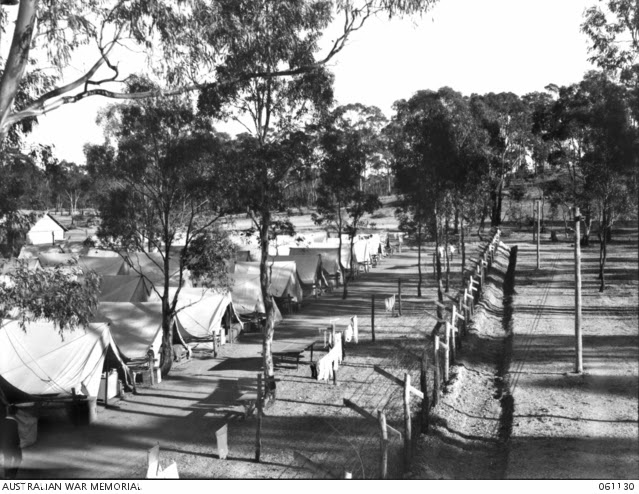
Each compound was enclosed by a double row of wire fencing 2 metres high with coiled barbed wire in between. Guard towers stood at each corner, with the perimeter lit at night. Each of the timber-framed barracks held twenty men. Kitchens, mess huts, shower blocks, laundries and latrines were all located within each compound.

The surrounding forest had been cut for firewood since Graytowns settlement, and POWs were put to work cutting firewood in the forest. The area now forms Graytown State Forest, and timber cutting has been illegal since 2002.

All the players are German POWs.
Repatriation
By 1943 the Kormoran men had been transferred from Murchison to Camp 6 (a timber felling camp) at Graytown. Others were transferred to Tatura. Finally, the prisoners returned to Europe on the Orontes in 1947.


Globally there are 250 species of owls; of this, 11 species are found in Australia. They are the Barn Owl, Barking Owl, Powerful Owl, Rufous Owl, Masked Owl, Morepork, Greater Sooty Owl, Lesser Sooty Owl, Eastern Grass Owl, Southern Boobook and Christmas Island Boobook.
Owls have long sparked our imaginations; their haunting night calls, silent flight, extraordinary hearing and deadly eyesight has seen them embedded in different cultures as symbols for magic, wisdom and mystery.
Bush Heritage

Characteristics
Owls are masters at silent flight. Their soft, uniquely structured feathers are serrated, affecting the movement of air over the wings. Additionally, the velvety surface of the feathers absorbs any sound made by flapping wings. Their silent flight allows them to pounce on prey with no warning. Owls have incredibly superior eyesight and hearing, and their forward-facing eyes grant them excellent depth perception, which is necessary for low-light hunting.

They can rotate their head 270 degrees, a vital asset when their eyes are fixed and cannot move within their sockets. In addition, their ears are asymmetrical on their head (at different heights on the side of their face), so the sounds reach each ear at different times, aiding them in identifying the exact location of their prey. Owls also have a facial disk around their eyes; this helps focus sounds to their ears, so they hear even the quietest sounds.

Behaviour
Owls are nocturnal (hunting only at night) though some are active at dawn and dusk. They are found in every state of Australia and vary significantly in size; they range from the smallest (Southern Boobook at 36cm tall and around 175g) to the largest (Powerful Owl at 60cm tall and 1.5kg). They live in various habitats, from snowy mountainous areas to deserts, from open wet forests to woodlands and grasslands. The Powerful Owl is territorial and has been known to attack humans, though most are solitary and shy.

Diet
Owls live on a diet of small to medium-sized mammals, birds and insects. Like most birds, they cannot chew and eat their prey whole or will tear off pieces with their powerful, sharp beaks if unable to do so. Some owls, such as the Sooty Owl, eat mainly tree-dwelling mammals such as sugar gliders and small possums. Others prefer land-dwelling lizards or mammals. Like other raptors, owls regurgitate the non-nutritious party of their prey. Several hours after eating, they will produce a pellet from their gizzards of fur and bone. They will then be ready to eat again.

Threats
Habit loss is the biggest threat to Australian owls as they rely on old-growth trees with hollows for nesting and breeding. These hollows take hundreds of years to form. Sadly, land clearing and bushfires are wiping out the hollows at an alarming rate. Another significant threat is secondary poisoning from eating prey such as foxes, feral cats, rabbits and rodents that have taken the bait. Poachers are also a concern, both as live specimens and eggs.

Status
No Australian owl species is on the national threatened species list. Some populations, however, such as the Powerful Owl in Victoria, are vulnerable, and the Masked owl is endangered in SA, Tasman and Victoria.

Henri Cartier-Bresson was a French photographer considered the founding father of photojournalism. He was also one of the first true street photographers using 35 mm film and pioneering the genre of street photography. He viewed photography as capturing a decisive moment. The “decisive moment” refers to capturing a fleeting and spontaneous event, where the image represents the essence of the event itself.
“I suddenly understood that a photograph could fix eternity in an instant.“
~Henri Cartier Bresson~

The Early Years
Cartier-Bresson was born on August 22, 1908, at Chanteloup, near Paris. His father was a respected and wealthy textile merchant, and he was given a strict Roman Catholic education. Cartier-Bresson’s uncle was an accomplished painter, and under his influence, he studied in Paris with Cubist painter and sculptor Andre Lhote from 1927-28. In 1929 Cartier-Bresson studied literature and painting at the University of Cambridge. While, as a young boy, he had used a Box Brownie, it wasn’t until 1930, after seeing the work of Eugene Atget and Man Ray, that he took a serious interest in photography.
In 1931, during a year on the Ivory Coast, he began recording his experiences. While on the Ivory Coast, he contracted blackwater fever (a form of malaria). Fearing he was dying, he sent a letter home instructing his grandfather to bury him in Normandy while Debussy’s String Quartet was played. His uncle replied his grandfather “finds it expensive and prefers that you return home first”. Fortunately, Cartier-Bresson recovered.

The Unseen Photographer
In 1932 Cartier-Bresson purchased his first 35mm Leica. The small size appealed to him, as he wished to remain silent and unseen when taking photographs. To become even more anonymous in the scene, he covered the bright silver parts of the camera with black tape to make it even less visible. On occasion, he even hid the camera under a handkerchief. Throughout his life, Cartier-Bresson mainly stuck to three fixed lenses – 35mm, 50mm and 135mm.

Between 1932 and 1935, he travelled throughout Eastern Europe, Spain and Mexico. In 1932 Cartier-Bresson took two of his most famous images – The cyclist caught gliding down a cobbled hill at the base of some stone steps in Hyères and The man jumping over a puddle behind the Gare Saint-Lazare.

His first photojournalism images were published in 1937 when, under assignment from the French weekly Regards, he covered the coronation of King George IV and Queen Elizabeth. However, Cartier-Bresson photographed the crowds and people, not taking a single image of the King and Queen. Also, that year, he married a Javanese dancer named Ratna Mohini. They divorced 30 years later.
The War years
Cartier-Bresson joined the French Army’s photographic unit at the outbreak of WWII as a corporal. His work, at this time, involved filming and photographing artillery fire, road bombardments and troop movements. However, in 1940, he was taken prisoner by the Germans. After three attempts, he escaped in 1943 and returned to France with forged papers.

Before being captured, he had buried his beloved Leica on a farm in France near the Vosges mountains. So one of the first things he did after escaping was to return to the farm, dig up his camera, and return to Paris to join the resistance. Finally, after four years of occupation, on August 19, 1944, French Resistance forces and Allied troops began their liberation of Paris. Robert Capa, Henri Cartier-Bresson and George Rodger (who would come to be three of the four founders of Magnum Photos) were all there recording the retreat. They documented the historic scenes as the city transformed from a place of oppression to one of freedom.
Founding Magnum
In 1945, Cartier-Bresson and the U.S. photographer Robert Capa, David Seymour and Ernst Haas founded the photographers’ cooperative Magnum Photos. The photographers owned the rights to their images, a novel concept at the time. Under the umbrella of Magnum, Cartier-Bresson concentrated more than ever on photojournalism. He travelled through India, China, Indonesia, and Egypt.
“Photography is the simultaneous recognition, in a fraction of a second, of the significance of an event as well as of a precise organisation of forms which give that event its proper expression.”
~Henri Cartier-Bresson~

Like Margaret Bourke-White, he was in India to photograph India’s independence from Britain. While there, he photographed Mahatma Gandhi barely 15 minutes before Gandhi was assassinated. The material from those years, plus Europe in the 1950s, became the subjects of several books published between 1952 and 1956. These publications cemented Cartier-Bresson’s reputation as a master of his craft.
Fame and Glory
In 1955, France honoured him when a retrospective exhibition of 400 of his photographs was held at the Museum of Decorative Arts in Paris. The show then travelled through Europe, the United States, and Japan. At the end of the exhibition, the photographs were consigned to the Bibliothèque Nationale (National Library) in Paris for posterity. He was also awarded the Overseas Press Club Award and Prix de la Societe Francaise de Photographie.

In 1963 he travelled to and photographed in Cuba, followed by Mexico in 1964 and India in 1965. Then, during the student revolt in Paris in May 1968, he was there with his 35-mm camera. In 1966, after being a photographer for 30 years, he left Magnum and gave up the camera. For the rest of his life, he concentrated on landscapes and portraiture, but with a pen and paintbrush. In 1967 he married Magnum photographer Martine Franck, and the couple had one daughter, Melanie.

“I have always been passionate about painting,” writes Cartier-Bresson. “As a child, I painted on Thursdays and Sundays, and dreamed about it every other day.”
~Henri Cartier-Bresson~

FRANCE. Paris. 1992.

Cartier-Bresson died in Montjustin (Alpes-de-Haute-Provence, France) on August 3, 2004, aged 95. No cause of death was announced. His wife, Martine Cartier-Besson, passed away in 2012 from Leukemia.
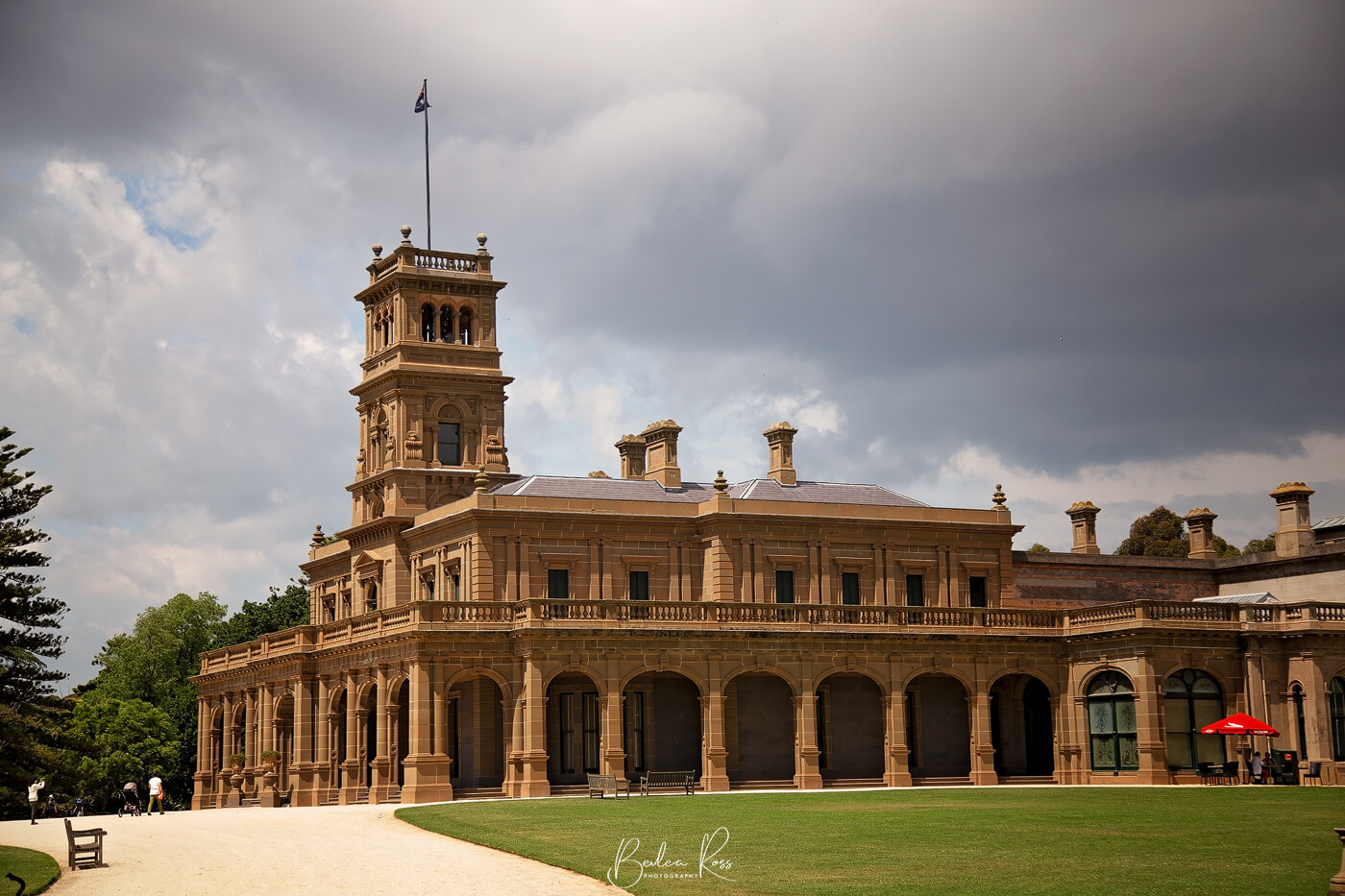
Werribee Park Mansion is one of Victoria’s largest and most opulent properties. The 60-room mansion, flowing across several wings, was built between 1874 and 1877 in the Renaissance Revival style by the pioneering pastoralists Thomas Chirnside (1815-1887) and his brother Andrew Chirnside (1818-1890), who emigrated to Australia from Scotland and founded the “Chirnside Pastoral Empire“.
The lush interior contains original furniture, an entry hall with a Minton encaustic tiled floor, niches, Corinthian pilasters, and free-standing columns leading to a grand staircase. Off the main entrance are the main reception rooms, a library and dining room.

Thomas Chirnside
Thomas Chirnside was born in Berwickshire, Scotland, the elder son of Robert Chirnside and Mary Fairs. In January 1839, at age twenty-three, Thomas Chirnside arrived in Adelaide from Liverpool on the ship Bardaster. He then made his way to Sydney in March. Returning to Melbourne, after drought in NSW affected his fortunes, the Chirnside brothers bought the land at Werribee.
As a member of the Victorian Acclimatisation Society, Thomas began importing animals from the old country, such as red deer, foxes, hares, pheasants, and partridges. It wasn’t long before “fine old English gentlemen” were hunting the new arrivals around the vast expanse of Werribee Park.
Western District Families


Thomas returned to Scotland for a holiday in 1845, where he fell in love with his first cousin Mary Begbie. He asked her parents for her hand in marriage, but she refused to move to Australia. His brother Andrew then travelled back to Scotland for a visit with a request from his brother. Bring back Mary any way he could. So in 1852, Andrew returned with Mary. However, he brought her back as his wife. Not quite the outcome Thomas wanted. Regardless, the brothers remained close, though Thomas remained a bachelor for the rest of his life.

The grand staircase
Thomas, and his brother Andrew, built the mansion at their Werribee park property over three years. In today’s money, the mansion cost nine million dollars. Notably, the impressive grand staircase is almost identical to the Barwon Park staircase. In fact, it’s a case of the Chirnsides emulating the Austins, as Barwon Park was completed six years before the Werribee mansion.

In 1877, when complete, Andrew, Mary and their three children moved in. Thomas continued to live nearby at the Point Cook homestead; however, he later moved in with Andrew and Mary. The mansion’s extensive workforce worked across ten acres of farmland and the house staff. The Chirnsides also entertained the shire ratepayers and their families. It was not unusual for the Chirnsides to hold picnics with games, bands and dancing for a thousand people, with Thomas appearing on his horse to resounding cheers. Thomas was a strict Sabbatarian and did not allow any work to take place on Sundays.

In 1887, in ill health, suffering depression, and believing himself bankrupt, Thomas shot himself in the laundry with his shotgun. Andrew then inherited the property and Thomas’s estate.
Sadly, Andrew passed away from heart disease just three years later, leaving his personal estate to Mary and his real estate holdings to his two youngest sons. However, as per his will, Mary was permitted to continue at Werribee park, along with a generous allowance until her death. She died, aged eighty-one, in 1908 at a private hospital in Colac due to burns after her hair had caught alight from a bedside candle.

Werribee, after the Chirnside’s
Unfortunately, George couldn’t mirror the success of his father and uncle, and with dwindling fortunes, he sold the mansion to Phillip Lock, a wealthy grazier from Warnambool, in 1922. Lock, in turn, sold it to the Catholic church in 1923. Under the church’s ownership, it became a seminary, Corpus Christi College. Several wings were added by the monks residing there. These wings have been converted to the 5-star Lancemore Hotel.

Finally, in 1973 the Victorian government bought the property from the Catholic church and restored the mansion and grounds to their former glory, renaming it Werribee Park Mansion. Three years later, the mansion was featured in the film The Devil’s Playground. In 1982, it was one of the sets used in the musical comedy, The Pirate Movie. The mansion was then depicted as an English manor in the children’s comedy series, The Genie From Down Under in 1996 and episodes of Miss Fishers Murder Mysteries. Werribee Park Mansion was added to the Victorian Heritage Register in April 1987.

Visiting Werribee Mansion
Open Daily entry is $11.10 for Adults, and children 4-15 years are $8.00. Adult concession is $8.00, and a family of 2 adults and two children is $34.80. Audio tours are available for an extra $3.80. Entry to the mansion also gives you free access to the gardens and State Rose Garden.

Vivian Dorothy Maier was an American amateur street photographer, often described as Mary Poppins with a camera. Born on February 1, 1926, in New York City to French/Austrian parents, she bounced between the U.S. and France during her childhood. In 1949, while living in France, Maier began experimenting with photography. Her first camera was a Kodak Box Brownie.
She was an intensely private person changing her name as she moved from family to family, calling herself Meyer, Mayer, Meier, Maier, or even Viv Smith.

Chicago
Maier returned to New York in 1951 on the Steamship De-grass’ and worked in Southampton as a nanny. In 1952 she purchased a German-made Rolleiflex camera. In 1956 Maier moved to Highland Park, a northern suburb of Chicago, to accept a job as a nanny for the Gensberg family. While with the Gensbergs, she would venture out to the streets of Chicago with her medium format Rolleiflex to photograph the neighbourhoods.

Years later, the three Gensberg boys she cared for recalled being taken to rough areas so their beloved nanny could pursue photography. At the Gensberg family home, she also had use of a darkroom.
Urban Human Landscape
Maier photographed the urban human landscape over three decades. Her preferred subjects were children, the poor, the marginalised, and the elderly, some of them aware of her and some not. She also made several self-portraits.

Between 1959 and 1960, Maier embarked on a solo trip around the world, taking pictures in Los Angeles, Manila, Bangkok, Shanghai, Beijing, India, Syria, Egypt, and Italy.

The Later Years
In the 1970s, with the children grown, Maier left the family and lost access to her darkroom. For a brief time in the 1970s, Maier worked as a housekeeper for talk-show host Phil Donahue. As she moved from family to family, her collection of rolls of undeveloped, unprinted work began to grow again. Maier had worked in a black-and-white documentary style until this time. However, she now switched to colour and adopted a more abstract approach. For her colour work, Maier stopped using the Rolleiflex and instead shot with her Leica and various German SLR cameras.

The colour work had an edge that hadn’t been seen in her work, becoming more abstract as time passed. Found objects, newspapers, and graffiti slowly replaced the people in her images. Her work also began to show a compulsion to save items she would find in garbage cans or lying beside the curb.

Hard Times
Now in her 70s, in the late 1990s, her financial situation worsened, and Maier put down her camera. Her belongings were placed in storage while she struggled to stay afloat. Finally, she became destitute and was about to be evicted from an apartment in Cicero. The Gensburg brothers banded together and arranged a small studio apartment for her in a better area.

In 2008, aged 82, she fell on a patch of ice in downtown Chicago, hitting her head. While she was expected to make a full recovery, her health began to deteriorate, forcing her into a nursing home. She passed away the following year in Illinois on April 20, 2009, aged 83. Maier had taken over 150,000 photographs in her lifetime.
The Maloof Collection
With Maier’s meagre means and the Gensberg brothers unaware of their existence, the storage locker containing her images was sold off due to non-payment of rent. The storage company auctioned off the negatives to RPN Sales. They, in turn, auctioned the boxes in a much larger auction to several buyers.
One of the buyers was John Maloof, a twenty-five-year-old real estate agent. Maloof purchased 30,000 negatives, sight unseen, for $400. Maloof was looking for vintage images of Chicago for a book he was publishing. Realising the photos were not what he wanted, he closed the box and put it on a shelf. Two years later, he took another look and, going through the box, found an envelope with her name. Maloof googled the name and found her death notice published just a few days before. Since then, Maloof has continued to acquire her negatives and now owns around 100,000 of them. Estimates are that Maloof now owns about 90% of her work, with Jeffrey Goldstein owning the remainder.

The School of Art Institute in Chicago established the Vivian Maier Scholarship Fund to provide female students with additional financial resources. John Maloof endowed the scholarship from funds received from print sales and his film, directed by Charlie Siskel, Finding Vivian Maier. Howard Greenberg and Charlie Siskel also provided donations.
Epilogue
However, Maier’s story doesn’t entirely end there. With the newfound fame around her images plus the publicity and income they generated, lawyers and potential heirs started putting their hands up. John Maloof had tracked down an heir and paid them for copyright. However, another lawyer claimed to have found another cousin in France and asked the court to nominate that cousin instead as heir to Maier’s Estate. In 2019, Maier’s images printed posthumously from her original negatives went up for sale in London for between $5k to $6.5k each.

© Estate of Vivian Maier; Courtesy Maloof Collection and Howard Greenberg Gallery
The Cook County public administrator in Chicago then took over what it considered an “unsettled estate”. A settlement was reached, allowing Maloof to continue to produce and exhibit the collection, keeping an undisclosed portion of the profits with the balance going to the Estate. So far, the exhibition has travelled through Europe and is currently in the U.K. until September 25.
Maloof was given the Estate’s blessing to make two significant donations to the University of Chicago to preserve Maiers’s legacy. The first donation was 500 prints in 2017, followed by another donation of 2,700 photographs in 2019. The prints will be held and made accessible to researchers allowing them to explore Maier’s printing process
Further Reading: Vivian Undeveloped: The Untold Story of the Photographer Nanny by Ann Mark
Note
The copyrights in the photography contained in this post are owned by the Estate of Vivian Maier. The Estate grants a limited license to media and press to reproduce the attached images in articles concerning Vivian Maier and/or John Maloof’s donation of vintage prints of Vivian Maier’s work to the University of Chicago. Hi-resolution versions of images may be used in connection with print versions of articles only. For electronic and online publications, the reproduced images may not exceed 1500 pixels on the longest side and 72 dpi. Unauthorised reproduction, distribution, or exhibition could result in liability under the Copyright Act. Publication of any of these images requires accompanying use of this notice: “Unpublished work © 2017 The Estate of Vivian Maier. All rights reserved.”

Shepparton’s Museum of Vehicle Evolution claims to be one of the largest regional museums in Australia. And large it is. The vast expanse of vehicles under the one roof is impressive.

As well as the display of vintage vehicles, the museum also houses trucks that played a significant part in Shepparton’s transport history. Also on display is The Furphy Collection, the Farren Vintage Bicycle Collection, the Clayton Collection (gramophones, telephones and radio) and Loel Thomson Costume Collection.
History
Move began life in 2012 as the Shepparton Motor Museum and Collectables. A $5.3m upgrade started in September 2020. The Victorian Government provided a large grant. Funds also came from the Greater Shepparton City Council and donations from local residents. The upgrade finished in 2021 and expanded the museum’s floor space to 10,000 square metres. It was then renamed the Museum of Vehicle Evolution (Move)
Vehicle Collection

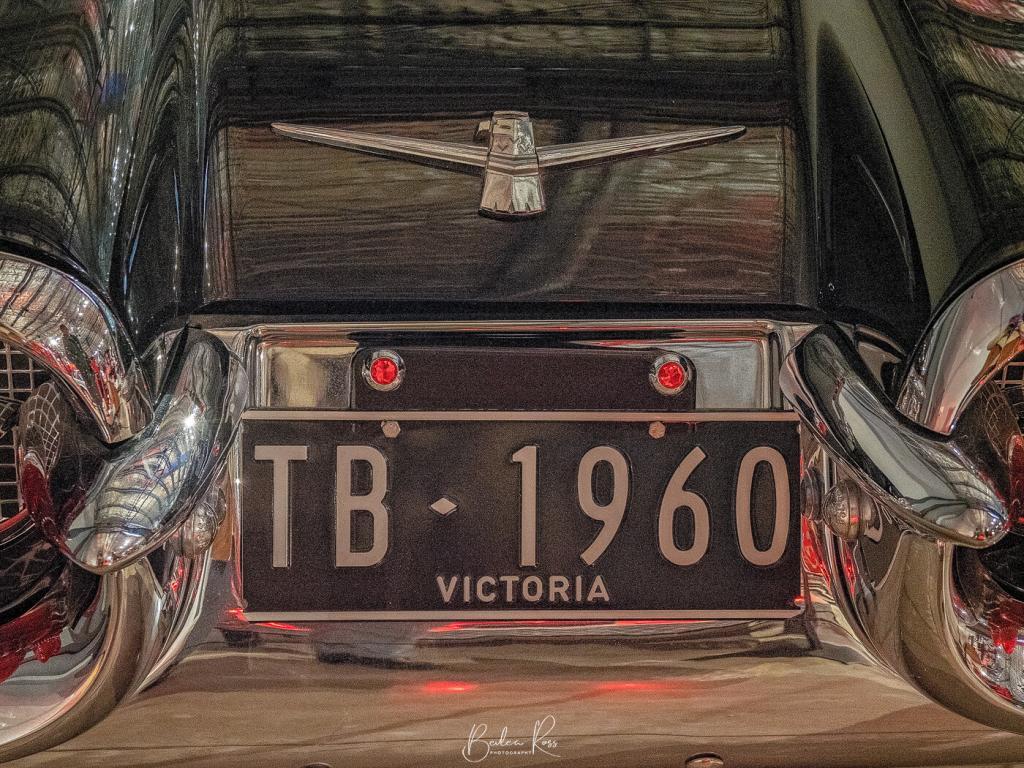
Taking up a large part of the ground floor is the vintage cars. Starting with early model Fords and progressing through Austins, massive Cadillacs, and Chevrolets to gleaming Mustangs and Thunderbirds. Visitors can stroll past a Ferrari the same model as Tom Selleck drove in Magnum or gaze in amazement at Johnny O’Keefes Thunderbird. The sheer size of the older cars is jaw-dropping. Compared to today’s modern vehicles, they are beyond huge with massive boots, bonnets and Of course, it goes without saying that parking them would be a nightmare in today’s crowded parking lots.


The Truck Collection
An extensive collection of trucks are also on display at Move. The curators approached Shepparton’s many trucking businesses for money and truck donations. As a result, trucks that once gathered dust in sheds are spruced up and sparkling under lights. There’s even a ’50s pioneer coach, a vintage fire truck and a truck driving simulator that kids of all ages will love.


The Furphy Collection
Born in Moonee Ponds to Irish immigrant parents in 1842, John Furphy began his blacksmith and wheelwright business at 22 years old. In time, he grew the company, adding a foundry and producing farm and agricultural implements. His patented grain stripper, which preceded the combine harvester, was awarded the first prize at the 1884 Grand National Show.

John is credited with inventing the “furphy”, a water cart used by the Australian Army in WWI. The term “Furphy” also became slang for gossip and tall stories, as many Furphy water cart drivers were supposedly spreaders of rumours and gossip.


The Farren Bicycle Collection
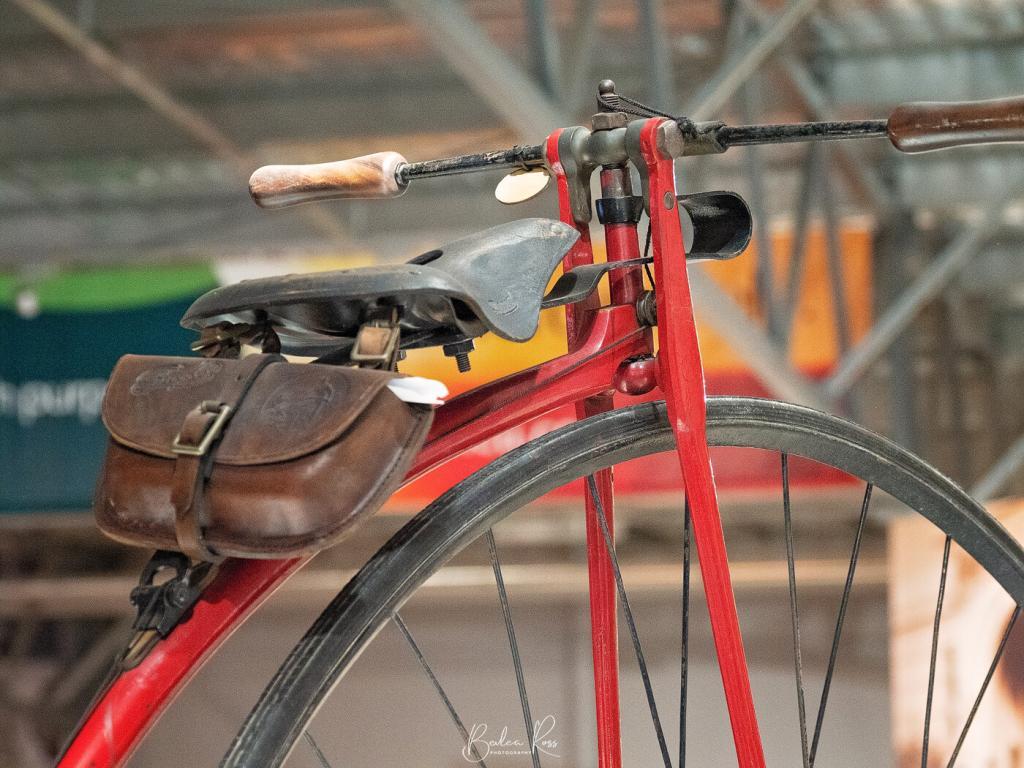
Over 30 years, Paul and Charlie Farren collected over 200 bicycles. Their collection includes bamboo bikes, adult tricycles, women’s side saddle bikes, tandems, and three-seater bikes that predate 1910. Look for the Penny Farthings; it’s hard to imagine riding these.


The Loel Thomson Costume Collection
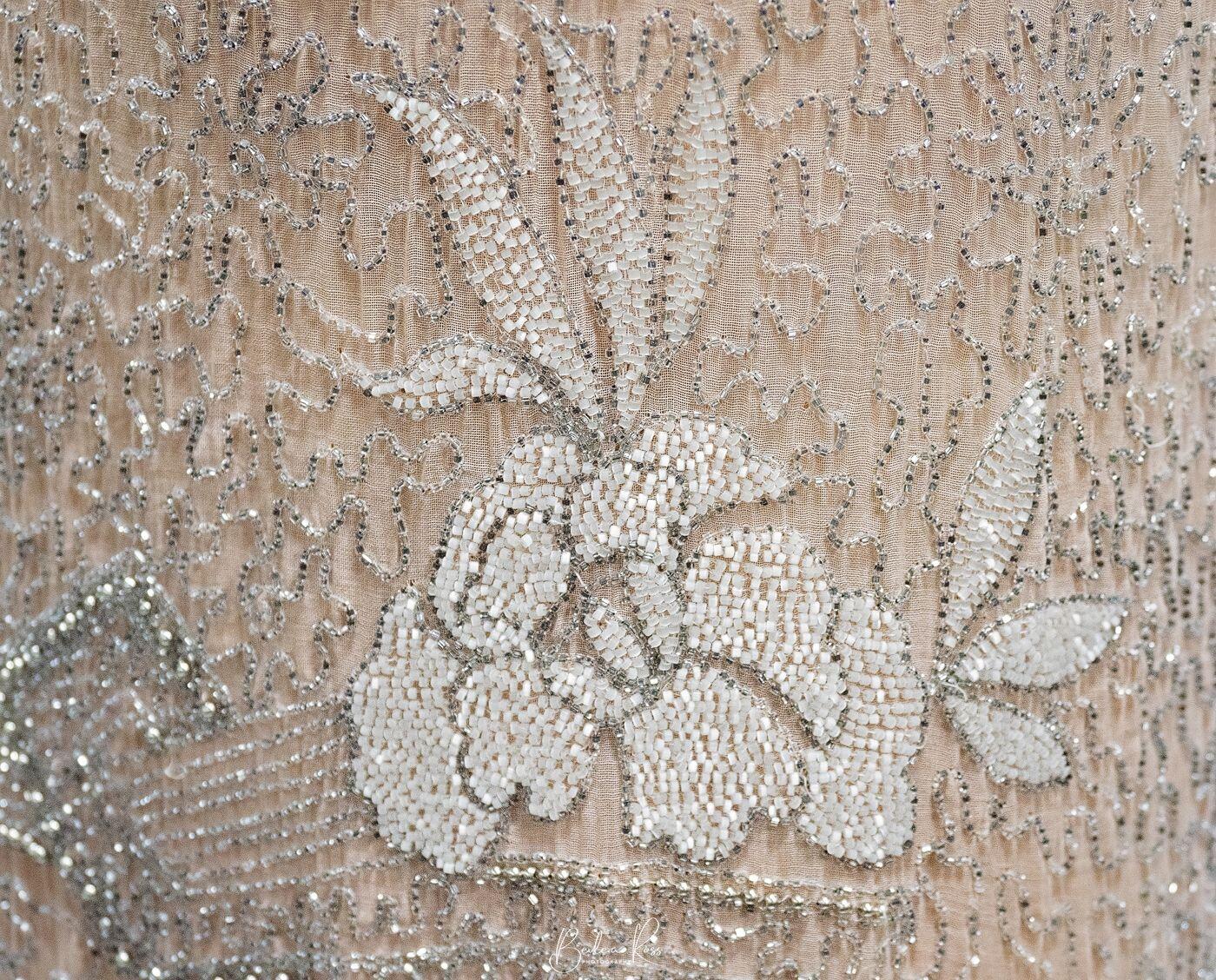
Loel Thomson, a former school teacher, spent forty years collecting the history of everyday Australian fashion. She said it was a “hobby that grew”. While some items are high-quality designer fashion, most of the collection is clothing that ‘ordinary’ people wear. Her collection is primarily women’s wear. However, it also includes some men’s and childrenswear. Subsequently, the collection grew to include approximately 10,000 items. It is regarded as the world’s most extensive and best organised private collection of Australian fashion. Items in the collections date from the 1770s to 2000.




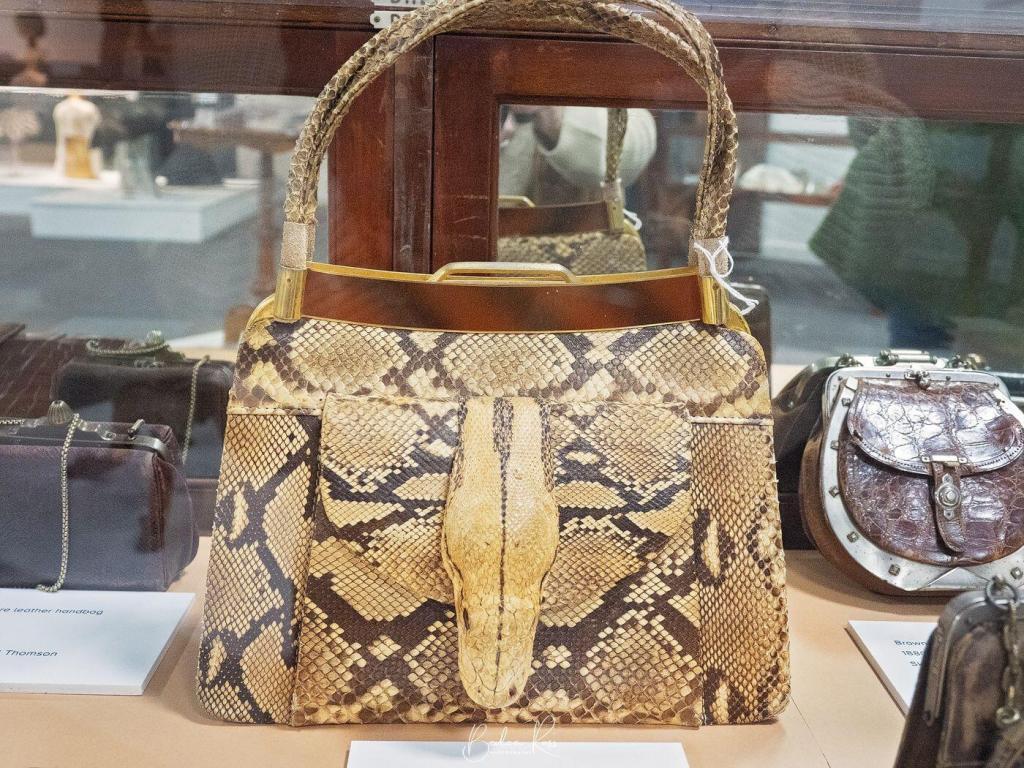
Move Museum is at 7723 Goulburn Valley Highway, Kialla, Vic 3631 and is open daily from 10 am to 4 pm.
Ticket prices depend on if you visit all or part of the museum. Entry to all the exhibitions is $24 for adults, $20 for Concessions, and for children 5 to 16, it’s $12. Children under 5 are free. (Family ticket $60)

Ansel Adams is considered one of the pioneers of photography and the most important landscape photographer of the 20th century. His love of nature inspired his photography. Adams was also a passionate environmentalist who advocated for more National Parks.
His images made him famous as an American West photographer, particularly those of Yosemite National Park, and he used his work and fame to promote the conservation of wilderness areas. In addition, his iconic black-and-white images helped to establish photography among the fine arts.
The Early Years
Born in San Francisco on Feb 20, 1902, he was the son of a businessman and grandson of a wealthy timber baron. At age four, he fell face first into a garden wall during an aftershock of the 1906 earthquake. This resulted in a badly broken nose, and the injury marked him for life. Then, at age five, his family lost their fortune in the financial panic of 1907.
As a naturally shy child with a distinctive broken nose, he struggled to fit in at school. While never diagnosed, it is widely believed he had Dyslexia and possibly ADHD. Unsuccessful at the several schools he was sent to, he left school aged twelve. From then on, he was tutored by his father and aunt.

A photographer emerges
Adams was 12 yrs old when he taught himself to play the piano and read music. He then began taking lessons and intended to become a concert pianist. Being tutored at home gave him the freedom to enjoy long solitary walks in the still wild areas of the Golden Gate. He would hike the dunes or walk along Lobos Creek and Bakers Beach daily. His first visit to Yosemite was in 1916 at age fourteen. Carrying the Kodak Box Brownie, a gift from his parents, he hiked, climbed and explored Yosemite. In 1919 Adams joined the Sierra Club and spent the next four summers in Yosemite Valley as “keeper” of the club’s lodge.

Yosemite Calls
Adams first published photographs appeared in the Sierra Club Bulletin in 1922. In 1928 Adams married Virginia Best, an aspiring singer and the daughter of landscape painter Harry Best. They had met in 1921 when she was 17 years old and he was 19 through their shared love of music.

The wedding followed a six-week courtship and a three-day engagement. The couple were avid hikers, and Best was also a member of the Sierra Club. They wed at the base of a 617-foot waterfall called Bridalveil and, naturally, honeymooned at Yosemite. Their first child, Michael, arrived in 1933, followed by Anne in 1935. Unfortunately, Adams missed the birth of both children, being away on photographic assignments at the time.

Ansel Adams,’ Public Board’, via Wikimedia Commons
Visualisation
In 1927 Adams published his most famous image – ‘Monolith, The Face of the Half Dome“. To get the shot he wanted, he climbed a rock cliff known as the ‘Diving Board’, a steep outcrop 3,500 metres above the Yosemite Valley.
When taking his image of the Half Dome – Adams said he had a vision of what he wanted the image to look like. This led to his visualisation technique. First, he composed the picture in his mind and then factored in tonal values. He felt this would lead to near-perfect negatives.
Adams took his first image using a yellow filter, but it wasn’t quite what he wanted. Then, using his last glass plate, he took another image using a red filter. This filter brightened the snow, created a dark sky and caused the rock face to glow in the midday sun.

Honing his craft
In 1929 he was hired as a photographer for the marketing department of Yosemite Park and Curry Company (the only lodging and dining provider for Yosemite National Park). The company wanted Adams to publish bold, captivating photographs to lure more tourists to Yosemite. To this end, the marketing department coached Adams about the most effective approach to making photographs.

In a letter, the head of the Yosemite Park and Curry Company instructed Adams that, when taking a winter photograph, he should only shoot trees and houses “heavily ladened with freshly fallen snow.” Likewise, Adams was told to take photographs of only the best-dressed ice skaters using the valley’s ice rink.
The Conversation
Straight Photography
Adams also met and became influenced by Albert. M. Benders, a San Francisco patron of the arts. Benders’ financial support and encouragement transformed Adams. Looking at Adams’s High Sierra photography, he declared they had to do a portfolio of them. Bender made all the arrangements for an edition of 100 portfolios, each 18 images, to be sold for $50 each. He also ordered ten copies for himself and handed Adams a check for $500 (approximately $8,500 today). Bender then got on the phone, lining up more supporters until half of the edition was pre-sold.

That same year Adams also met photographer Paul Strand. Strands’ images also had a significant impact on Adams. Adams turned away from the “pictorial” style of painterly, soft focus images he had previously used and began to concentrate on “straight photography” (also known as ‘pure’ photography). Before long, Adams was straight photography’s most articulate and emphatic champion.
The title ‘straight’ photography is, however, somewhat contradictory. Adams still used manipulation in his techniques and would spend hours in the darkroom dodging and burning his prints.
Bests Studio
By 1934 Adams was elected to the Sierra Club’s board of directors. In 1936 Virginia’s father, Harry Best, suddenly passed. She inherited Best’s Studio in Yosemite and, for 36 years, ran what is now The Ansel Adams Gallery. In 1937, Adams left the Yosemite Park and Curry Company to concentrate on his fine art photography, and the couple moved to Yosemite to take over the management of Bests Studio. Living in Yosemite, Adams now had access to the wilderness on his doorstep during all seasons and times of the day. He was now firmly established as a Sierra Nevada photographer and a Yosemite defender.
That same year, his Yosemite darkroom caught fire resulting in the loss of 5000 negatives. In 1941 he formulated the ‘zone system’ with Fred Archer, a technique dividing the negative into 11 zones and ranking tones from pure white to pure black plus eleven greys. Adams used this technique in developing negatives.
Commercial Work
While Adams was well known for his landscapes, it wasn’t until the later years that they provided him with a steady income. He often accepted work as a commercial photographer to keep the bills paid and allow for his creative pursuits. For example, in 1969, his Winter Morning in Yosemite Valley was licensed to the Hill Brothers Coffee Company, appearing on their 3lb tins. The tins still fetch up to $1000 when they come up for auction.
Japanese Internment

In 1943 Adams collaborated with Dorothea Lange on Japanese Internment images. He photographed the internment camp at Manzanar, one of the many camps the government put up for the detained Japanese-Americans. His pictures depicted the detainees’ discriminatory treatment at the U.S Government’s hands. In 1965, he donated his internment collection of more than 200 photographs to the Library of Congress.
“The purpose of my work was to show how these people, suffering under a great injustice, and loss of property, businesses and professions, had overcome the sense of defeat and dispair [sic] by building for themselves a vital community in an arid (but magnificent) environment … All in all, I think this Manzanar Collection is an important historical document, and I trust it can be put to good use.”
Ansel Adams

. California Manzanar, 1943. Photograph. Library of Congress.

. California Manzanar, 1943. Library of Congress
Career highlights & Awards
- Lectured and taught courses at the Museum of Modern Art
- Assisted in the establishment of the department of photography at the California School of Fine Arts
- Received three Guggenheim Fellowships
- Became a consultant for Polaroid
- Named on President Johnson’s environmental taskforce
- Founded ‘The Centre for Creative Photography at the University of Arizona
- “Yosemite and the Range of Light”, a book published which went on to sell over two hundred thousand copies
- Awarded Presidential Medal of Freedom by President Jimmy Carter
- Presented with Decoration of “Commander of the Order of the Arts and Letters”, the highest cultural award given by the French government to a foreigner

Ansel Adams, the technical genius of the camera and avid conservationist, passed away in Community Hospital California at age 82 due to a recurring heart problem. As a result of his tireless work, in 1984, the Ansel Adams Wilderness area of more than 100,000 acres was named after him. In addition, in 1985, Mount Ansel Adams, an 11,760-foot peak in Yosemite, was named after him on the anniversary of his death.
Virginia Best Adams outlived Ansel by 19 years, passing away in January 2000, aged 96.

The Tawny Frogmouth is a species of Frogmouth native to Australia. Their species name, Strigoides, means owl-like. However, while nocturnal and carnivorous, Tawny Frogmouths aren’t owls. They are, in fact, more closely related to Nightjars.
Appearance

The Tawny Frogmouth is a stocky bird with a large head, rounded wings and short legs. They measure from 34cm for females to 53cm tall for males and weigh 680g. There are three distinct colour morphs, grey, chestnut and rufous, with grey being the most common in both sexes.
Grey males have silver-grey upperparts with black streaks and slightly paler underparts with white barring and brown mottling. Females of the grey morph are often darker with more rufous mottling. The eye is yellow, and the broad, heavy bill is olive-grey to blackish and hooked at the tip. It is topped with distinctive tufts of bristles. Southeastern Tawny Frogmouths are larger than their northern counterparts. The name Tawny Frogmouth came from their diet of frogs. They can live up to 14 years in the wild.
Differences to Owls
The Tawny Frogmouth is not an owl. It’s a night-jay or nighthawk. They have wide forward-facing beaks for catching insects, whereas owls have narrow downward-facing beaks used to tear prey apart. Their eyes are to the side of the face, while owls have eyes fully forward on the front. Owls have curved talons, but Tawny’s do not. However, like owls, they have soft feathers for stealthy, silent flight.
Camouflage

The Tawny Frogmouth exhibits one of the best examples of camouflage and visual mimicry of Australian birds. They perch low on a tree branch during the day, and their silver-grey plumage patterned with white, black and brown streaks, and mottles allow them to freeze into the form of a broken tree branch, rendering them practically invisible. They often sit on broken branches and thrust their head up at an acute angle to emphasise the resemblance to the broken branch.
Habitat and Distribution
The Tawny Frogmouth can be found in almost any habitat except dense rainforests and treeless deserts. They are common across forests, woodlands, and urban and rural areas throughout Australia, including Tasmania.

Diet
The bulk of the Tawny Frogmouth’s diet is nocturnal insects, worms, slugs and snails, small mammals, reptiles, frogs and birds. They take their prey by pouncing from an elevated perch to the ground. They catch flying insects such as moths while the insect is in flight.

Breeding
Tawny Frogmouths have a regular breeding season from August to December, and both sexes incubate the eggs. The male will sit on the eggs during the day. However, both sexes share the egg sitting duty at night. Once the chicks hatch, the whole family can be seen roosting on the same branch, side by side. The nest of the tawny frogmouth is a loose platform of sticks in a forked tree branch. As a rule, only one clutch of 2 to 3 eggs is raised per season. However, southern Tawny’s may have two. The breeding pair will mate for life and often stay in the same territory for ten years.
Threats
Carpet Pythons take Tawny Frogmouths while they are roosting. When hunting prey on the ground, they can be taken by feral cats, dogs or foxes. The biggest threat to them, however, is habitat loss. They are reluctant to move on even once their habitat is destroyed, whether through land clearing or bushfires. Secondary poisoning from pesticides used in termite control and rat poison also impact their numbers, especially in urban areas. In addition, being nocturnal, they are vulnerable to vehicle collision as they have been known to fly after insects illuminated by headlights.
Status
The Tawny Frogmouth is considered of least concern on the IUCN Red List of threatened species.

Dorothea Lange was born Dorothea Nutzhorn on May 26 1895, in Hoboken, New Jersey, U.S. Lange was an American documentary photographer famous for her portraits of displaced farmers and Dust Bowl migrants during the Great Depression. Her photos were among the first examples of documentary photography and photojournalism.
Early Years
At age seven, Lange survived a severe polio case, leaving her with a lifelong limp. Her father abandoned the family in 1907 when she was 12, and her mother reverted to her maiden name of Lange. At age seventeen, Lange began working as an office assistant for famous photographer Arnold Genthe and taking photography classes. In 1919, at 24, Lange left home with a friend to travel the world. However, the U.S. had just entered the war, which ruled out European travel. So instead, she planned to travel to Mexico, Hawaii and the Far East.
California Bound
However, a thief scuttled her travel plans a second time. Arriving in San Francisco, a pickpocket stole all their money, leaving Lange and her friend stranded and penniless. Lange then went to work as a photo finisher at a five-and-dime store. Within a year, she opened a portrait photography studio. Her skill brought many of the rich and famous of San Francisco to her door. Through her work at the studio, she met her first husband, wilderness painter Maynard Dixon. Together they had two sons before separating, reportedly due to his long absences and rumours of infidelity. They finally divorced in October 1935. In December that year, she married economist Paul Taylor.

Gift of Paul S. Taylor
A social Conscience
While Lange had a successful career as a portrait photographer in San Francisco, she saw her photographs as tools for social change rather than art. Lange, therefore, began photographing life outside the studio. She took to photographing the unemployed men wandering the streets of San Francisco. Her images, showing the men’s desperate condition, were publicly exhibited and received immediate recognition from the public and other photographers.

The Great Depression
The Great Depression had begun in 1929 and, by 1933, was at its height. Seven thousand banks (one-third) of the banking system had closed. Within the U.S., fourteen million people were out of work bringing hardship, homelessness and poverty to millions. People evicted from their homes were sleeping in parks, sewer pipes and numerous shanty towns. “Hooverville” became a common term for a shanty town, named after Herbert Hoover, President at the start of the depression and widely blamed for it.

Lange visited a nearby breadline she had heard about with her Graflex camera. The breadline had been set up by a woman known as the “White Angel” to feed the many hordes of unemployed. This visit resulted in another iconic image: ‘White Angel Bread Line, San Francisco’, The photograph of a man turned away from the hungry crowd; his interlaced hands and set jaw personified collective despair.
Documenting the Dust Bowl Migrants
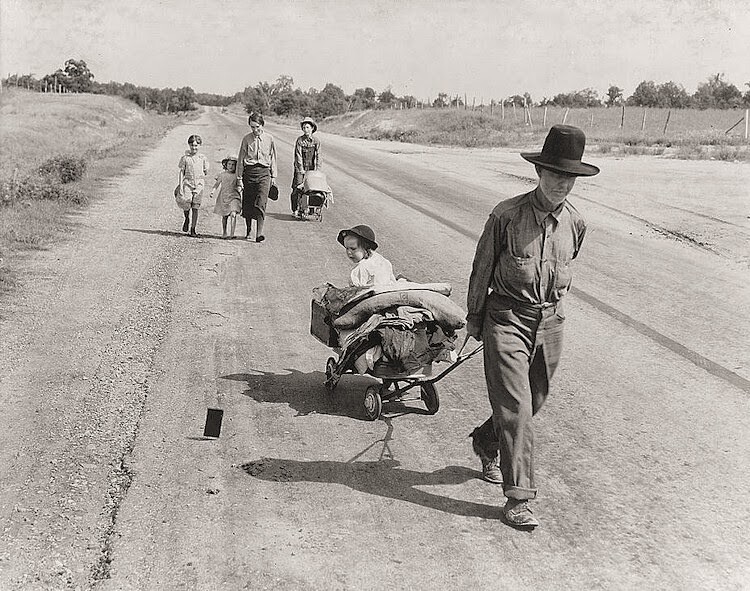
Lange’s photographs brought her immediate recognition, especially her image “white angel breadline”. It led to her being offered a commission as a Field Investigator for the Federal Resettlement Administration. The U.S. Agriculture Department hoped that Lange’s powerful images would bring the conditions of the rural poor to the public’s attention. So, throughout the summer of 1936, Lange drove through the South, photographing tenant farms and sharecroppers.
Dust Bowl Migrants
AP reporter Robert Geiger coined the term “dust bowl” to describe the land after years of drought. Following ten years of drought and subsequent dust storms, many sharecroppers and tenant farmers abandoned their land. Some battled on. However, they too were forced out when the banks foreclosed. As a result, around one-quarter of the population of the Great Plains (Colorado, southwestern Kansas, the panhandles of Texas and Oklahoma, and northeastern New Mexico) were rendered homeless. They packed everything they owned into their cars and trucks and headed west toward California, which was touted at the time as Eden for hard workers. Leaving the drought-ravaged Midwest behind them, the migrants were viewed by Californians as disease-ridden intruders who would sponge off the government.
Unlike our current view of migrants being from other countries, these ‘migrants’ were fellow Americans moving from Great Plains to California. They were disdainfully called ‘Oakies’ and despised by Californians because their circumstances forced them to live in filth and squalor in shantytowns along irrigation ditches and roadsides.

The Migrant Mother
At the end of her trip through the south, as she returned home to the Bay, Lange was hot, tired and missing her sons. Driving down the road, she saw a sign reading, “PEA-PICKERS CAMP,” in Nipomo, California. Though she drove past the sign, it tugged her back, and she turned the car around and returned to the camp. There she encountered Florence Owens Thompson and her children. This led to the most famous image of the depression, if not her career.

“I saw and approached the hungry and desperate mother as if drawn by a magnet,” she later recalled. “She said that they had been living on frozen vegetables from the surrounding field and birds that the children killed.”
Dorothea Lange
The image Lange took that day, ‘Migrant Mother’ became one of the most iconic and reproduced images in the history of photography. (Unfortunately, as Lange had been working for the U.S. Government then, she didn’t own the image and received no royalties from it).
Lange’s career continues to rise
Lange’s first exhibition was held in 1934, cementing her reputation as a skilled documentary photographer. In 1939 she published a collection of 112 photographs in the book An American Exodus: A Record of Human Erosion. It is considered a masterpiece of the documentary genre. Her second husband, economist Paul Taylor, provided the text. In 1939. John Steinbeck visited the migrant camps with Lange and used her images as research when writing his seminal novel the ‘Grapes of Wrath’. John Ford also used her images as research when he turned the book into a film.

In 1940, Dorothea received a Guggenheim fellowship that gave her enough money to live for one year and focus on her art. So, Lange invited her son Daniel and friend Ansel Adams to join her in photographing Mormon communities in America.
The War Years
However, as World War II escalated, Dorothea and Ansel put the project on hold. They wanted to do something they considered more important. So the War Relocation Authority hired the two colleagues. Their brief was to document the experience of Japanese Americans in internment camps following Japan’s attack on Pearl Harbour. Dorothea opposed internment policies but felt it was important to witness and document the truth of the camps.
When working for the War Department during WWII, she was forbidden from documenting the Japanese internment camps in any way that suggested they were anything other than organized and dignified. She found creative workarounds, such as photographing the shadow of a barbed-wire fence rather than the fence itself.
Literary Ladies Guild

Dorothea Lange/Library of Congress prints and photographs division, Washington D.C. 20540 USA

Japanese Internment Campos
The army instructed Lange to capture all steps in the process of the camps. But she was too good at her job. Her photographs showed Japanese parents and children in horrific and heartbreaking conditions. This was not the PR the U.S. Army wanted, and they refused to share Dorothea’s photographs with the public. Censored and forgotten, no one saw her Japanese internment photographs for decades.

Finally, in 2006, her work was celebrated when Impounded: Dorothea Lange and the Censored Images of Japanese American Internment, edited by historians Linda Gordon and Gary Y. Okihiro, was published.

Post War
Following the end of World War II, Lange returned to her projects creating several photo essays for Life magazine, including Mormon Villages and The Irish Countryman. In 1953–54 Lange worked with Edward Steichen on “The Family of Man,” an exhibition organised by the Museum of Modern Art (MoMA) in New York. Included in the exhibition were several of her photographs. Over the next ten years, Lange travelled with her husband Paul, who was now a diplomat, photographically documenting countries throughout Asia, notably South Asia, the Middle East, and South America.

Final Exhibition
In 1965 Lange was diagnosed with inoperable esophageal cancer. At the time she was preparing for a retrospective exhibition of her work to be held at MoMA the following year. Her one-woman show was only the sixth ever dedicated to a photographer. And the first ever for a woman photographer. Dorothea Lange died, aged 70, on October 11, 1965. The exhibition opened to wide acclaim three months after her death

